Is yoga safe during pregnancy?
For most people with an uncomplicated pregnancy, gentle prenatal yoga is considered safe once their doctor approves it. Obstetric guidance generally encourages regular moderate activity in pregnancy. The key is to practise a version designed for pregnancy, avoid the positions listed below, and stop if anything feels wrong.
Your doctor may advise against exercise, or limit it, if you have certain conditions. These include some forms of heart or lung disease, a cervix that needs support, placenta praevia after the middle of pregnancy, bleeding, preterm labour or ruptured membranes, pre-eclampsia or pregnancy-induced high blood pressure, or severe anaemia. That is why a conversation with your doctor comes before your first class, not after it.
What to avoid throughout pregnancy
Some practices are unsuitable in any trimester. A good prenatal teacher will replace each of them with a safe alternative, so you will not miss out.
| Avoid | Why | Try instead |
|---|---|---|
| Lying on the belly (cobra, locust, bow) | Pressure on the abdomen | Cat–cow on hands and knees |
| Deep closed twists | Compresses the abdomen | Gentle open twists that turn away from the belly |
| Strong backbends (wheel, full camel) | Overstretches the abdominal wall | Supported chest openers over a bolster |
| Full inversions (headstand, shoulderstand) | Balance and blood-pressure changes, fall risk | Legs resting on a chair or low wall |
| Forceful breathing: kapalbhati, bhastrika | Strong pressure changes in the abdomen | Slow, even nasal breathing |
| Breath retention (kumbhaka) | Holding the breath is not advised in pregnancy | Extended, relaxed exhalation |
| Hot yoga or very warm, stuffy rooms | Overheating | A well-ventilated room and water nearby |
| Jumping and fast transitions | Balance changes and joint strain | Step, don't jump, between poses |
Two more principles apply throughout. First, don't overstretch. Pregnancy hormones, including relaxin, make ligaments looser, so it is easy to push past a safe range without feeling it. Work at about three-quarters of your usual stretch. Second, you should always be able to talk while you practise. If you are too breathless to speak a sentence, ease off.
First trimester (weeks 1–12): go gently
The first trimester is about gentle movement, rest and breath. Nausea and fatigue are common, so shorter sessions are fine. If you already practise yoga, keep to a softer version of your practice. If you are new, wait for your doctor's approval and begin with a prenatal-specific class.
- Good choices: gentle standing poses with a wide stance, cat–cow, supported hip openers, seated side stretches, and slow nasal breathing with a longer exhalation.
- Avoid: strong core work, deep twists, intense heat, breath retention and forceful breathing.
- Listen to fatigue: a 15-minute practice lying on your side with a few breaths is a complete session on a tired day.
Second trimester (weeks 13–27): steady strength
Many people feel more energetic in the second trimester, which makes it a good time to build steady strength in the legs, hips and back. The belly begins to grow, so balance changes and positions that lie flat on the back for long periods should be replaced with supported or side-lying versions.
- Good choices: warrior poses with a shorter, wider stance; supported squats on a block; standing poses next to a wall for balance; gentle pelvic-floor awareness; and side-lying relaxation.
- Adapt: after about 16 weeks, avoid long periods lying flat on your back. Many people feel light-headed in this position. Prop the upper body up on a bolster or lie on your left side instead.
- Avoid: sit-ups, crunches and any movement that makes the belly dome or bulge along the midline.
Third trimester (weeks 28–40): comfort, breath and birth preparation
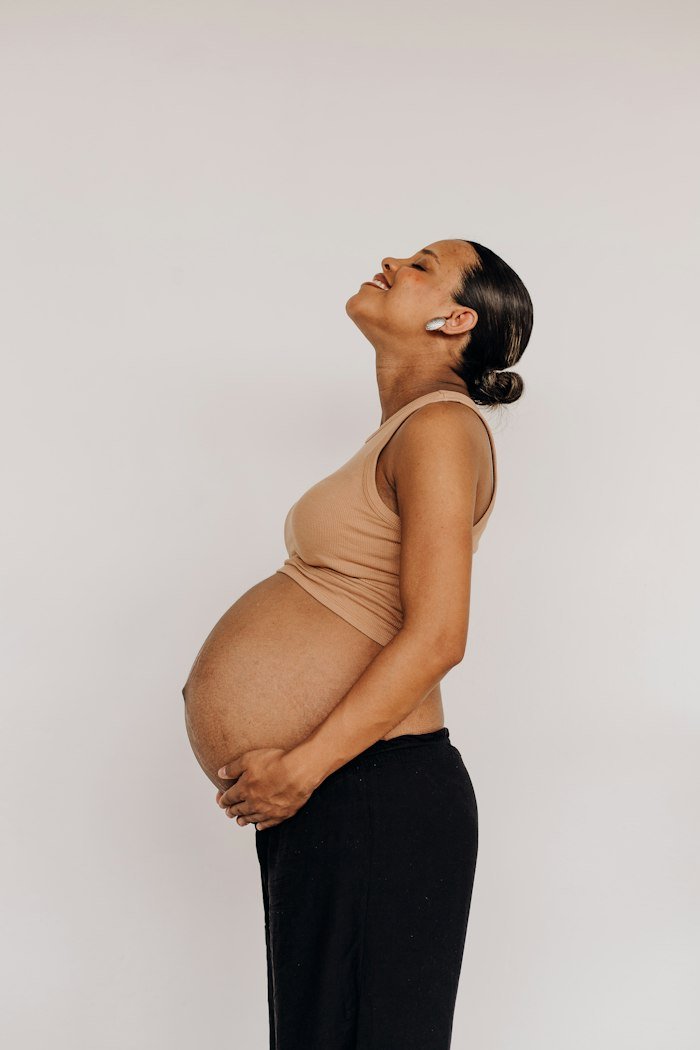
In the third trimester, the practice shifts towards comfort, rest and preparation for birth. Movements become smaller and slower. Supported positions, hip mobility, pelvic-floor relaxation and calm breathing that you can use during labour take centre stage.
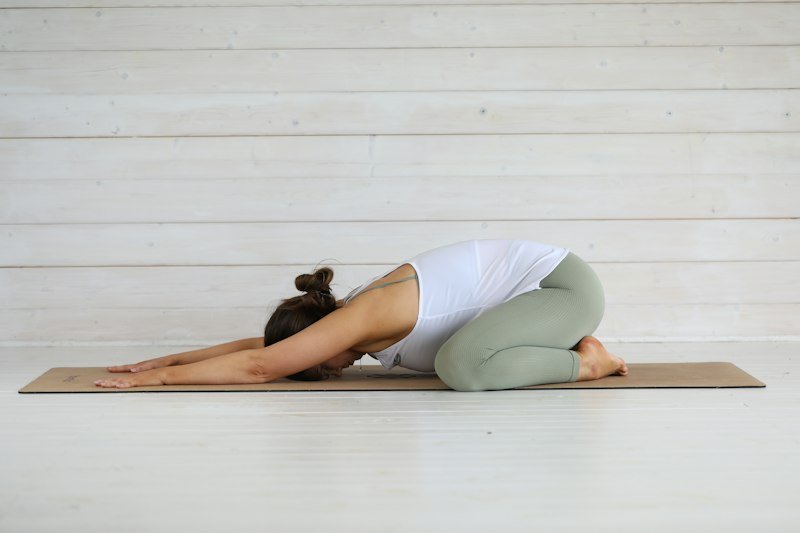
- Good choices: supported wide-knee child's pose, hands-and-knees hip circles, sitting on a birthing ball, supported side-lying relaxation, and long, relaxed exhalations.
- Adapt: use a chair or wall for every standing pose. Take extra care getting up and down from the floor, rolling onto your side first.
- Avoid: deep squats if you have been told the baby is in breech position or you have pelvic pain, unless your doctor or midwife recommends them.
Which breathing practices are safe in pregnancy?
Slow, relaxed nasal breathing, a gently longer exhalation and humming breath (bhramari, practised softly) are generally suitable in pregnancy. Forceful techniques such as kapalbhati and bhastrika, and any breath retention, should be avoided until after birth and your postnatal check.
Breathing practice is one of the most useful things you can take into labour. Learning to lengthen the out-breath while the body stays soft is a skill, and it is easier to learn over weeks of practice than in the delivery room. If you are interested in breathwork beyond pregnancy, our pranayama classes teach the full range of techniques once you are ready.
How to choose a safe prenatal yoga class
- Choose a class designed for pregnancy, not a general class where you modify alone. The teacher should have specific prenatal training.
- Expect questions. A good teacher asks how many weeks pregnant you are, whether your doctor has approved exercise, and about any complications.
- Look for props. Bolsters, blocks, chairs and a wall should all be on hand.
- Check the room. It should be well ventilated, not heated, with water and a toilet close by.
- Notice the tone. You should feel free to rest at any point, without being encouraged to push.
If you have joined a general class, like Surya Namaskar sessions, before becoming pregnant, tell your teacher as soon as you feel comfortable doing so. Most will move you to a prenatal class or give you adapted options. After your baby arrives, wait for your doctor's clearance at the postnatal check before returning to practice, and begin with a postnatal yoga class designed for recovery.
Our prenatal yoga classes in Baner are small, trimester-aware and taught at an unhurried pace. If you are not sure whether they suit your stage of pregnancy, message us and we will talk it through with you before you book.