Pranayama Classes in Baner, Pune
Learn to breathe the way yoga intended — slowly, simply, with a guide.
Guided pranayama for complete beginners and regular practitioners, near Balewadi High Street and live online. Small batches, clear instruction, and techniques introduced step by step, at a pace that suits you.
First class free · No experience needed · We check your health before you begin.
Inhale 4 · Exhale 6
How are you arriving today?
Choose what feels closest. We will show you where to start.
Already know you want to try it? Book a Free Pranayama Class
Is this you?
Does any of this feel familiar?
Most people come to pranayama not because they want to learn a technique, but because something in their day feels off-balance.
Feels like“My mind is always ‘on’.”
Tabs open in your head long after work ends.
- In classA long, slow exhale and a counted breath give the mind one simple thing to follow.
- You may noticeA clearer pause between thoughts, and an easier shift from ‘work mode’ into rest.
Feels like“I don’t know how to slow down.”
Even relaxing feels like another task to get right.
- In classGuided pacing. The teacher counts, you follow. There is nothing to perform and nothing to get wrong.
- You may noticeSlowing down begins to feel like a skill you can learn, not a personality trait you lack.
Feels like“I think I breathe badly — shallow, in my chest.”
Catching yourself holding your breath at your desk.
- In classHands-on awareness of the belly, ribs and chest, and the three-part yogic breath taught in stages.
- You may noticeYou start spotting your own breathing patterns during the day, which is where change begins.
Feels like“I start routines and never keep them.”
Downloaded apps, saved videos, abandoned by week two.
- In classA fixed batch time, a small group and a teacher who notices when you are absent. Plus one 5-minute practice to use at home.
- You may noticeA routine short enough to keep, supported by people who expect to see you.
Feels like“I feel disconnected from my body.”
Living from the neck up, meeting to meeting.
- In classStillness, body scanning, and feeling the breath move in specific areas before any technique is added.
- You may noticeA better sense of posture, tension and energy through the day.
Feels like“I’m worried about doing breathing exercises wrong.”
Videos online that make you dizzy, or advice that contradicts itself.
- In classA short health check before your first class, gentle techniques first, and stronger practices introduced only when they suit you.
- You may noticeConfidence that what you practise is appropriate for you — and that you know when to stop.
If one of these sounded like you, a single trial class is the simplest way to find out whether pranayama helps. Already practise asana? See how breathwork deepens it in the technique ladder.
Try a pranayama class freeA guided, gradual breath practice
Pranayama classes in Baner, built around how you breathe today
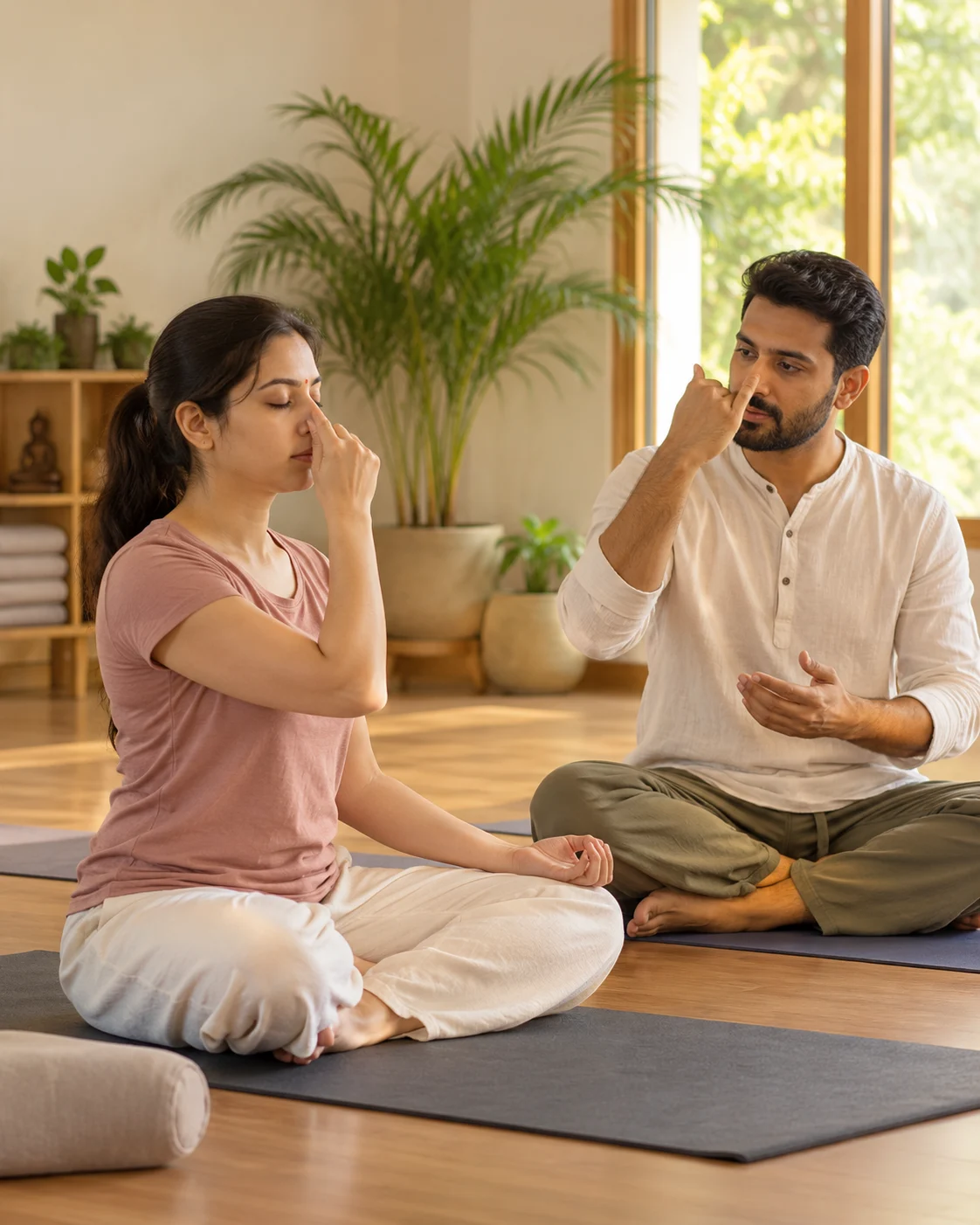
Our pranayama classes begin with where your breath is today, not where a textbook says it should be. Each session moves from simple awareness to guided technique to quiet stillness, so you learn to practise with control rather than strain. Techniques are introduced in stages, and stronger practices are offered only when they are suitable for you.
Start With a Free Pranayama Class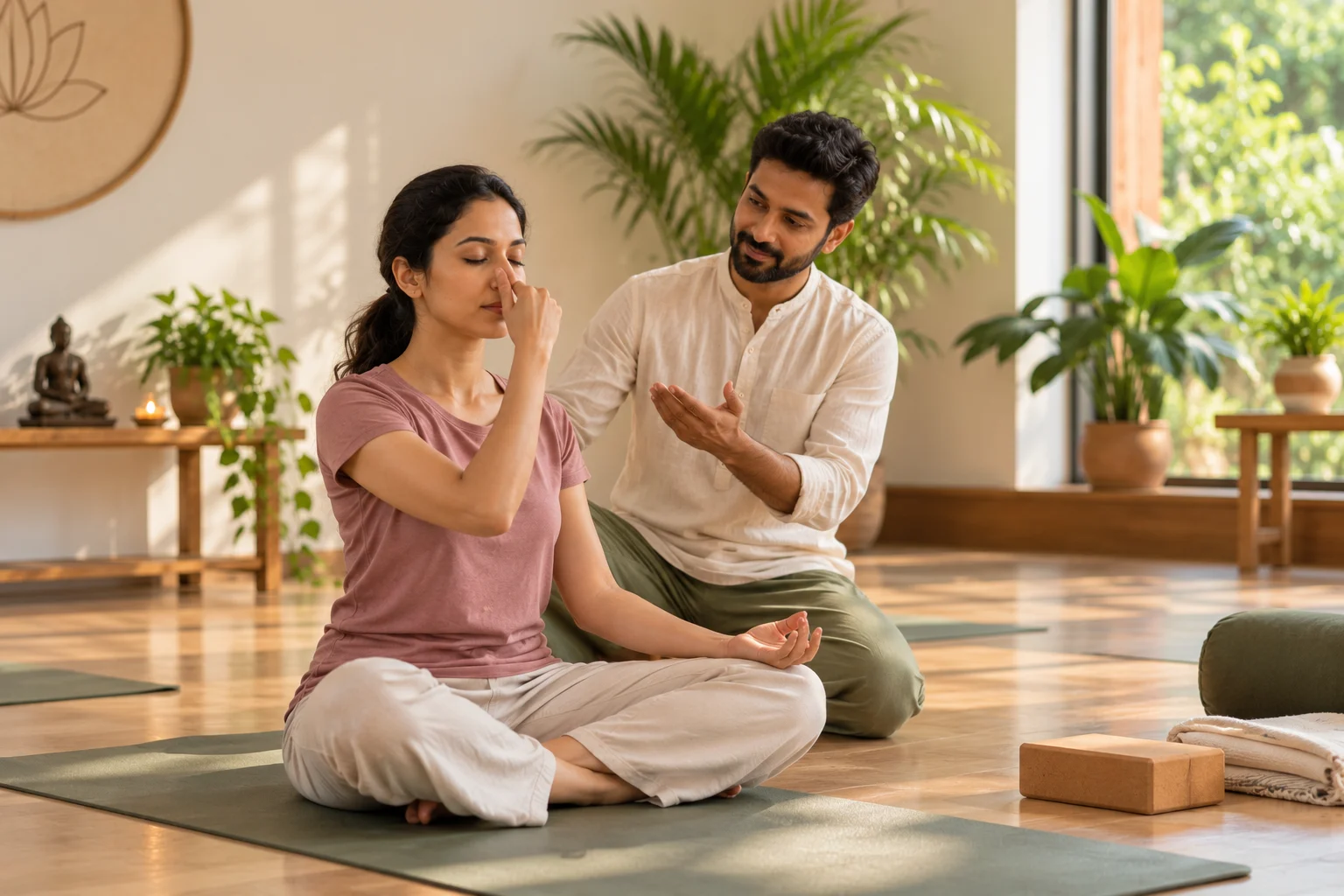
Guided, not guessed
Every breath count and every pause is led by the teacher.
Step-by-step progression
Foundations first; you advance when you are ready, not when the calendar says so.
Suitability first
A short health conversation before you begin, and alternatives for every technique.
Something to take home
A short daily practice you can do without us between classes.
The practice
What is pranayama?
Pranayama is the yogic practice of consciously guiding the breath. The word joins prana (life force, vital energy) and ayama (extension or regulation). In practice, it means learning to observe, slow down and shape your breathing through specific, structured techniques.
A practice with deep roots
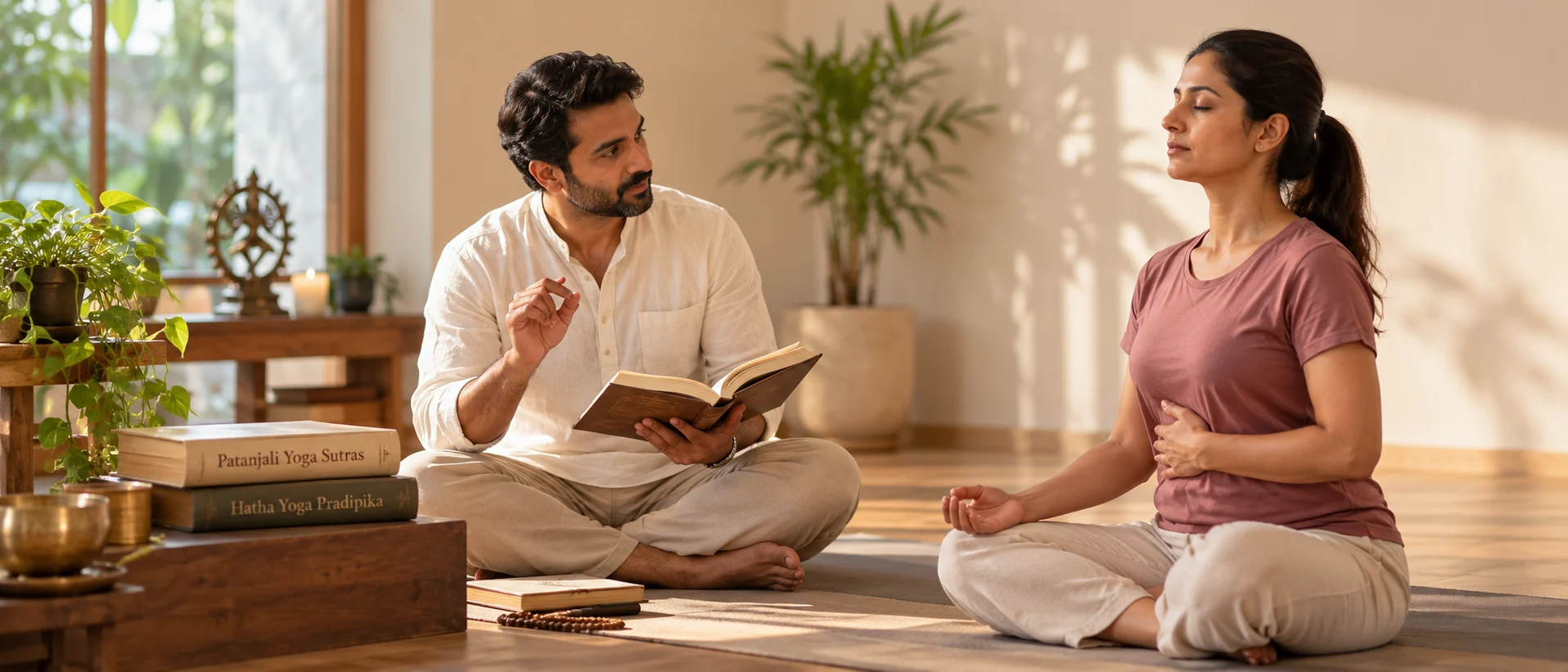
Pranayama is described in classical texts such as Patanjali’s Yoga Sutras, where it is the fourth of the eight limbs of yoga, and in later hatha yoga texts such as the Hatha Yoga Pradipika. Traditionally, it links posture (asana) and meditation (dhyana): a steady breath supports a steady mind.
What actually happens when you practise
You sit comfortably, notice your natural breath, and then follow guided patterns: slower exhales, even counts, alternate-nostril breathing or gentle sound. The practice is quiet and seated. There is no physical strain and no flexibility required.
What a beginner can expect
- Mostly seated work on a mat, cushion or chair
- Plain-language instruction; Sanskrit names explained
- Short rounds with rest in between
- You can stop, pause or return to natural breathing at any time
Why breath awareness matters
Breathing is one of the few body processes that happens automatically yet can also be guided by choice. Learning to notice it gives you a simple, portable way to pause — at your desk, before sleep, or before a difficult conversation.
New to pranayama? Your first class is freeSixty seconds inside a class
Step inside a pranayama class
No choreography, no performance. Just a small group, a steady voice and an hour that slows everything down.
What happens in a class
Your hour, one breath at a time
Every class follows a gentle rhythm, so you always know what comes next. Timings are indicative for a 60-minute class.
- 01
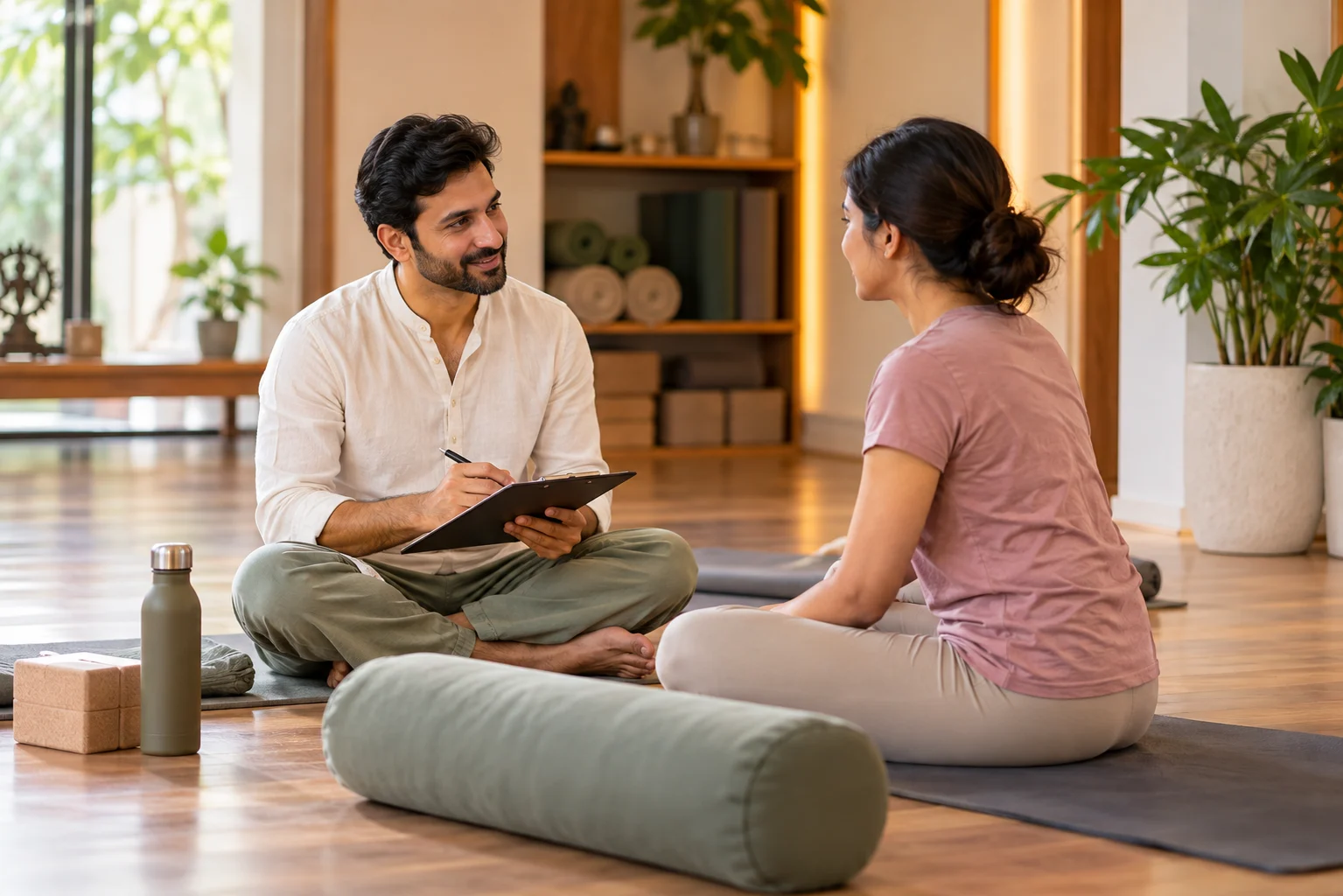
Arrive
≈5 minSettle in, choose a mat, cushion or chair. First-timers meet the teacher for a quick, private health check-in.
- 02
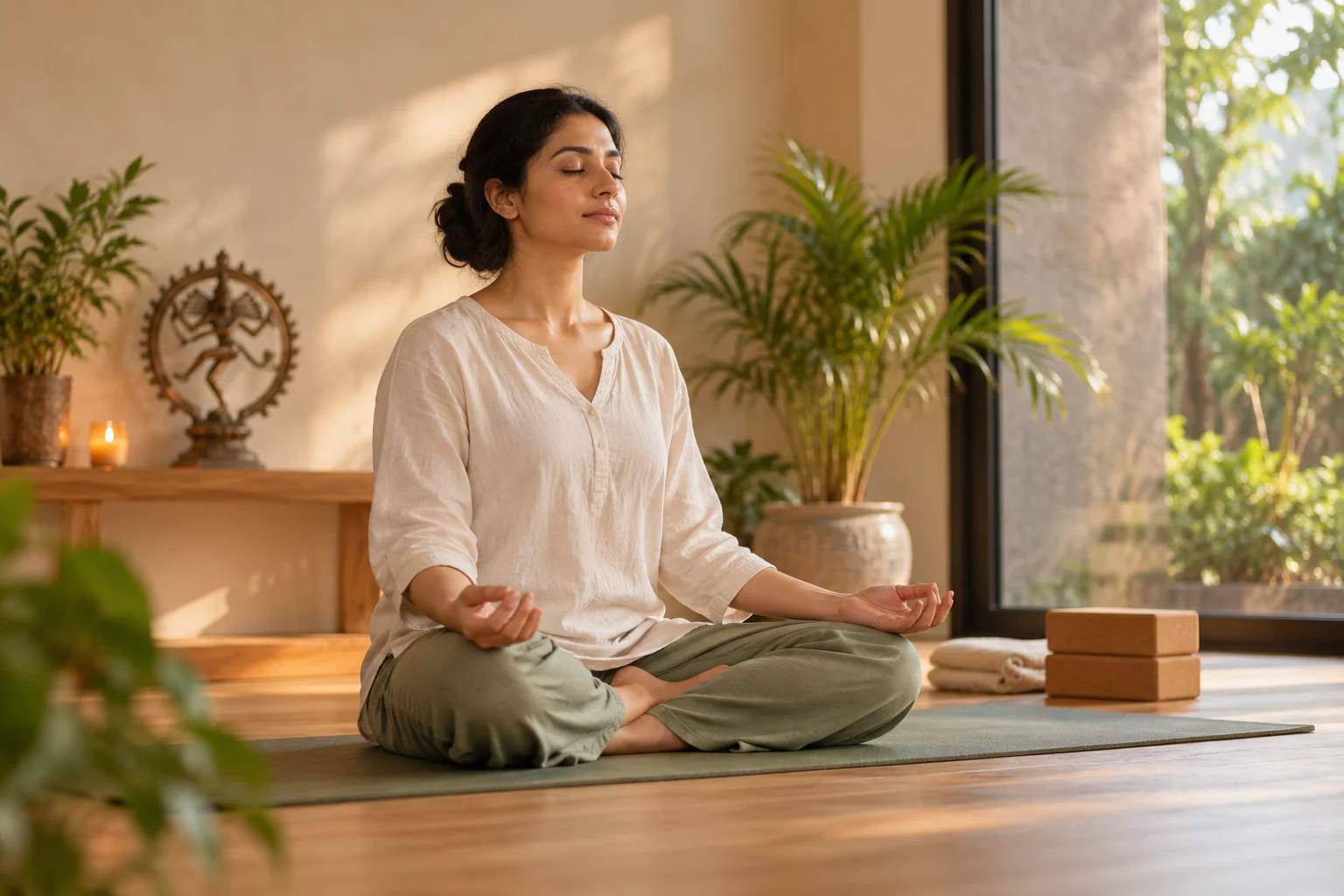
Ground
≈5 minSit comfortably, close or soften the eyes, and let the day’s pace fall away.
- 03
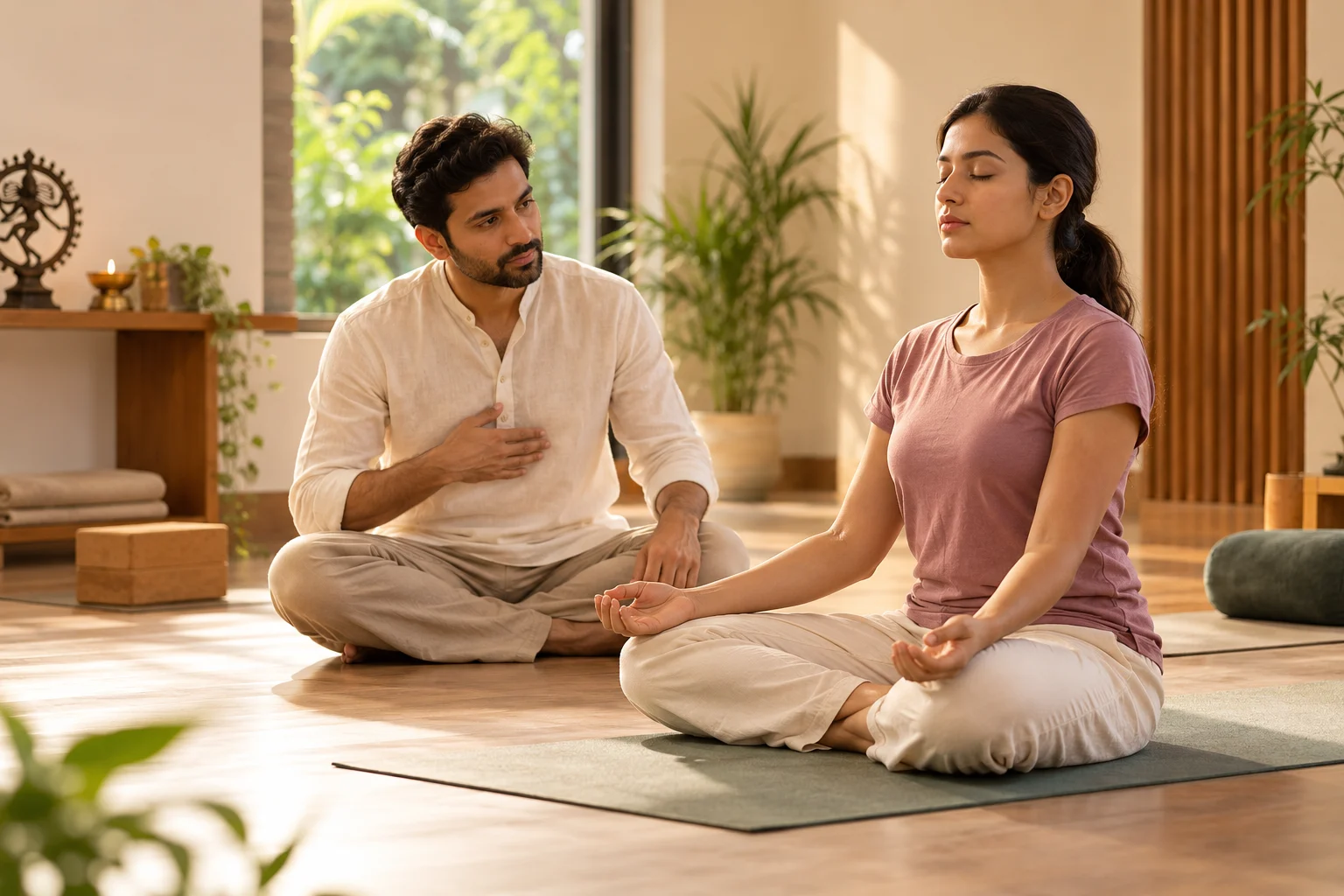
Notice
≈10 minObserve your natural breath without changing it: where it moves, how fast, how deep. This becomes your baseline.
- 04
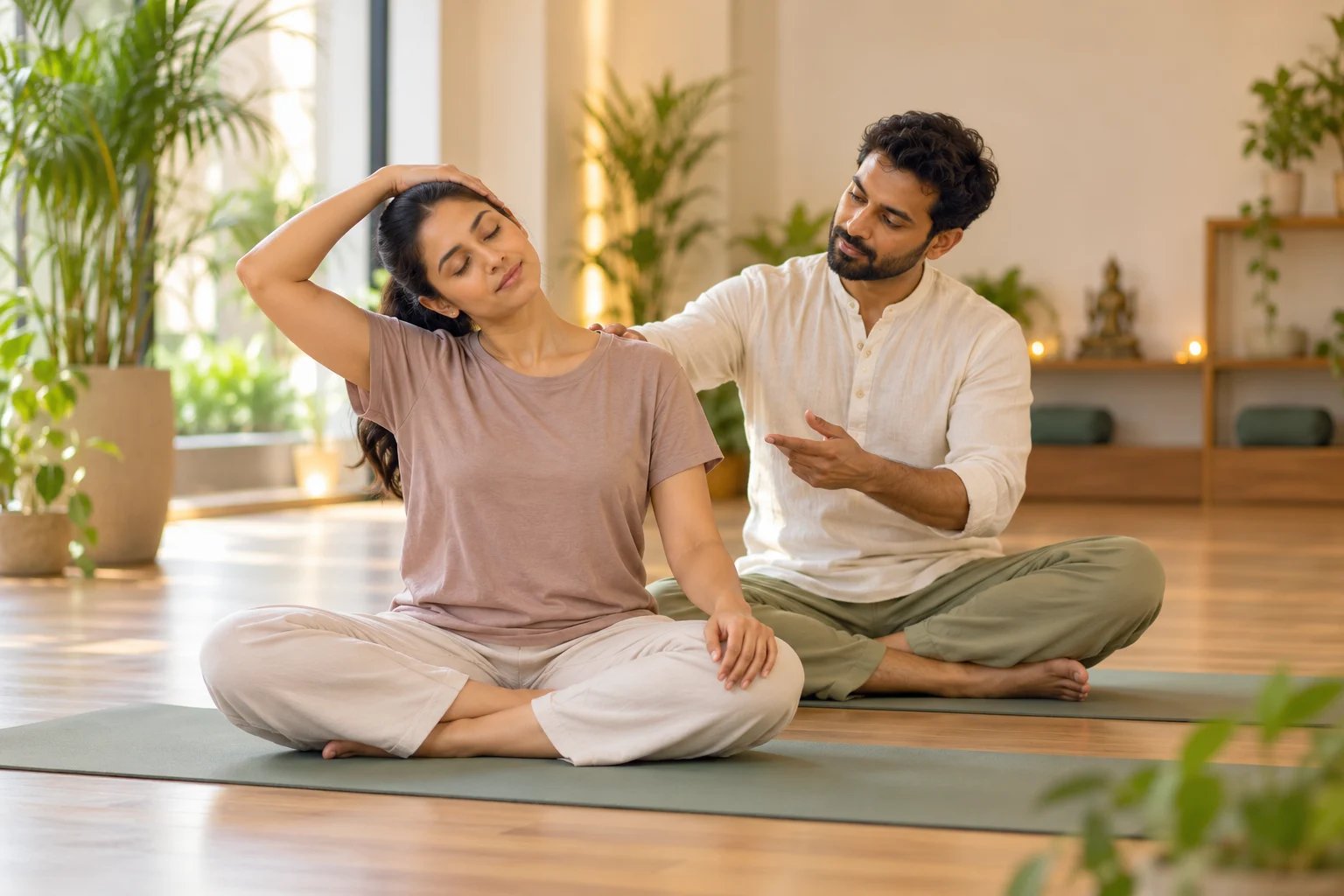
Warm up
≈5–10 minGentle neck, shoulder and spine movements to free the ribcage and make breathing easier.
- 05
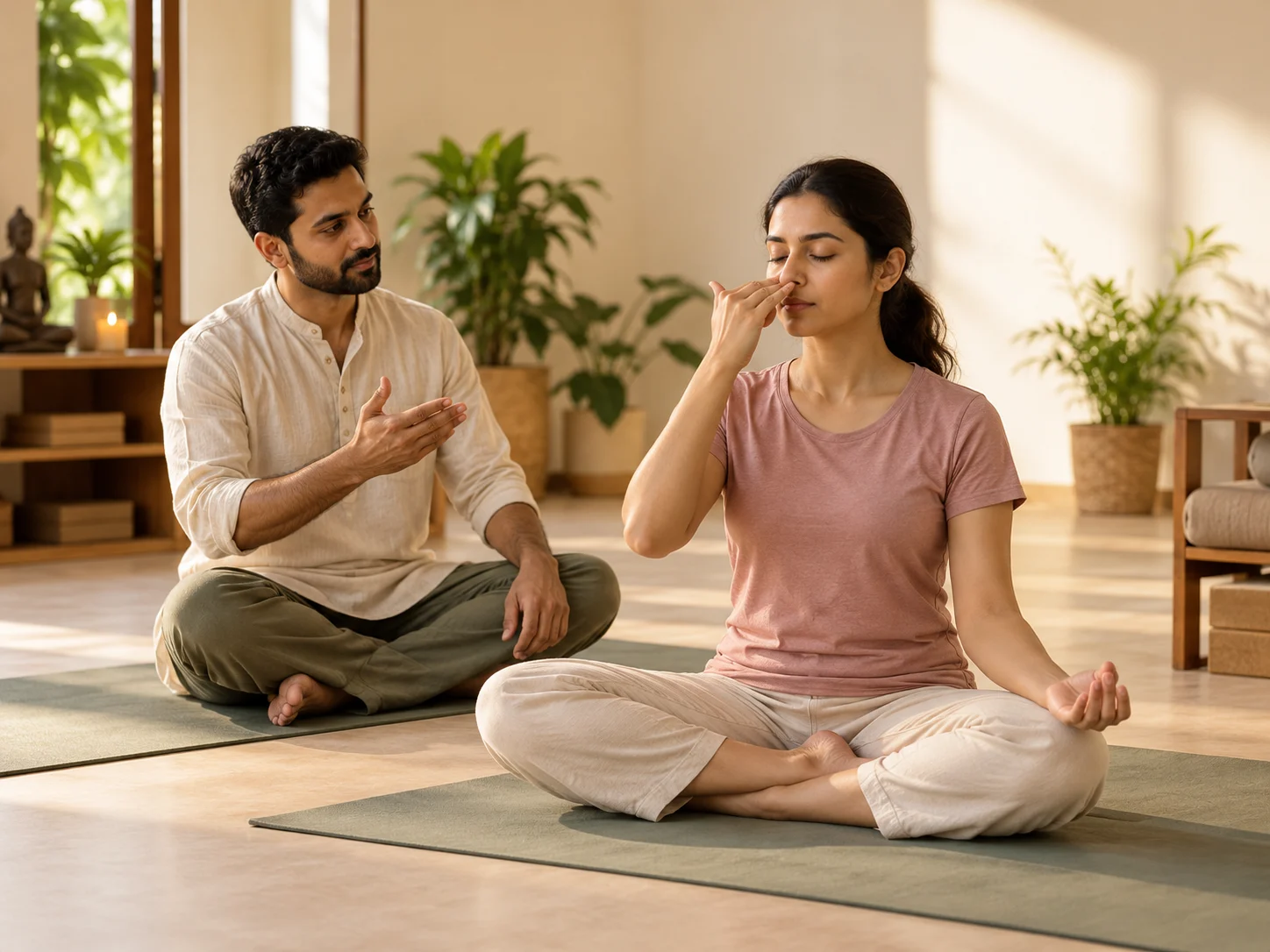
Guided practice
≈15 minFoundational techniques such as three-part breath, equal breathing and nadi shodhana, led with counts and rest rounds.
- 06
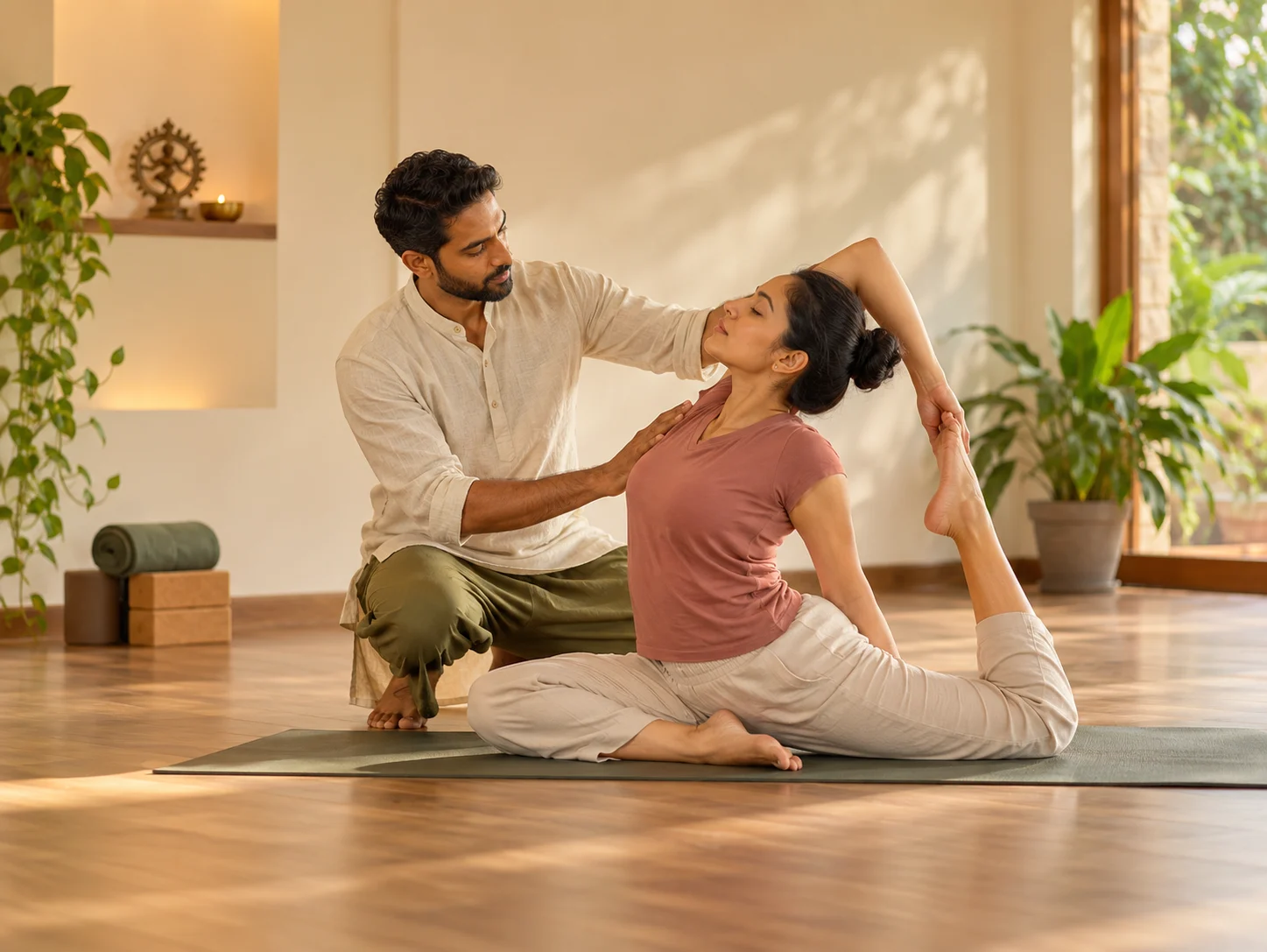
Deeper practice
≈5–10 min · optionalFor those ready, a refined or longer practice. Alternatives are always offered, and you are never asked to push.
- 07
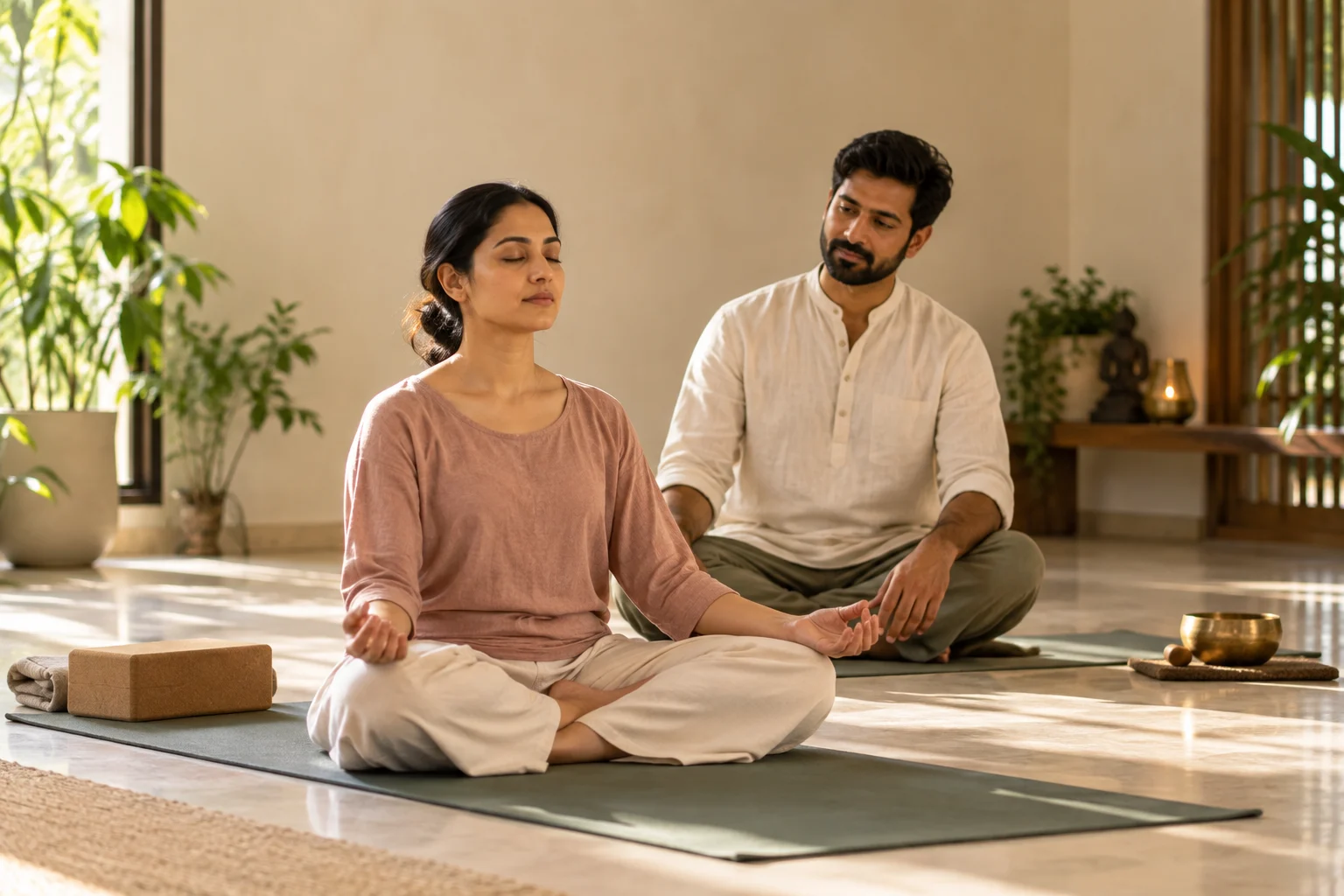
Stillness
≈5–10 minSilent sitting or guided relaxation. Let the effects settle.
- 08
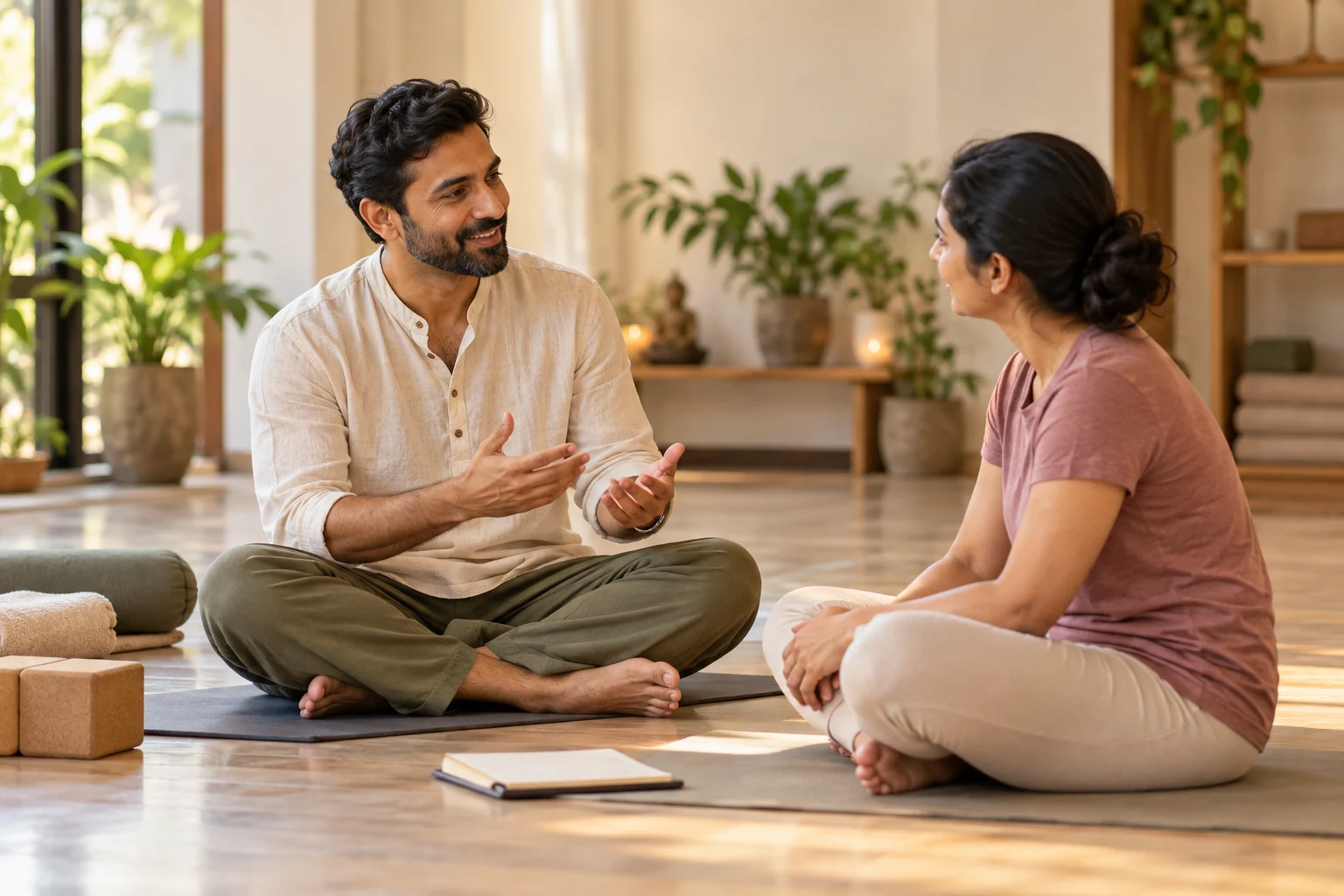
Close
≈2 minA short reflection, one practice to try at home, and questions answered.
Class content
Pranayama techniques you may learn
Techniques are introduced in three stages. Your teacher will guide you through the ones that are right for you.
Tier 1Foundations
Suitable for most beginners
Natural breath awareness
Observing the breath without changing it.
Abdominal (diaphragmatic) breathing
Feeling the belly move with the breath.
Three-part yogic breath (Dirgha)
Belly, ribs, chest in sequence.
Equal breathing (Sama Vritti)
Matching the inhale and the exhale.
Extended exhale breathing
A longer out-breath for a calmer finish.
Alternate-nostril breathing (Nadi Shodhana / Anulom Vilom)
Gentle, without breath retention.
Humming bee breath (Bhramari)
A soft hum on the exhale.
Tier 2Building
After you are comfortable with the foundations
Ujjayi (ocean breath)
A soft throat sound that steadies long breaths.
Cooling breaths (Sheetali / Sheetkari)
Cooling inhalations; your teacher advises on suitability.
Longer counts and ratios
Gradually extending the length of each breath.
Tier 3Guided & assessed
Only with your teacher’s go-ahead
Kapalabhati (skull-shining breath)
A forceful exhale technique, traditionally a cleansing kriya.
Bhastrika (bellows breath)
Vigorous, energising breathing.
Kumbhaka (breath retention) and bandhas
Holding the breath with locks.
These are powerful practices. They are not suitable for everyone, including during pregnancy and for some heart, blood-pressure, respiratory or other conditions. We teach them only after a conversation about your health and once your foundations are steady. Many students never need them to benefit from pranayama.
Pranayama pairs naturally with Meditation
Not sure which techniques suit you? Ask on WhatsAppBenefits
What regular practice can bring
Everyone’s experience is different. These are the changes students most often describe after regular practice.
- From rushed to unhurried
- From scattered to focused
- From holding to releasing
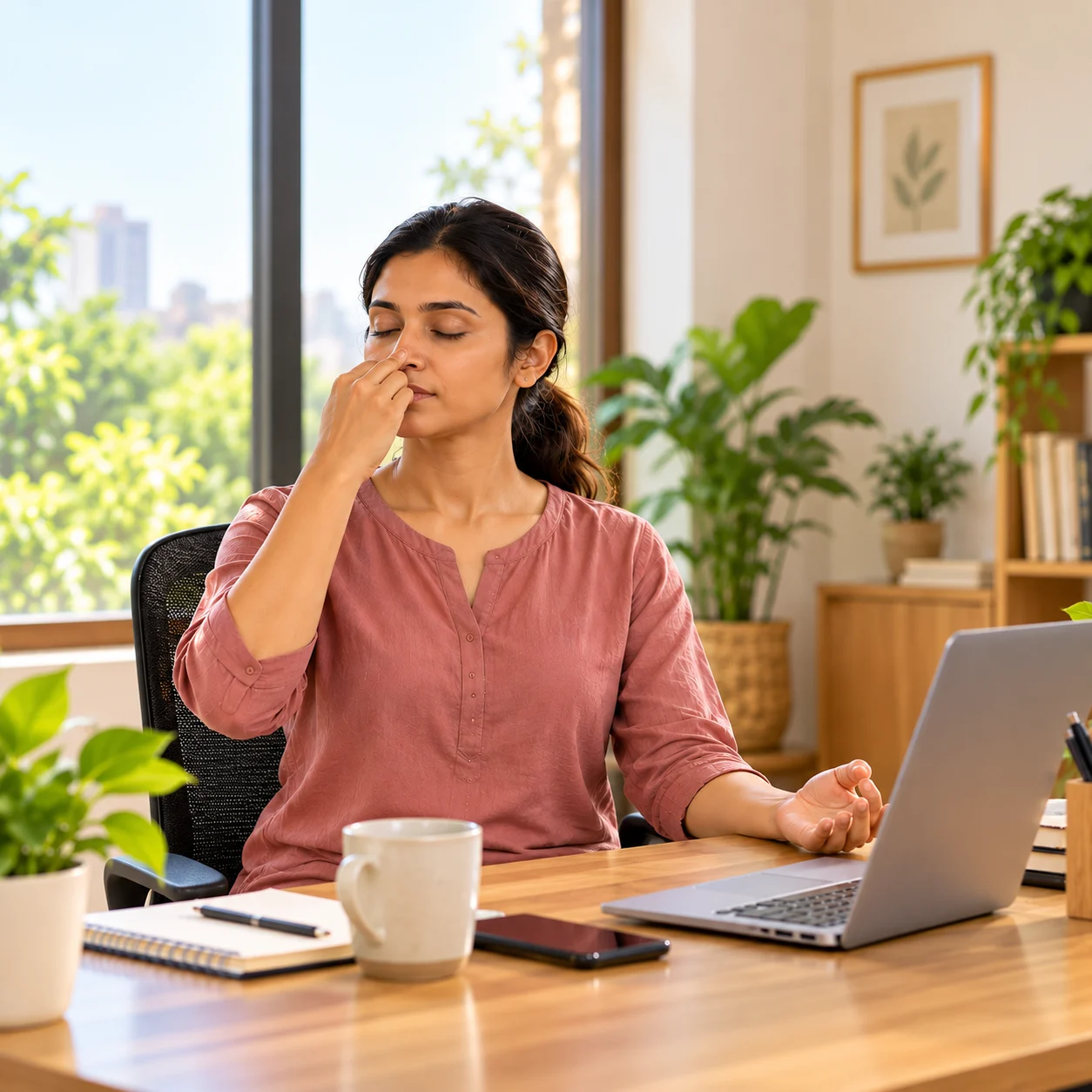
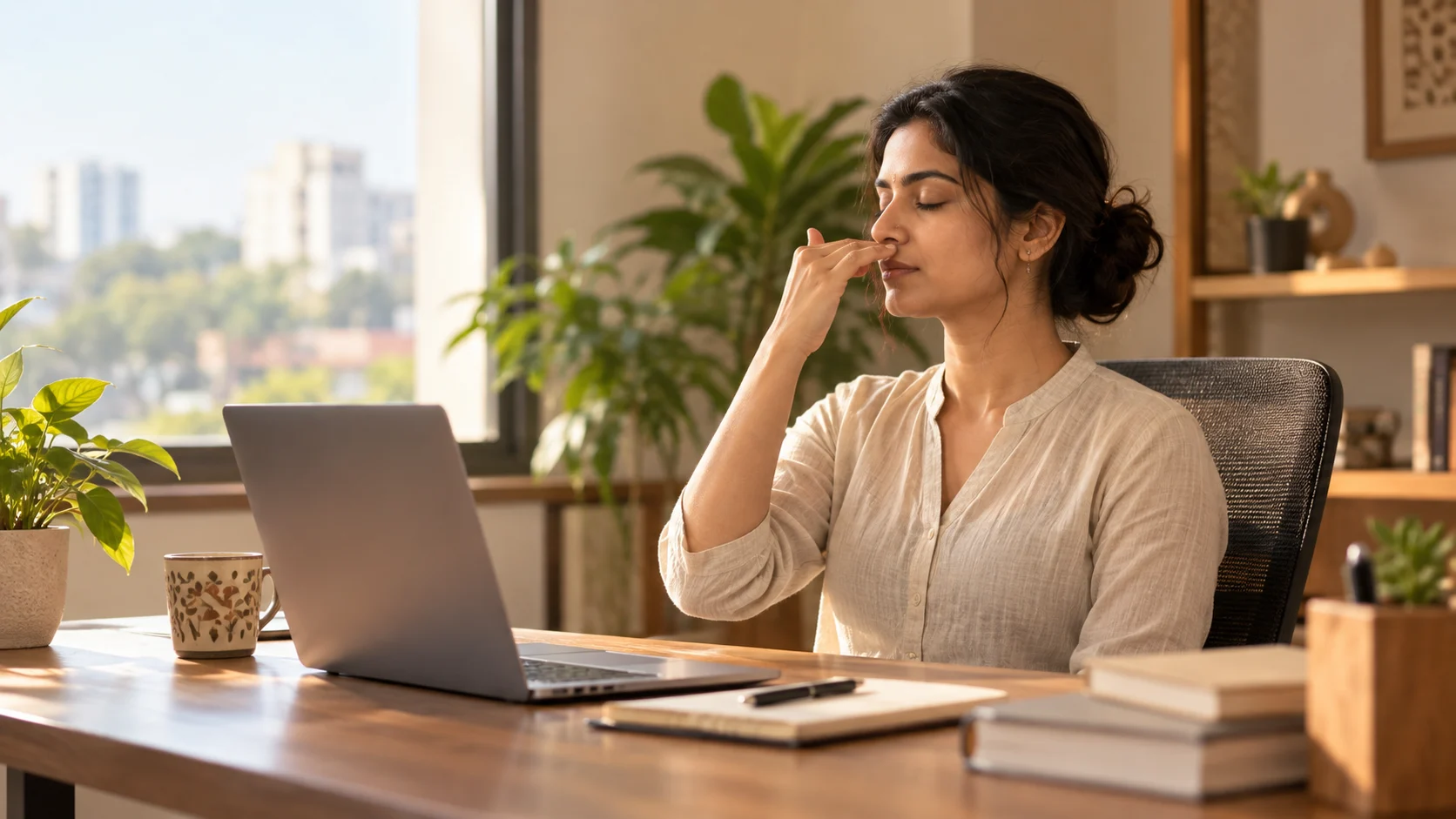
The benefit travels with you — a slower exhale at the desk takes seconds.
Greater breath awareness
Notice how you are breathing — at the desk, in traffic, before sleep.
An easier path into stillness
A reliable way to shift from busy to calm when you choose to.
Better body awareness
Sense tension in the shoulders, jaw and belly sooner.
A structured relaxation routine
A clear sequence you can repeat, instead of ‘trying to relax’.
Understanding your own patterns
Recognise habits such as breath-holding or shallow chest breathing.
A deeper yoga practice
Asana and meditation that feel more connected and steady.
Pranayama is a complementary wellness practice. It does not replace medical diagnosis or treatment. If you have a health condition, please continue to follow your doctor’s advice.
Feel the difference — try a free pranayama classWho it’s for
Who our pranayama classes are for
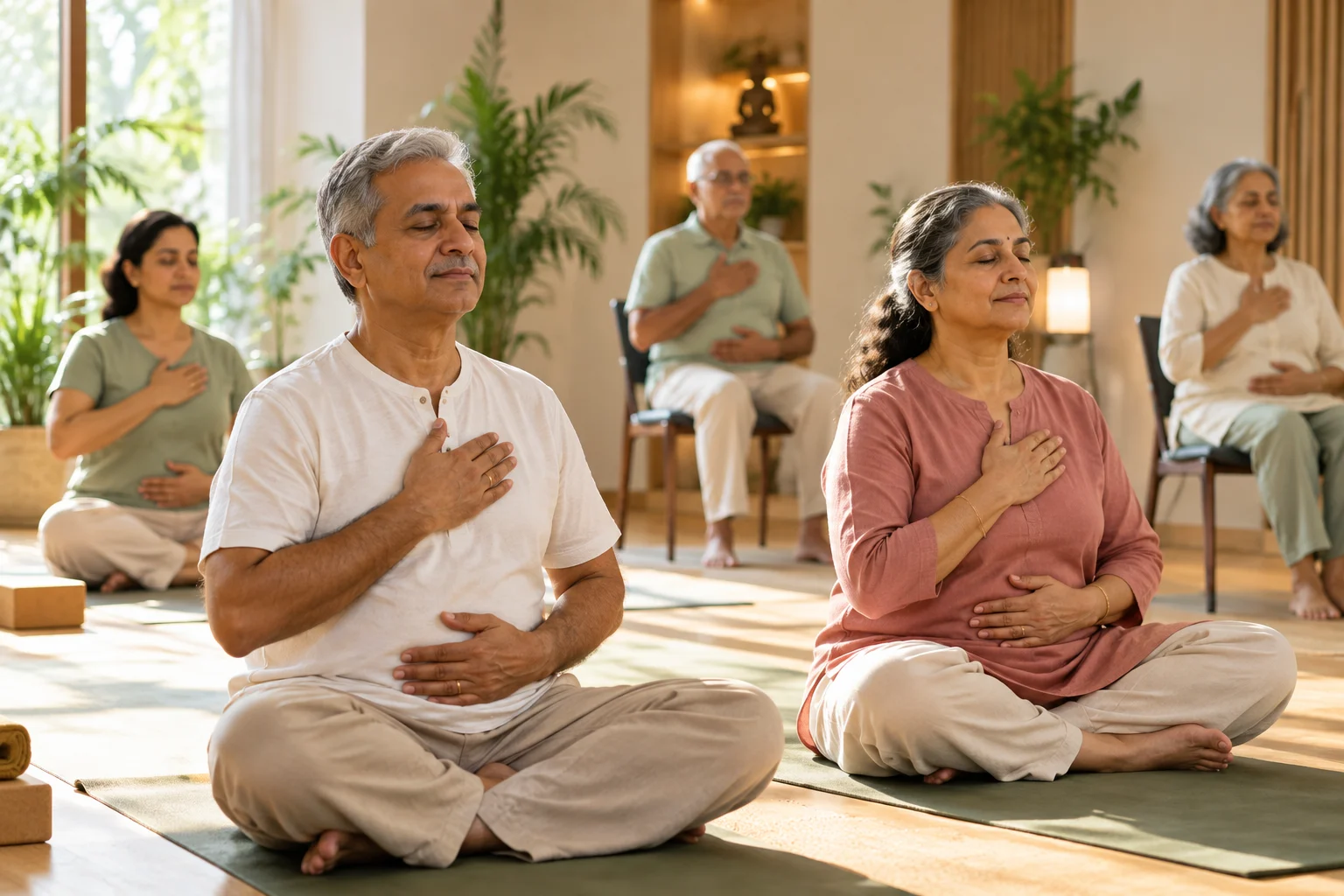
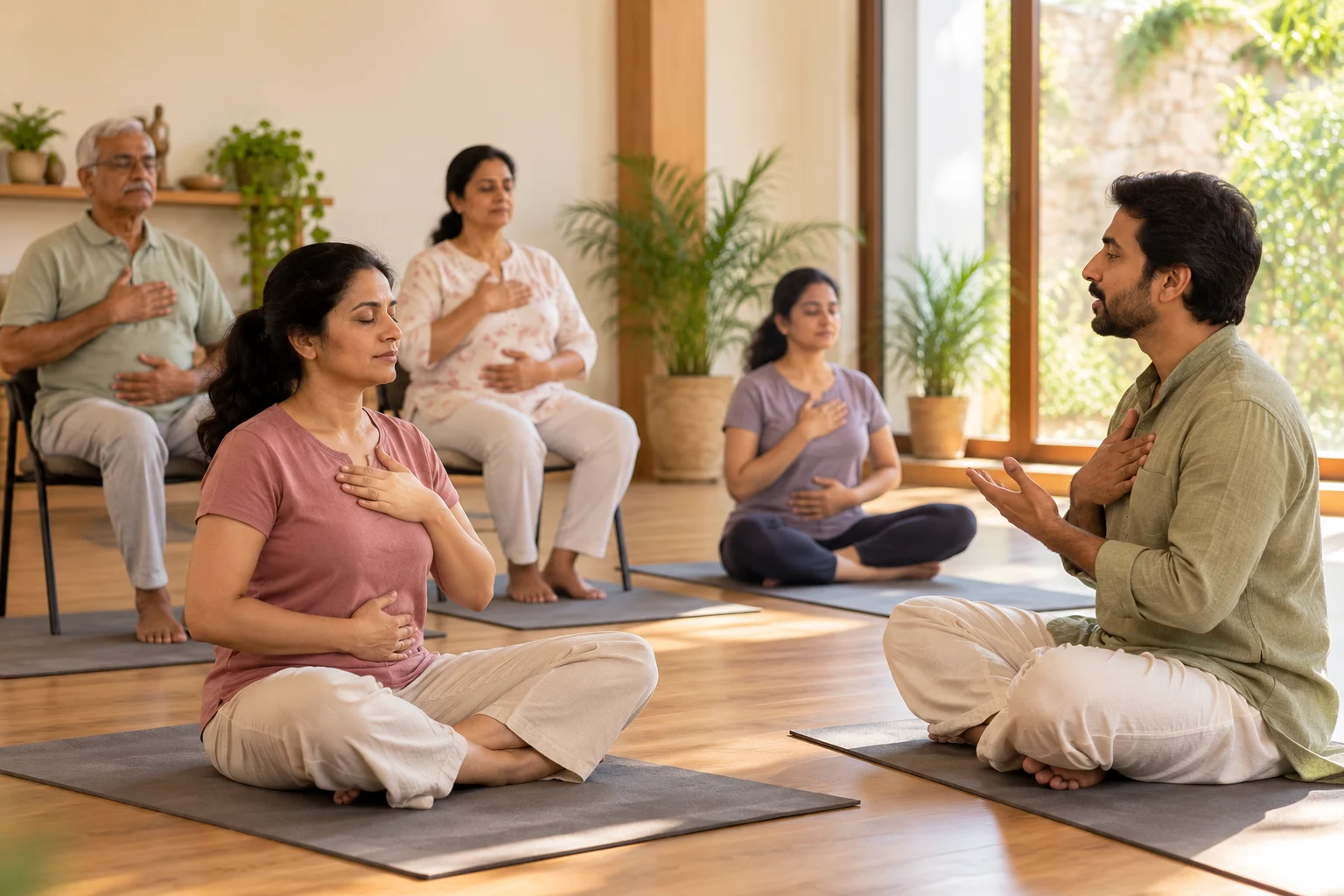
There is no such thing as being ‘bad’ at breathing. If you can sit comfortably and follow a voice, you can begin.
This class welcomes you if…
- You have never practised yoga or pranayama before
- Your work or home life feels relentlessly busy
- You want a calm, structured practice, not a workout
- You already practise asana and want to add breathwork properly
- You are older, less flexible or returning after a break (chair options available)
- You have tried breathing apps but want a real teacher to check your technique
Please speak with us (and your doctor) first if you…
- Are pregnant or recently gave birth — we will suggest suitable practices or our Prenatal Yoga class
- Have a heart condition, or high or low blood pressure
- Have asthma, COPD or another respiratory condition
- Have had recent surgery (especially abdominal, chest, eye or ear)
- Have epilepsy, glaucoma, a hernia or a history of fainting
- Experience panic attacks, or have a history of trauma where breathwork may bring up strong sensations
- Are under medical supervision or taking medication that affects breathing or blood pressure
This does not necessarily mean you cannot join. It means we will adapt the practice for you, and in some cases ask you to check with your doctor first. In every class: if you feel dizzy, lightheaded, anxious or uncomfortable, stop and return to natural breathing.
Have a health question? Talk to us before bookingPractical details
Class details at a glance
- Duration
- 60 minutes
- Level
- Beginner to intermediate — foundations first
- Class size
- Small groups, so the teacher can check every student
- Batches
- Mon, Wed, Fri · 7:45 – 8:30 AM See full schedule
- Frequency
- We suggest 2–3 classes a week, plus a short home practice
- Location
- Anahat Yoga, Colours Preschool, Sr 135, Plot 128 Ram Indu Park, Near Balewadi High Street, Baner, Pune 411045
- Online
- Live online batches — camera optional
- Also convenient for
- Balewadi · Wakad · Pashan · Aundh
- What to bring
- Water bottle, small towel; a shawl for stillness
- What to wear
- Loose, comfortable clothing that doesn’t press on the belly
- Before class
- Avoid a heavy meal for about 2 hours
- Experience
- None required
- Fees
- First class free · monthly, 3- and 6-month plans shared when you enquire
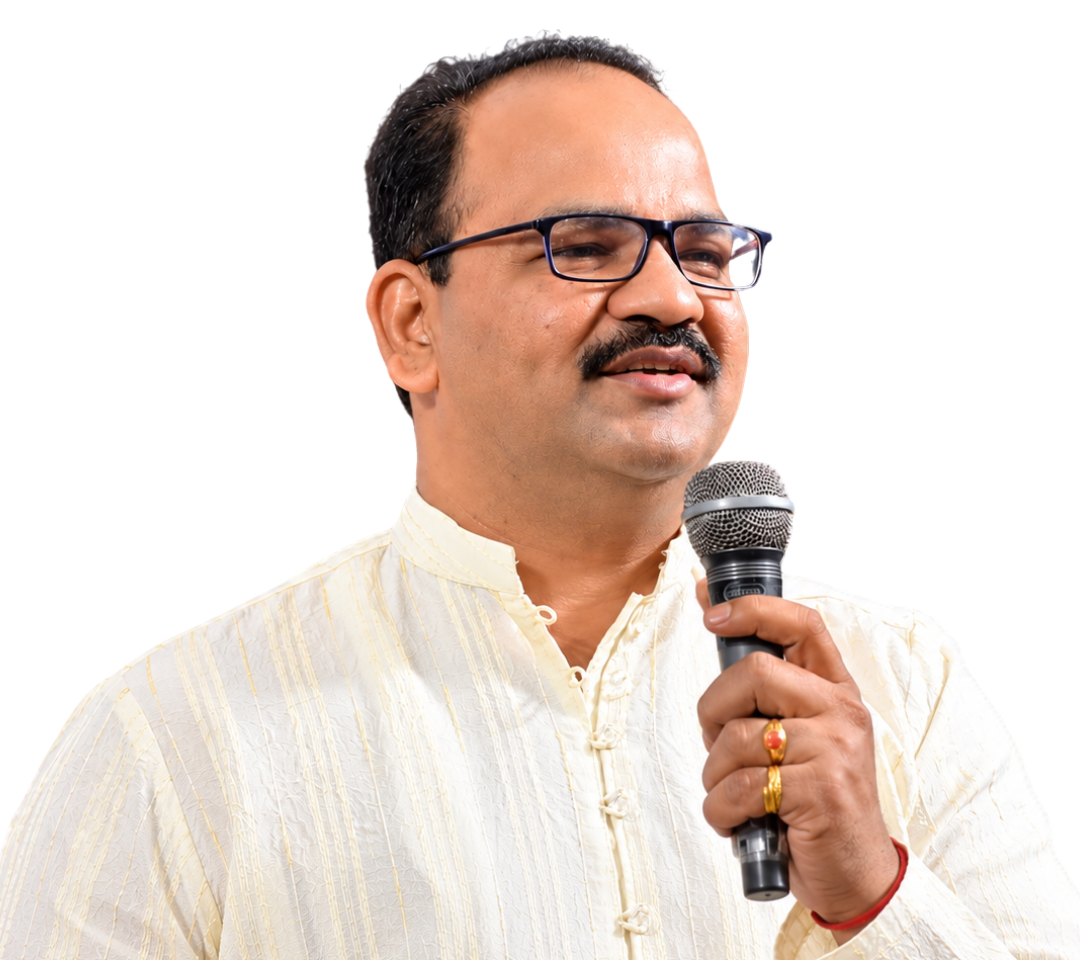
Your teacher
Learn with Dr. Vishvanath Pise
Dr. Vishvanath Pise is the founder and director of Anahat Yoga, near Balewadi High Street in Baner. He designs and guides every program at the studio — from regular batches to pranayama and meditation — and leads a team of teachers who follow the same careful, step-by-step approach to the breath.
Breath before technique. When you understand your own breathing, every practice becomes safer and more meaningful.
- Founder & director, Anahat Yoga
- Small, teacher-led batches
- Studio & live online
In our students’ words
We publish only real reflections, shared with permission by people who practise pranayama with us. While we gather them, you can read what students say about Anahat Yoga on Google.
Questions
Pranayama classes — frequently asked questions
Do I need previous yoga experience to join pranayama classes?
No. Our pranayama classes in Baner start with simple breath awareness and build up gradually. Many students begin with no yoga background at all. Your teacher explains every technique in plain language and offers easier alternatives whenever you need them.
I have never tried pranayama. What will my first class be like?
You will have a brief health check-in with the teacher, then follow the class from settling in to breath awareness, gentle foundational techniques and quiet stillness. You will not be asked to attempt advanced practices, and you can rest at any time.
Can I join if I am not flexible?
Yes. Pranayama is practised seated or lying down and needs no flexibility. If sitting on the floor is uncomfortable, you can use a cushion, a block or a chair. Comfort and an upright spine matter far more than posture.
How long is each class, and how often should I attend?
Each class lasts 60 minutes. We suggest attending two or three times a week and practising a short routine at home on other days. Regular, unhurried practice matters more than long sessions.
What should I bring and wear?
Wear loose, comfortable clothing that does not press on your belly, and bring a water bottle and a small towel. Please avoid a heavy meal for about two hours before class.
Are all breathing techniques suitable for everyone?
No. Gentle practices such as abdominal breathing and alternate-nostril breathing without retention suit most people. Stronger techniques such as kapalabhati, bhastrika and breath retention are not suitable for everyone, so we introduce them only after understanding your health and experience.
I am pregnant / have high blood pressure / asthma. Can I join?
Please speak with us and your doctor before your first class. In many cases we can adapt the practice or suggest a more suitable class, such as Prenatal Yoga. Some forceful techniques and breath retention will be avoided for you.
Can I practise pranayama on my own at home?
Yes, once you have learned the foundations with a teacher. We give you a short home practice after class. We recommend learning stronger techniques in class first, so that your teacher can check your technique and pace.
Is pranayama the same as anulom vilom or meditation?
Anulom vilom (nadi shodhana) is one type of pranayama. Pranayama covers many breathing techniques, and it naturally leads into meditation: many students find the mind settles more easily after breathwork. Our classes include a short period of stillness at the end.
Do you offer online pranayama classes?
Yes. We run live online batches, so you can practise from anywhere with guidance from our teachers. Online students follow the same step-by-step structure as studio classes, with time for questions at the end.
Is the first class really free? What happens after?
Yes, your first trial class is free, with no obligation. If you would like to continue, you can choose a monthly or multi-month plan and pay securely online or at the studio.
I live in Wakad or Balewadi. Is the studio easy to reach?
Our studio is near Balewadi High Street in Baner, a few minutes from Balewadi and an easy drive from Wakad. Students who prefer not to travel can join our live online batches instead.
Still have a question?
We usually reply on WhatsApp within the day.
Free trial class
Your first pranayama class is on us
Give yourself one unhurried hour. Learn to notice your breath, try a few simple techniques with a teacher beside you, and leave with a short practice to use at home. If it feels right, we will help you choose a batch.
Before you book — take one slow breath with us.
- WhatsApp +91 98814 75758
- Call +91 98814 75758
- Studio hours: Mon–Sat, 6:00 AM – 8:30 PM
No payment needed. We will call or WhatsApp you to confirm your slot.
Continue your practice
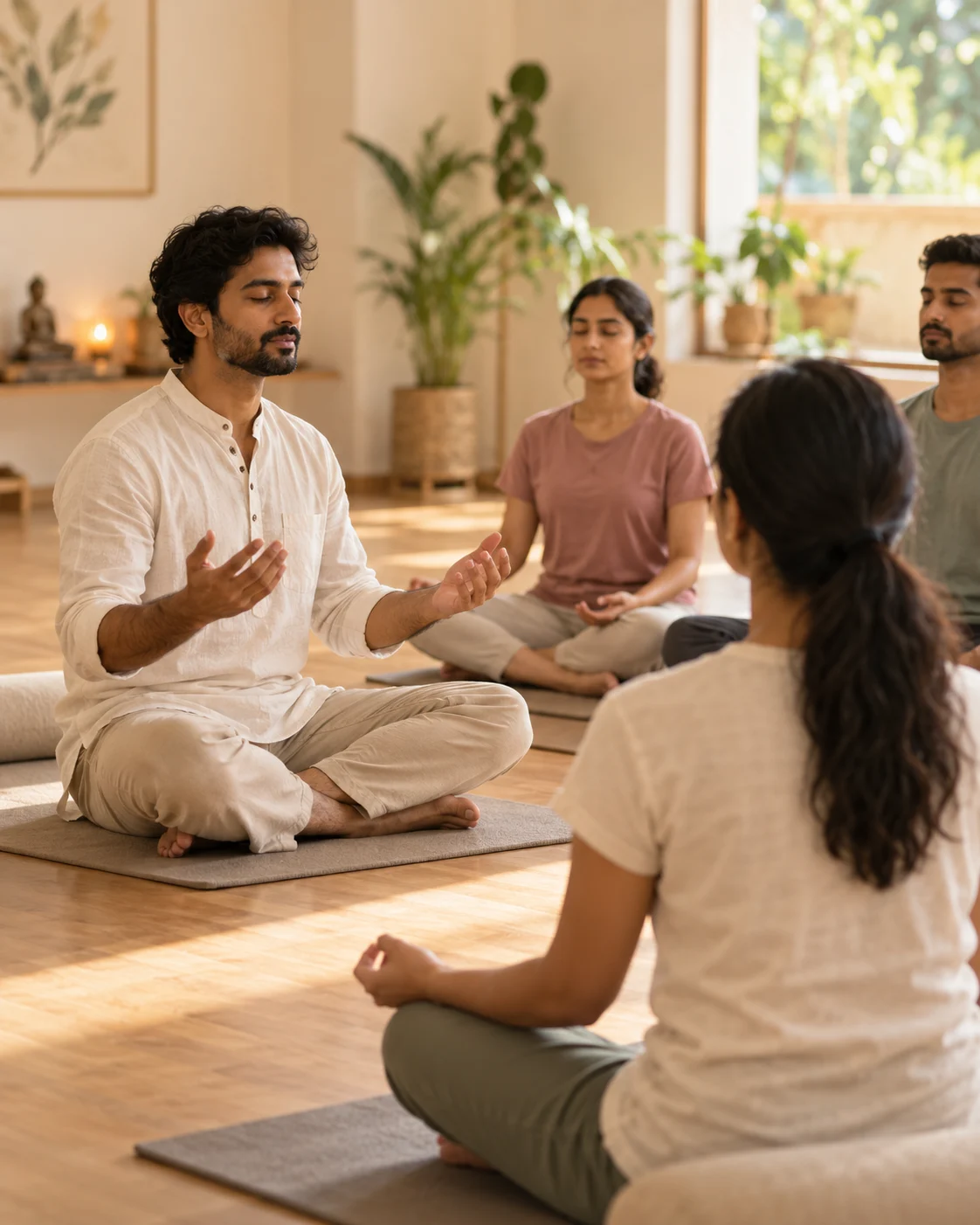
Meditation
Simple, guided techniques for a quieter, clearer mind.
Explore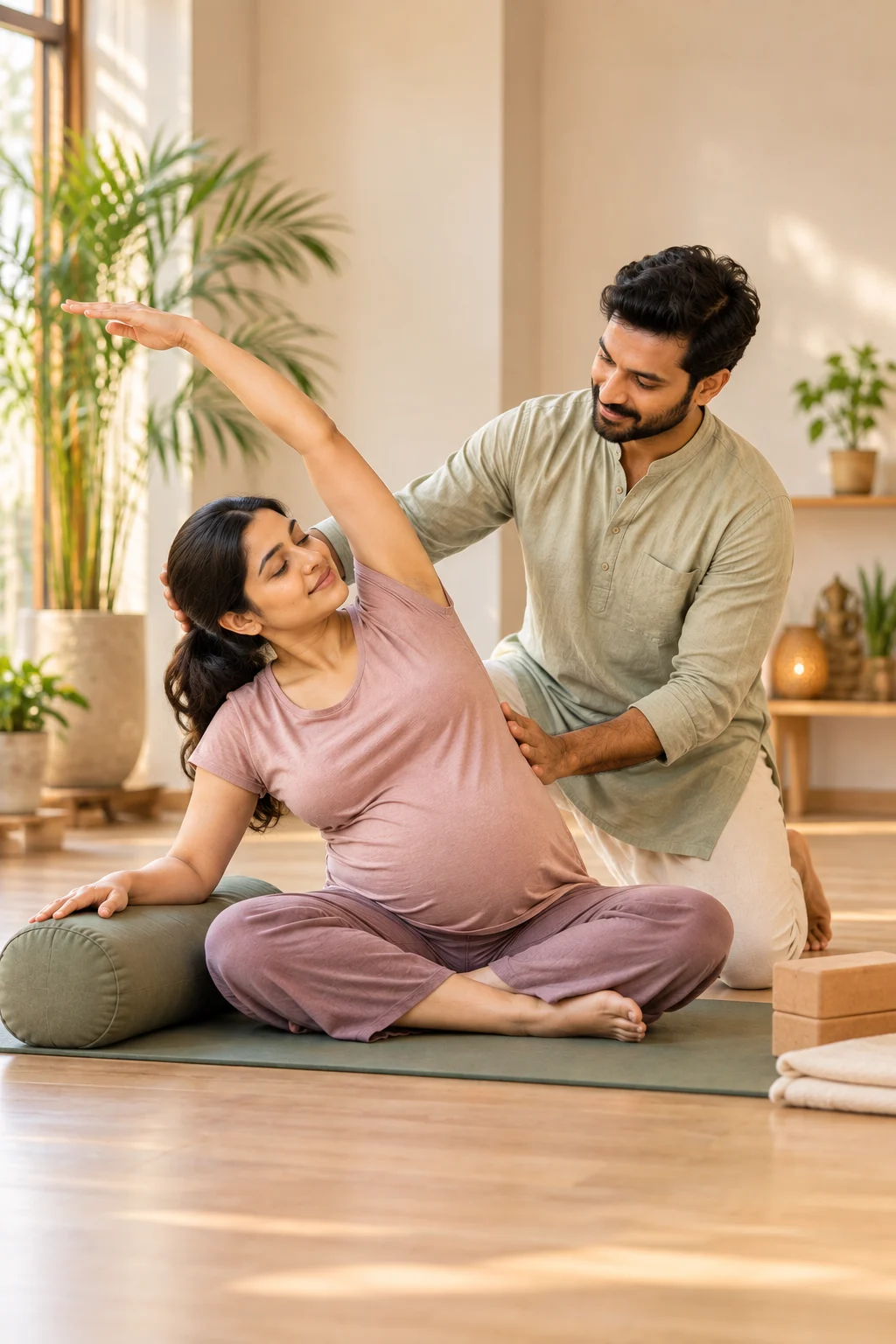
Prenatal Yoga
Gentle, adapted practice for each trimester.
Explore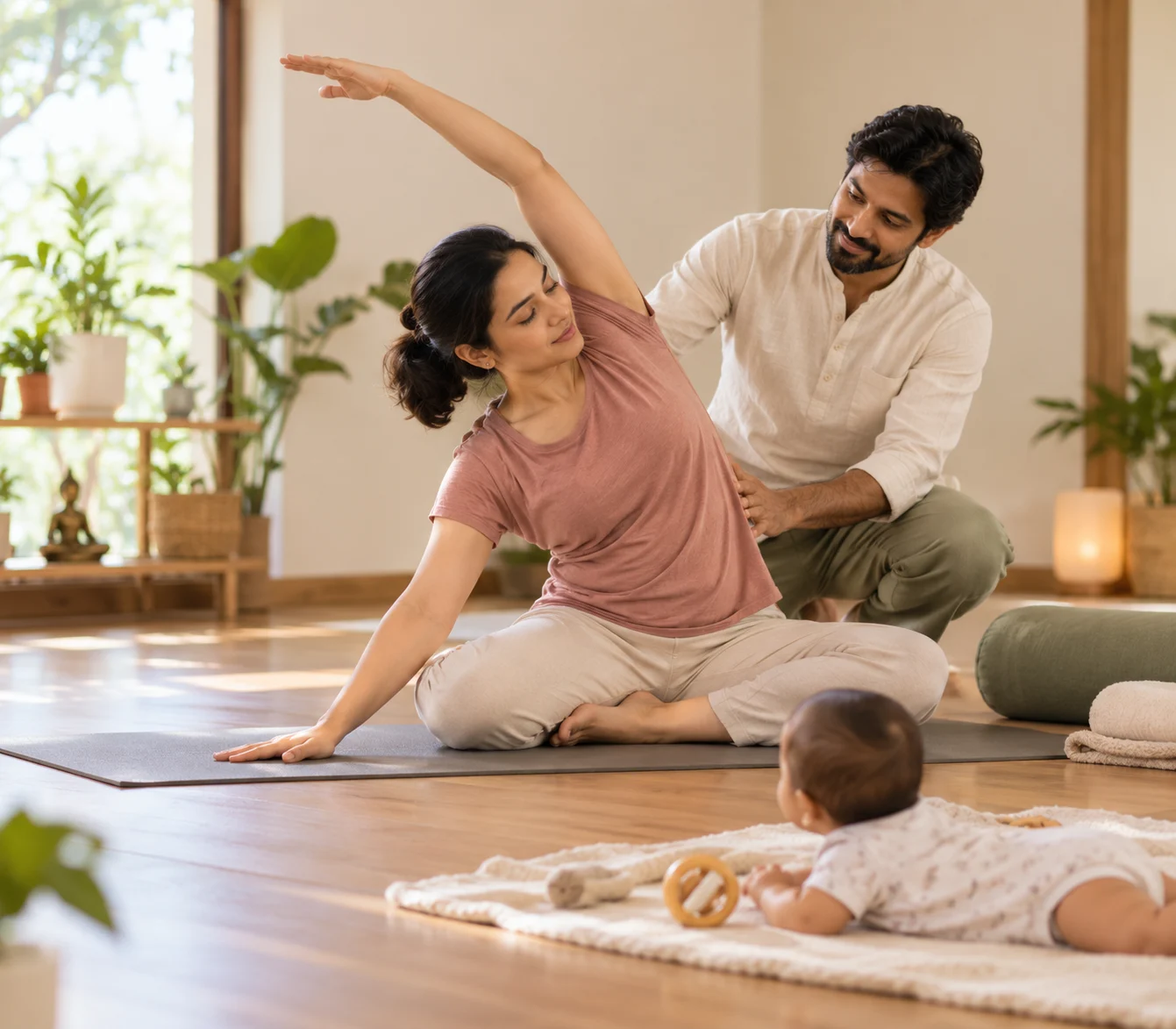
Postnatal Yoga
Rebuild core, pelvic floor and energy after childbirth.
Explore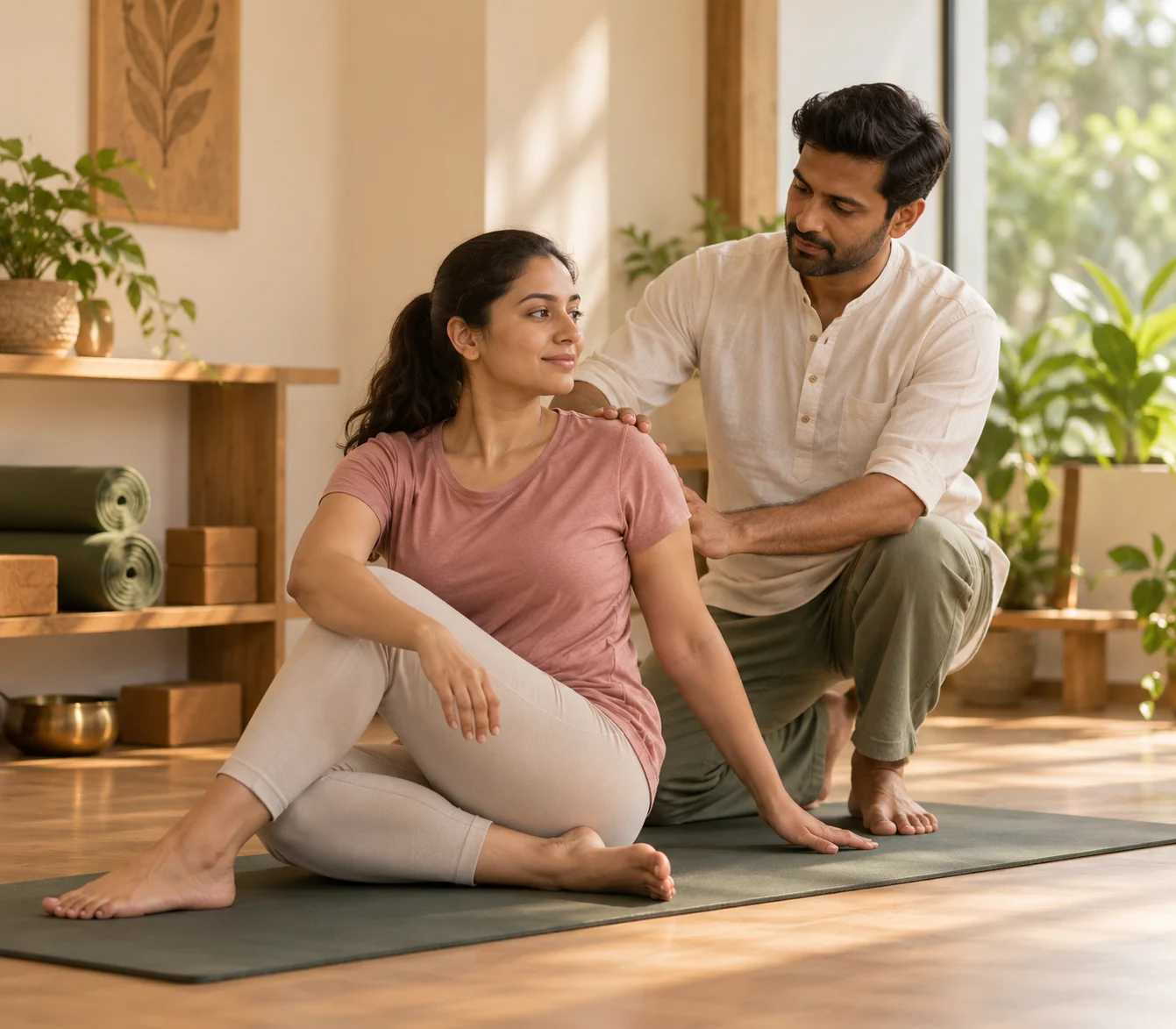
PCOS / PCOD Yoga
A steady practice alongside your medical care.
Explore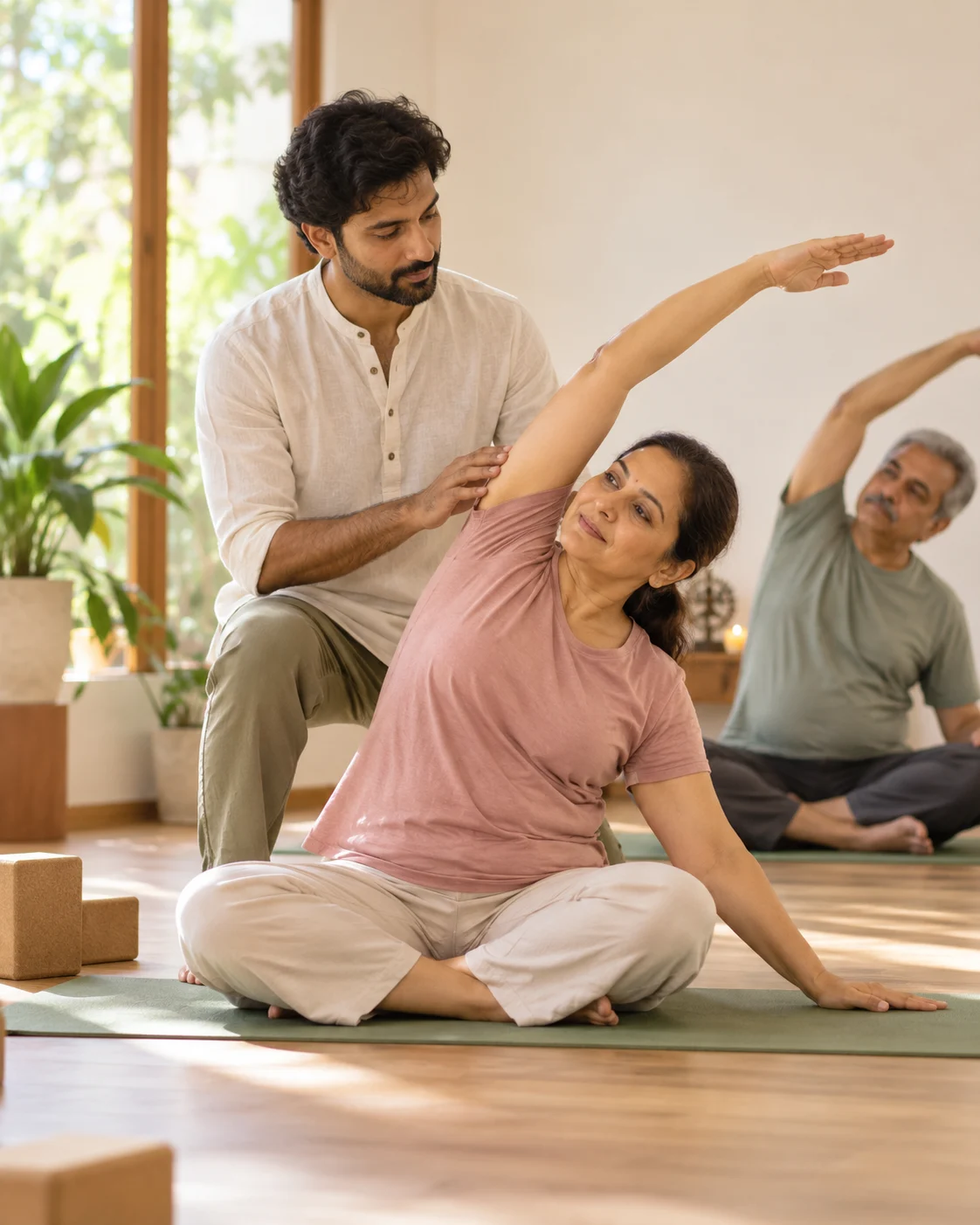
Diabetes Yoga
Gentle, guided practice alongside diabetes care.
Explore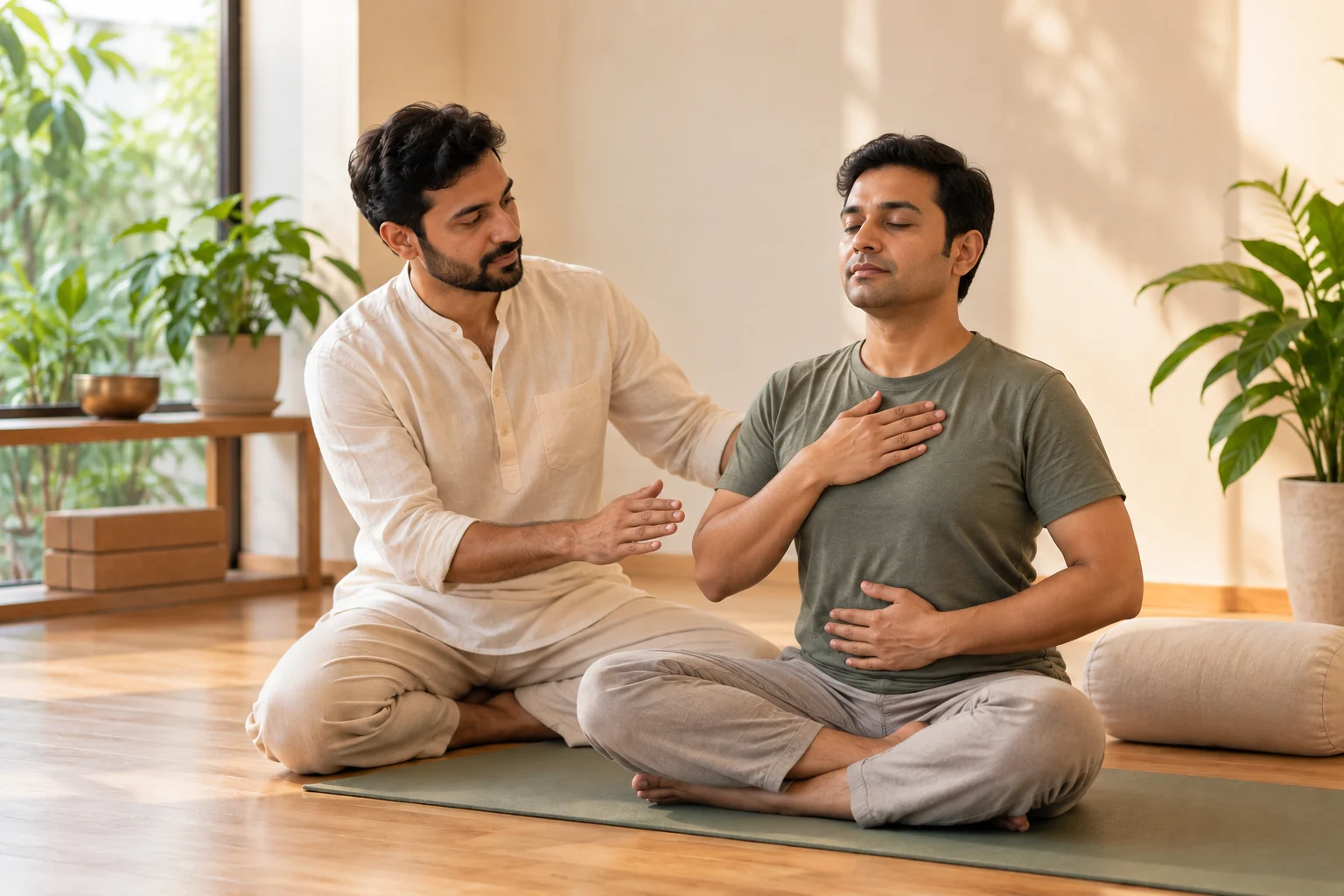
Hypertension Yoga
A slow, calming practice for blood-pressure concerns.
Explore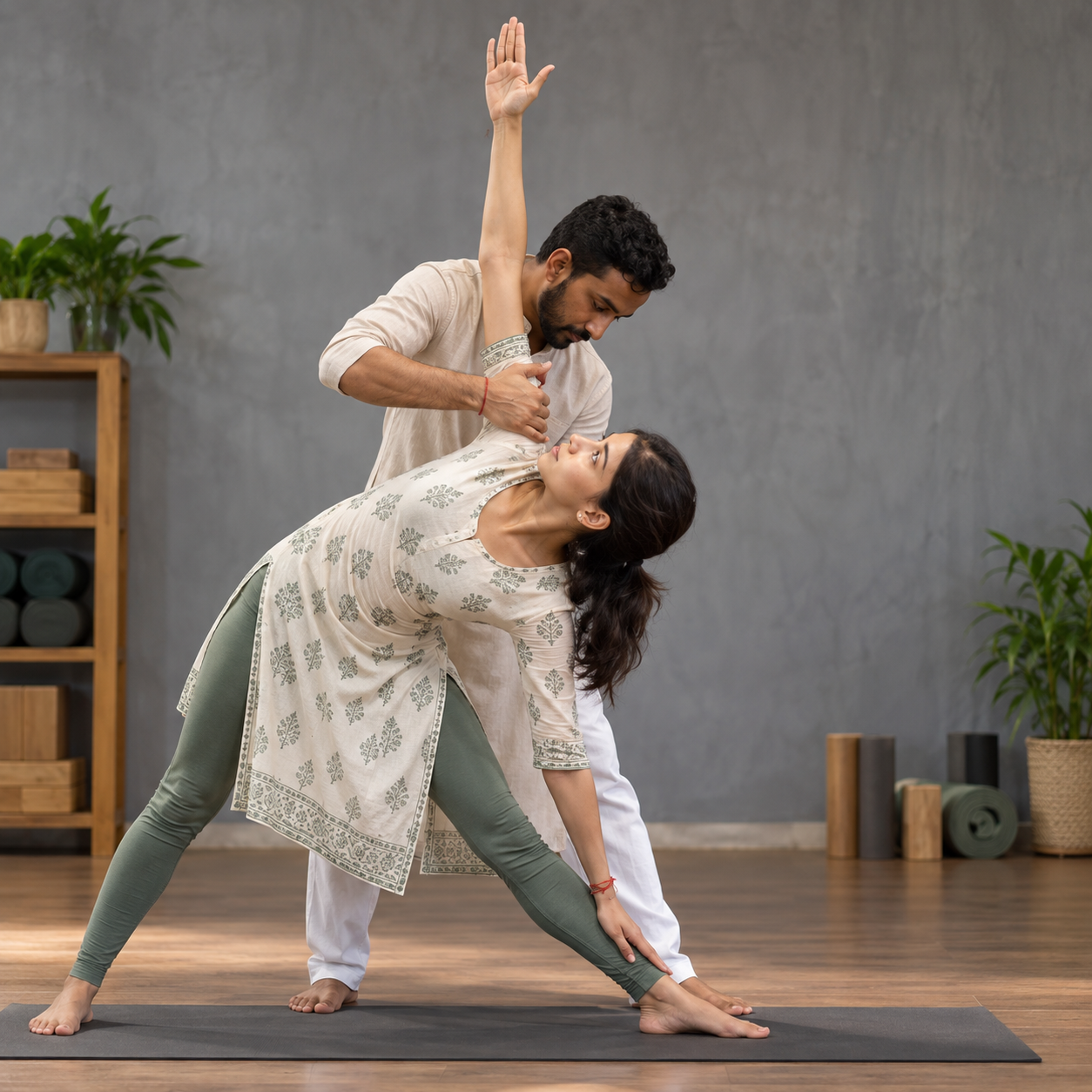
Personal Yoga Training
One-to-one sessions at the studio, at home or online.
Explore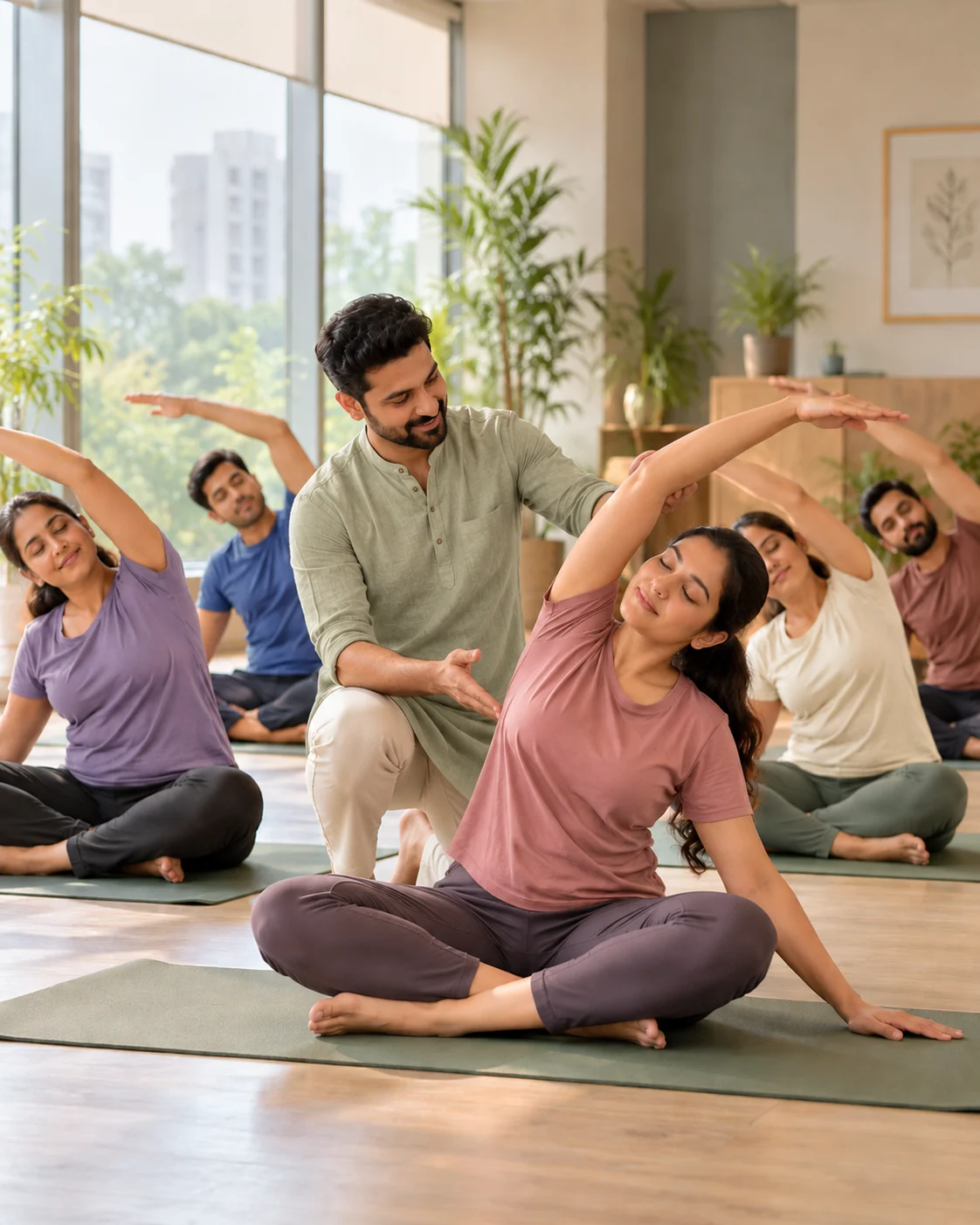
Corporate Yoga
On-site and online sessions for teams.
Explore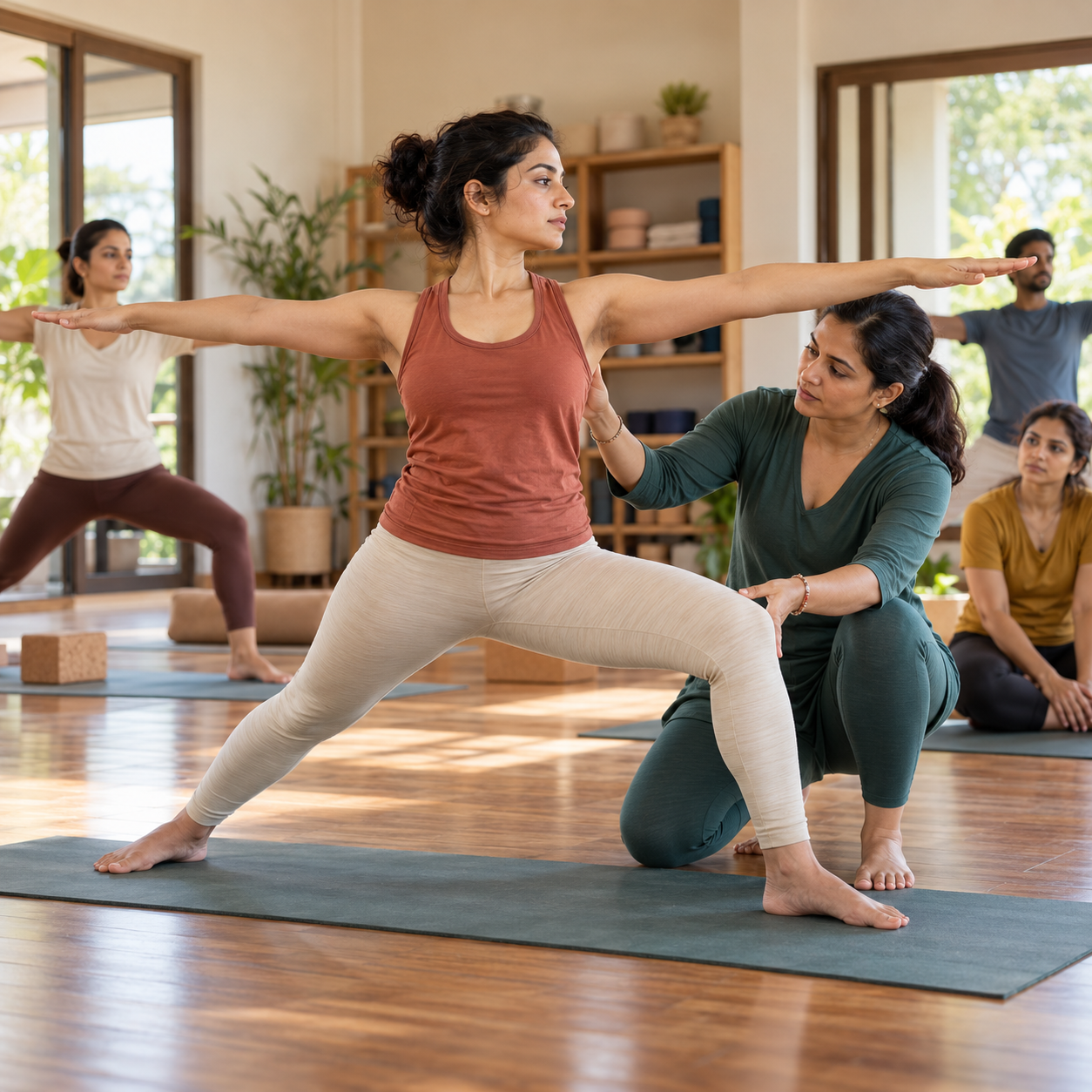
Teacher Training
Study yoga in depth and learn how to guide others.
Explore
Yoga and pranayama are complementary wellness practices and are not a substitute for medical advice, diagnosis or treatment. Please consult a qualified health professional about any medical condition.