Hypertension Yoga Classes in Baner, Pune
Slow the pace of your day — gentle movement, breath and rest, alongside your care.
Guided yoga for people living with high blood pressure, near Balewadi High Street. Gentle movement, slow breathing and relaxation, adapted to your health and paced so you never strain. A complement to your medical care, never a replacement for it.
First class free · No experience needed · Keep following your doctor’s advice.
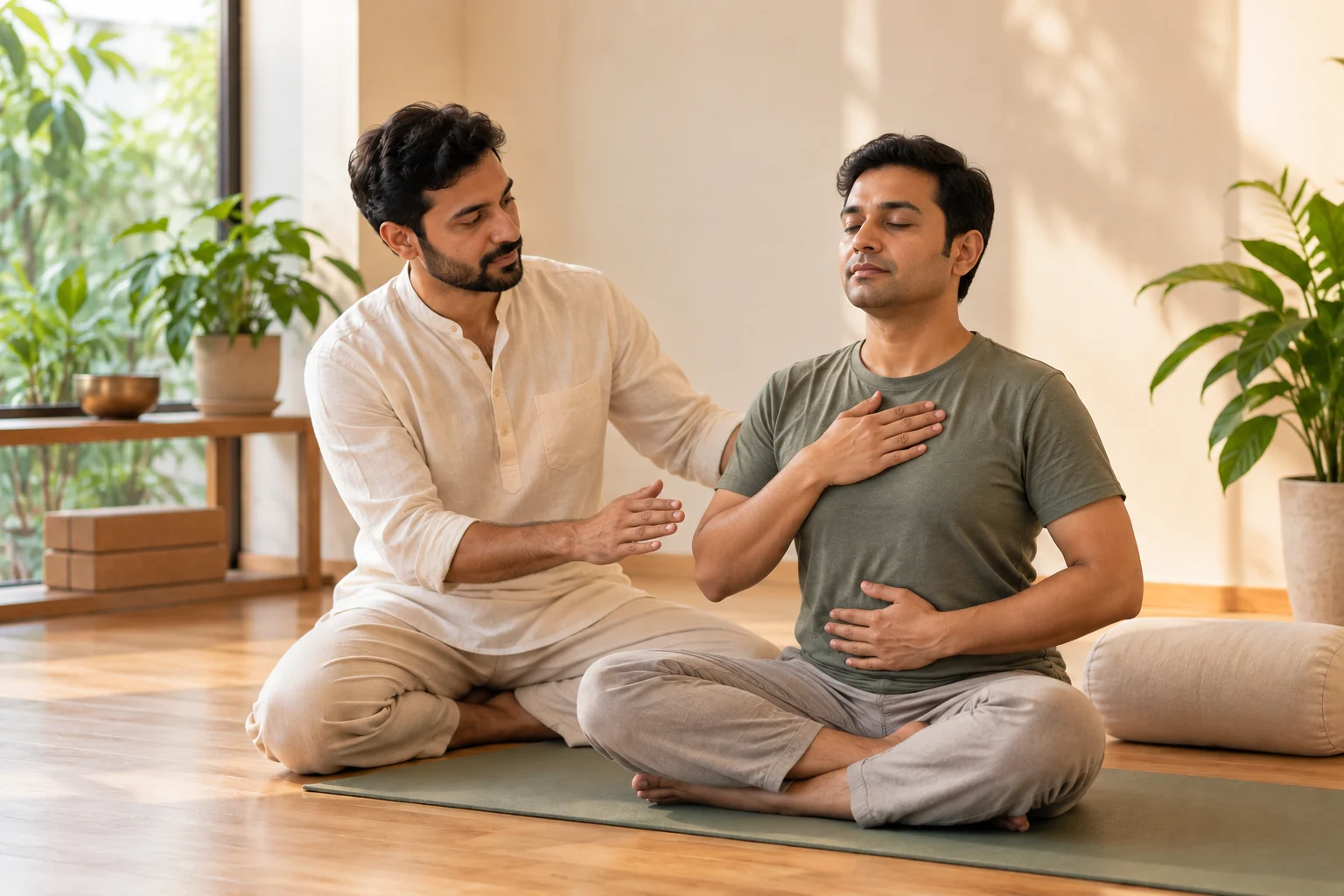
Slow · Steady · Calm
How are you arriving today?
Choose what feels closest. We will show you where to start.
Already know you want to try it? Book a Free Hypertension Yoga Class
Is this you?
Does any of this feel familiar?
Everyone’s experience of high blood pressure is different. These are some of the reasons people look for a calm, guided practice.
Feels like“My doctor mentioned lifestyle changes. Where do I start?”
Advice to ‘exercise and reduce stress’, but no clear first step.
- In classA structured, guided practice at a fixed batch time that covers both gentle activity and relaxation.
- You may noticeA practical routine you can build on, alongside your doctor’s advice.
Feels like“My days feel constantly pressured.”
Deadlines, traffic and responsibilities, with no real pause.
- In classSlow breathing with a longer exhale, and guided relaxation at the end of every class.
- You may noticeA dependable way to slow down, which you can repeat at home.
Feels like“I want to exercise, but I’m not sure what’s safe.”
Worried that effort or certain postures could be a problem.
- In classA health check-in first, a moderate pace, no breath-holding or straining, and the head kept above the heart for most postures.
- You may noticeConfidence in a practice planned around your health and your doctor’s guidance.
Feels like“I can’t switch off, even at night.”
Lying down, but the mind keeps running.
- In classGuided relaxation and Yoga Nidra, taught step by step so you can use them on your own.
- You may noticeA familiar wind-down routine for the end of the day.
Feels like“I start routines and don’t keep them.”
Walks and home workouts that fade after a few weeks.
- In classA fixed class time, a small group and a teacher who notices when you are absent. Plus one short practice for home.
- You may noticeA routine that is easier to keep — which matters more than any single session.
Feels like“I feel stiff and out of practice.”
It has been a while since you last exercised regularly.
- In classGentle mobility with chair options and an easier version of every posture.
- You may noticeEasier everyday movement, at a pace that suits your body.
If one of these sounded like you, a single trial class is a simple way to see whether this practice suits you. Already practise yoga? See how the practices are layered in the practice guide.
Try a hypertension yoga class freeSupportive, not a treatment
Hypertension yoga in Baner, built around calm, steady practice
Regular physical activity and stress management are part of the lifestyle advice often given to people with high blood pressure. Our classes offer a calm, guided way to include both: gentle movement, slow breathing and relaxation, introduced step by step, with no breath-holding or straining, and always alongside your doctor’s advice.
Start With a Free Class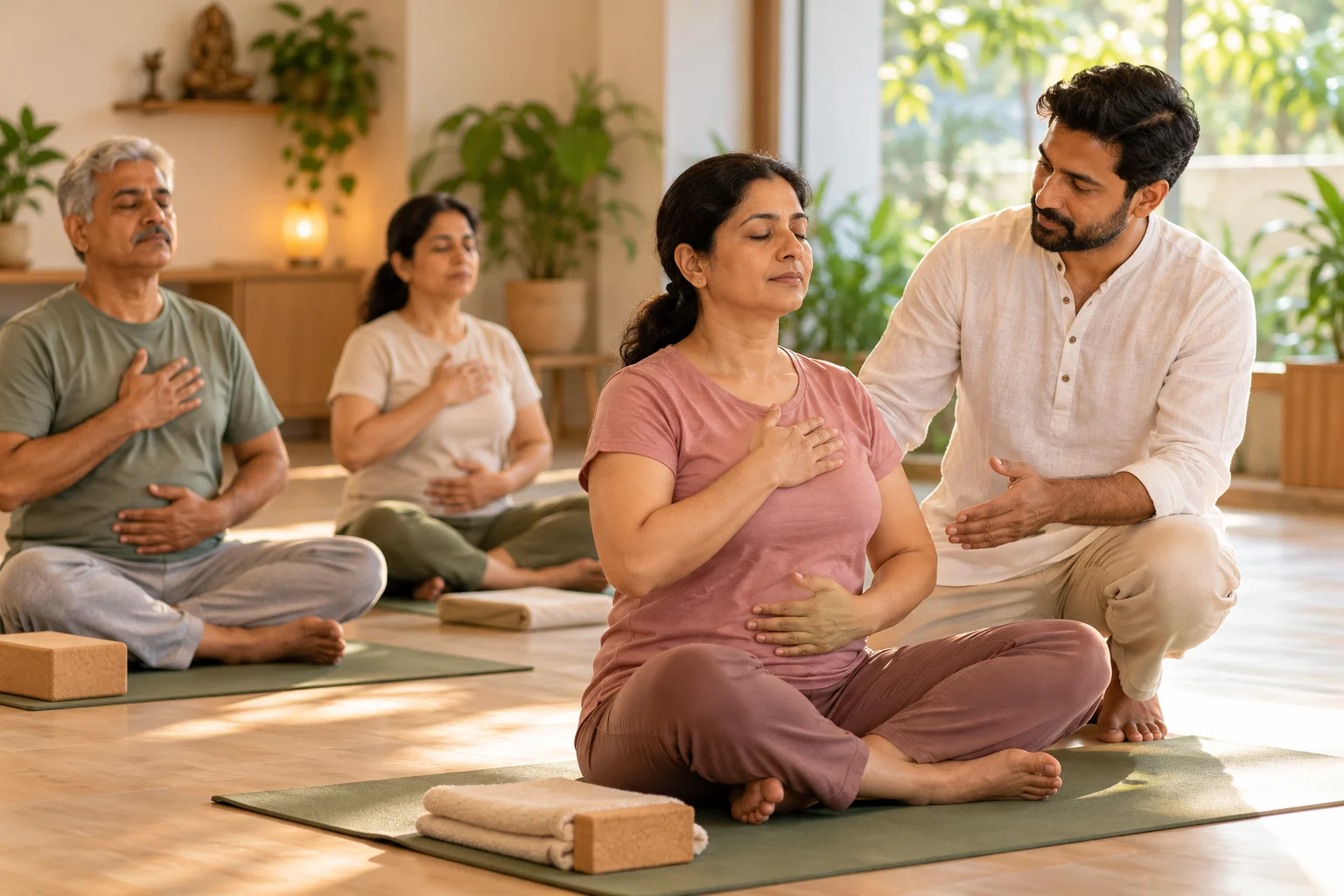
Calm, not strenuous
A moderate pace with no straining, no breath-holding and plenty of rest.
Step-by-step progression
Foundations first; you build stamina and confidence when you are ready.
Alongside medical care
A short health conversation first, and your doctor’s advice always comes first.
Something to take home
A short breathing and relaxation routine for between classes.
The practice
What is hypertension yoga?
Hypertension yoga is a regular, guided practice planned with the needs of people living with high blood pressure in mind. It emphasises gentle movement, slow breathing and relaxation, avoids straining and breath-holding, and works alongside — never instead of — your medical care.
What yoga can and cannot do
High blood pressure (hypertension) is a common long-term condition that often has no symptoms, and it is managed with the help of doctors, regular monitoring, medication where needed and lifestyle care. Yoga can be part of the lifestyle side. It cannot cure hypertension, and it does not replace medication, monitoring or medical advice.
What actually happens when you practise
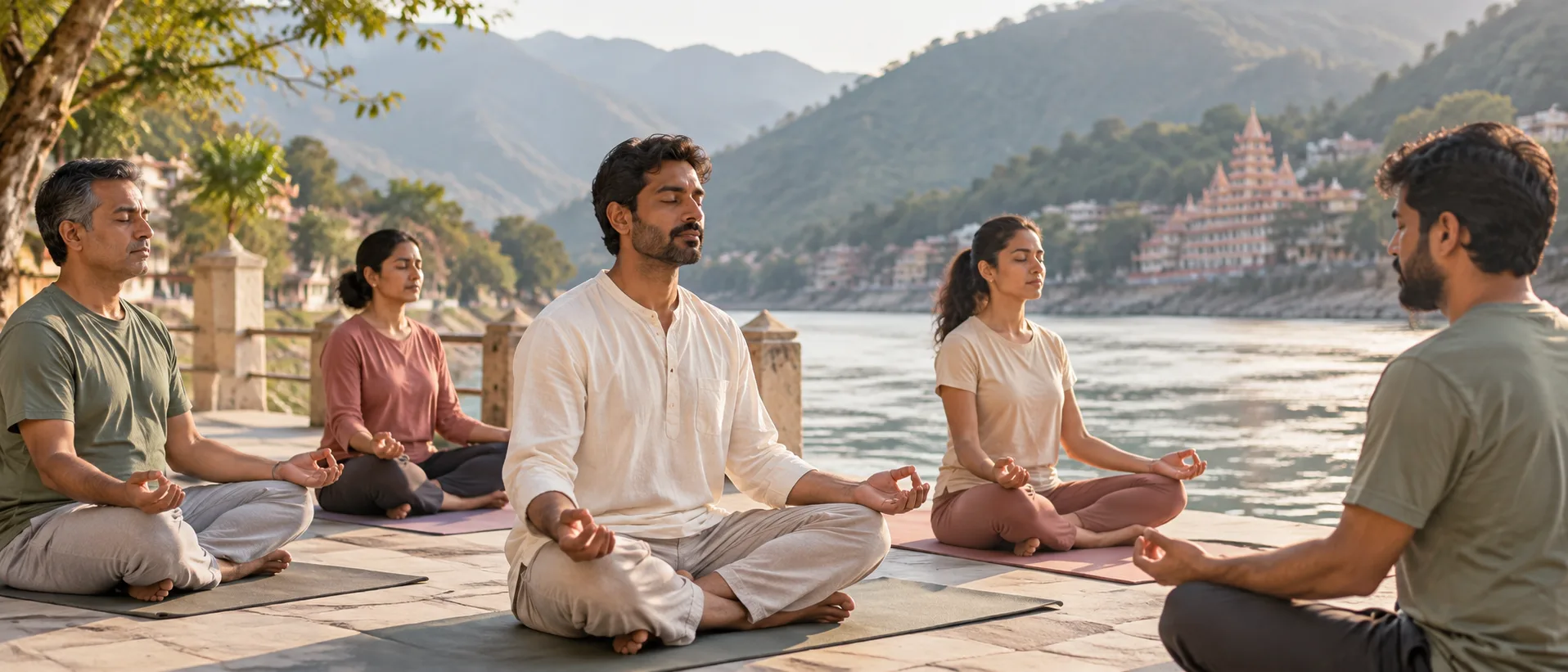
You move through gentle standing, seated and floor postures that keep the head above the heart for most of the class, learn slow breathing with a longer exhale, and finish with guided relaxation. You never hold your breath or strain, and you can pause at any time.
What a beginner can expect
- Gentle, unhurried movement — no straining
- Plain-language instruction; Sanskrit names explained
- Breathing always easy — never held or forced
- You can pause, sit down or stop at any time
What the evidence says
Research reviews suggest yoga may help lower blood pressure modestly in some people, particularly when it includes breathing practices and relaxation. Studies vary in design and quality, and results differ from person to person, so we make no promises about your readings or medication.
New to yoga? Your first class is freeA look inside a class
Step inside a class at Anahat
No rushing, no straining. Just a steady voice, a group moving at an easy pace, and time to rest.
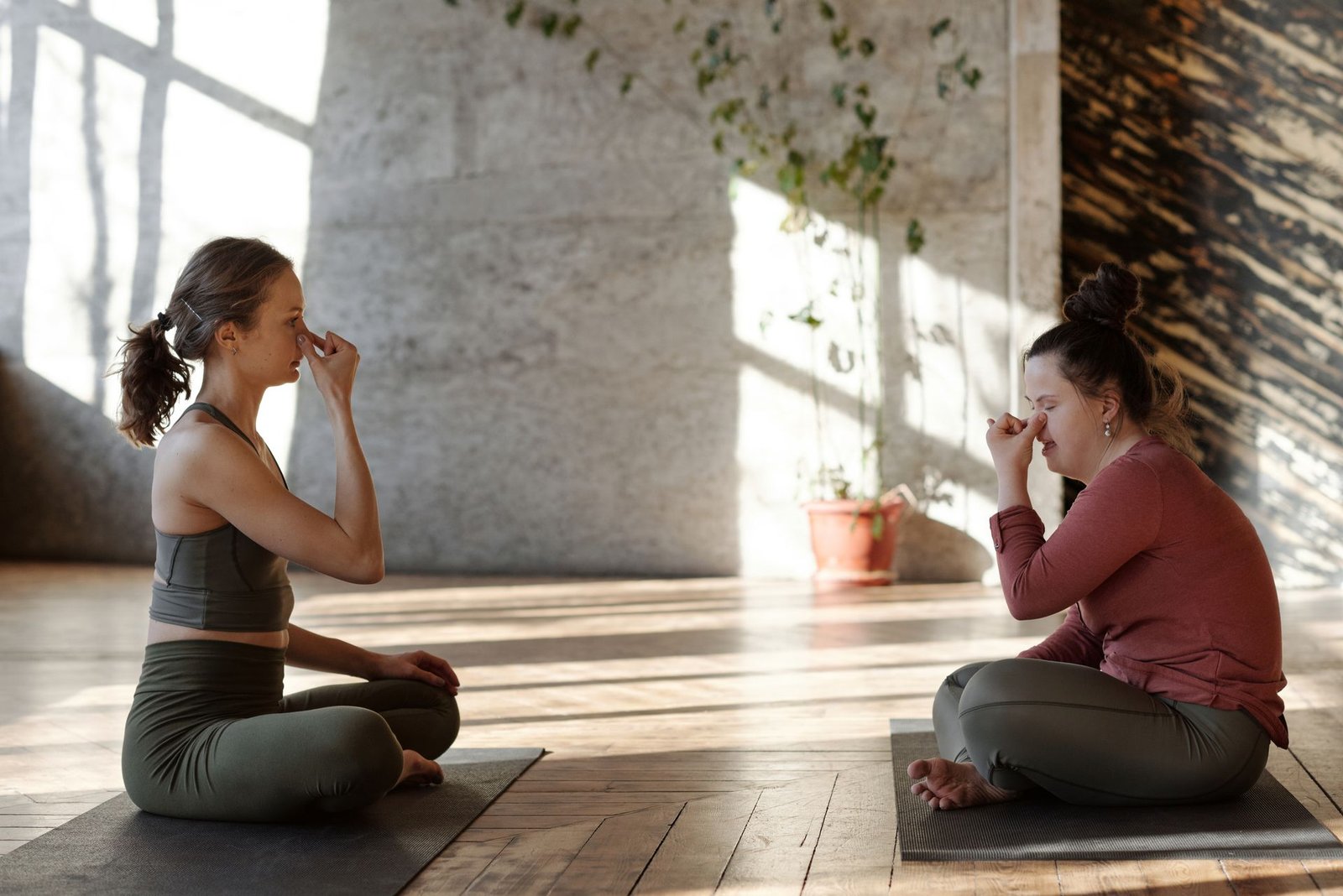 Film coming soon
What happens in a class
Your class, from arrival to rest
Classes generally follow this gentle arc, so you always know what comes next. The practices change with the group and with your experience.
- 01
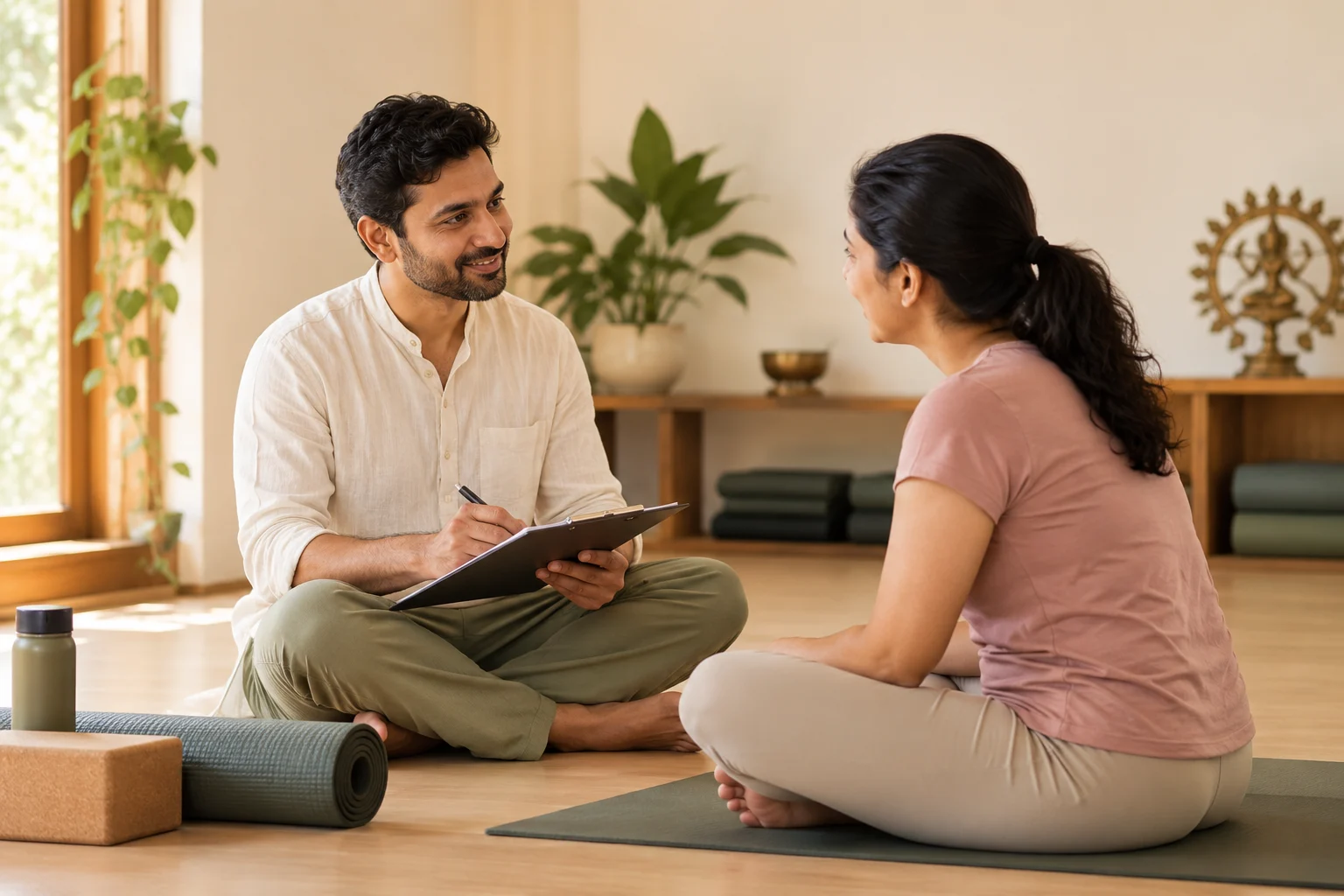
Arrive
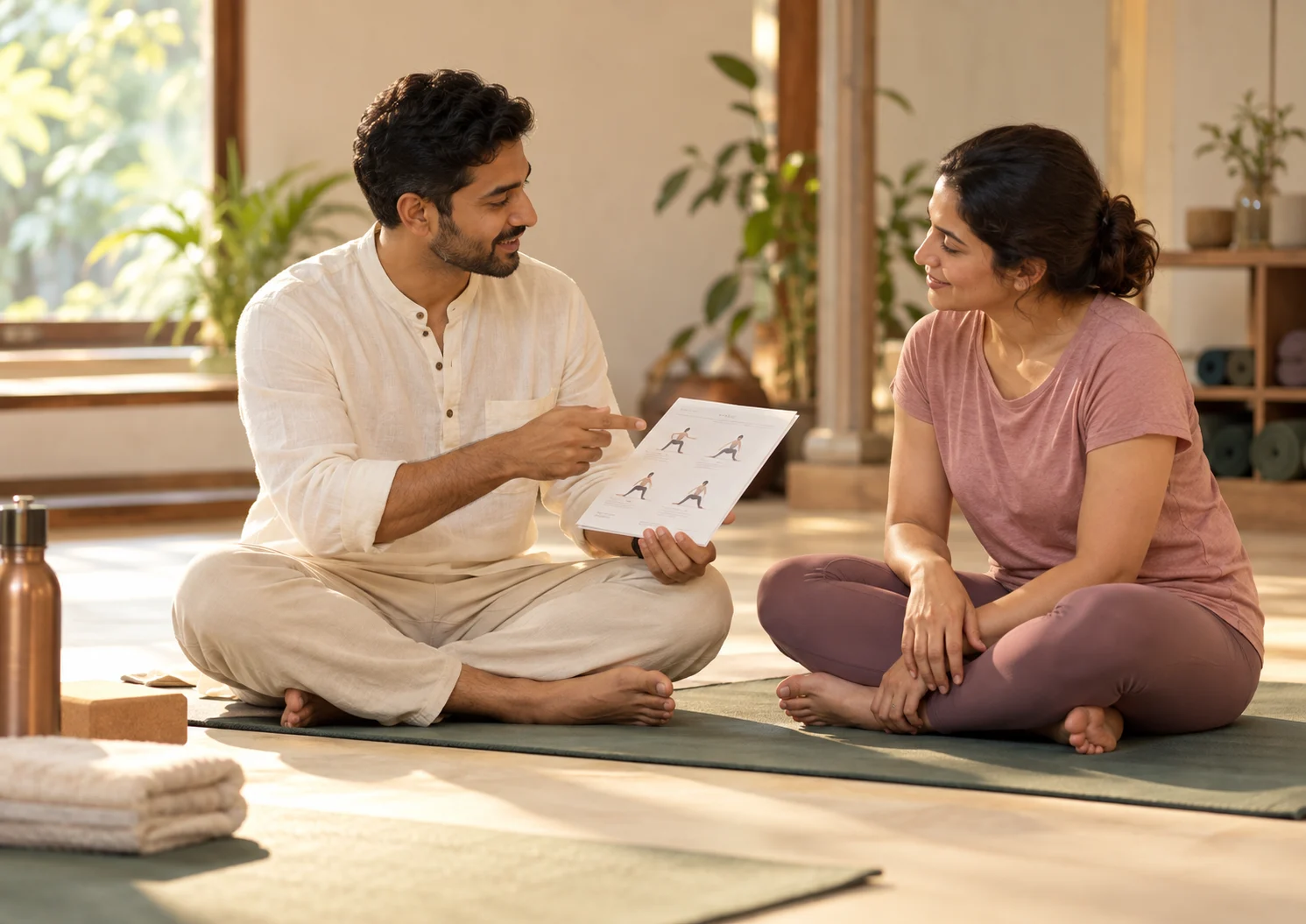
SettleSettle in with a mat or chair. First-timers have a quick, private health check-in with the teacher.
- 02
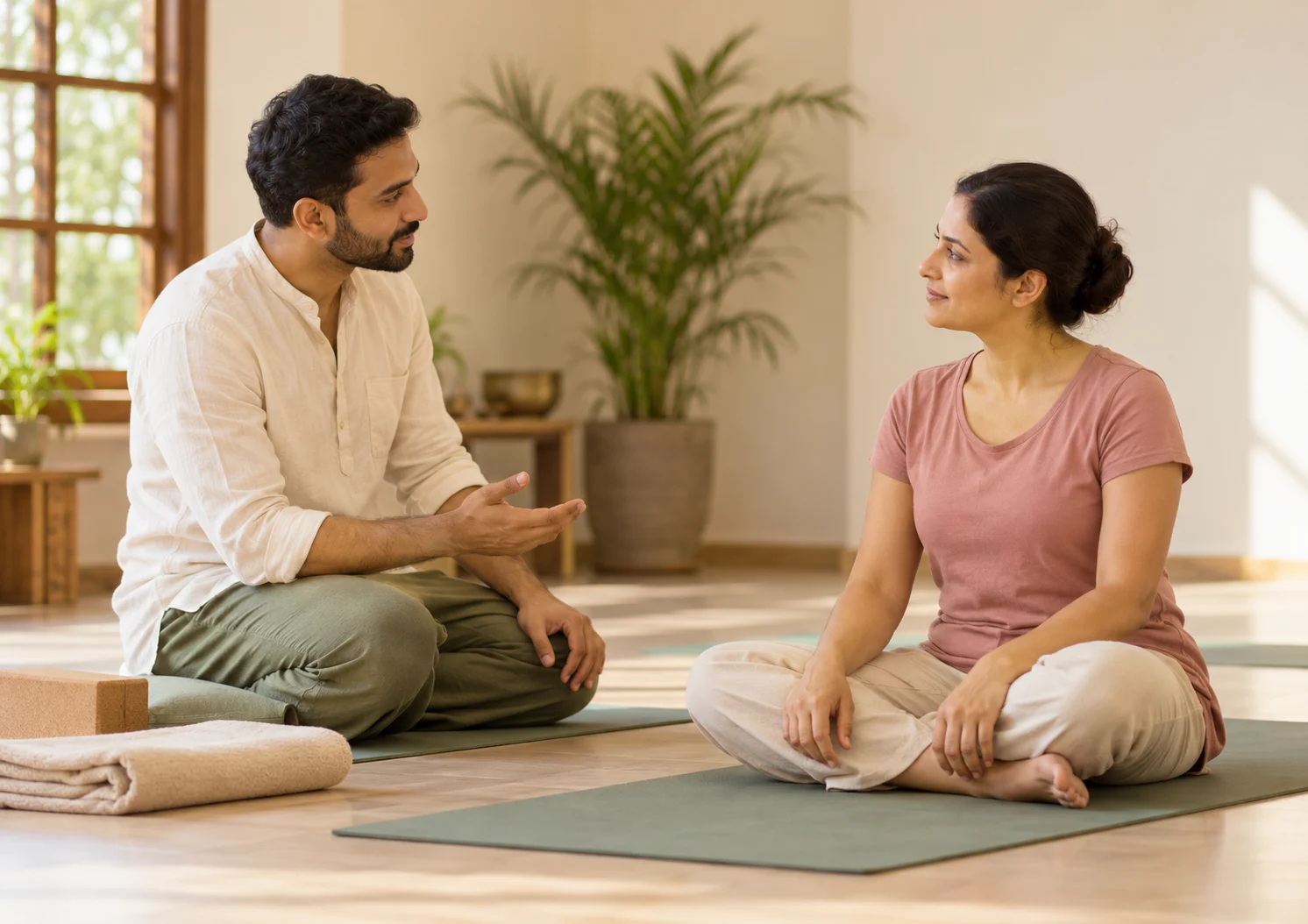
Ground
SettleSit comfortably and let the day’s pace fall away. Tell the teacher if you feel unwell today.
- 03
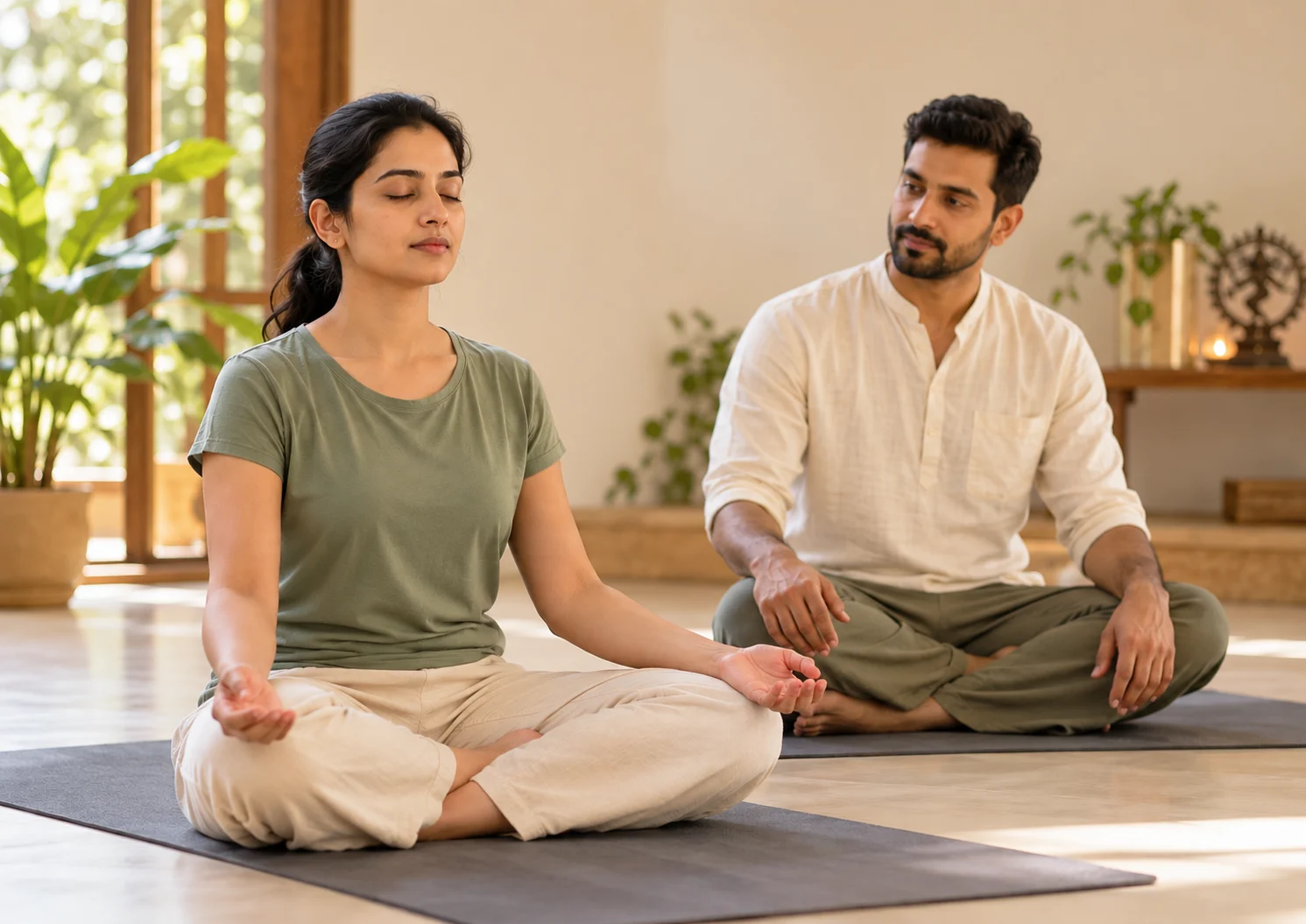
Notice
AwarenessObserve your natural breath and how your body feels, without changing anything yet.
- 04
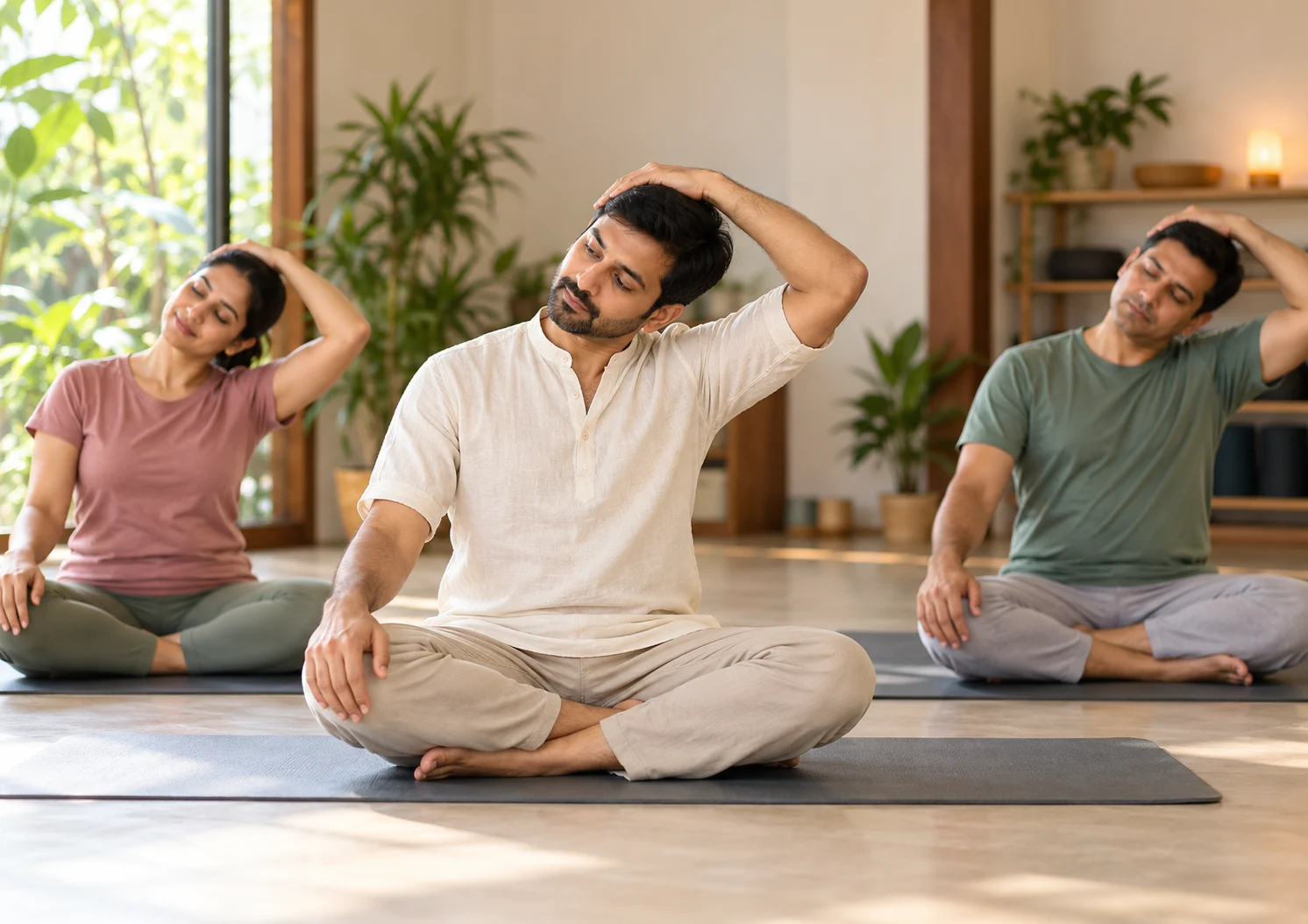
Warm up
MovementGentle mobility for the neck, shoulders, spine and hips, at an easy pace.
- 05
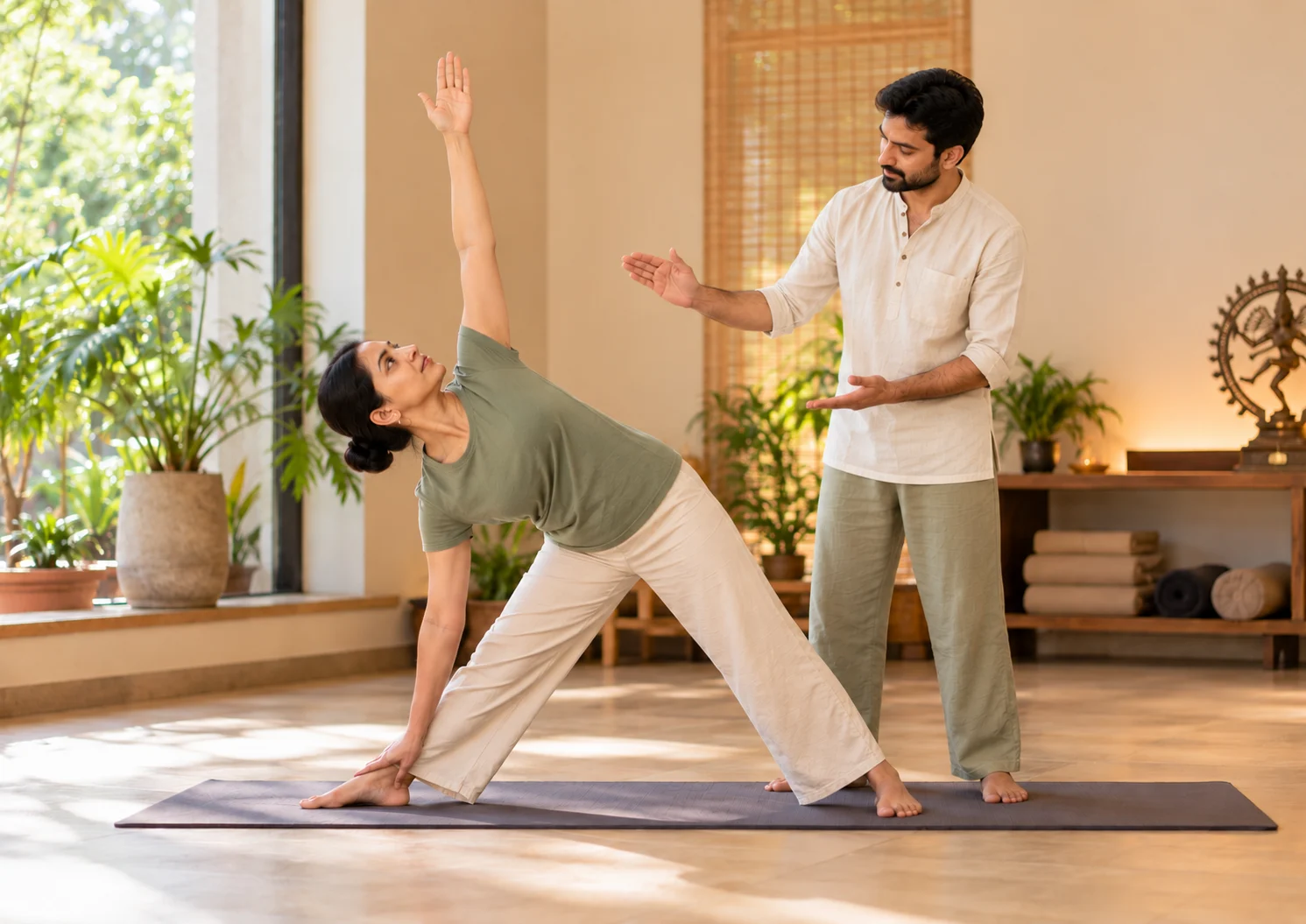
Guided practice
MovementGentle standing, seated and floor postures, with the head above the heart for most of them and no straining.
- 06
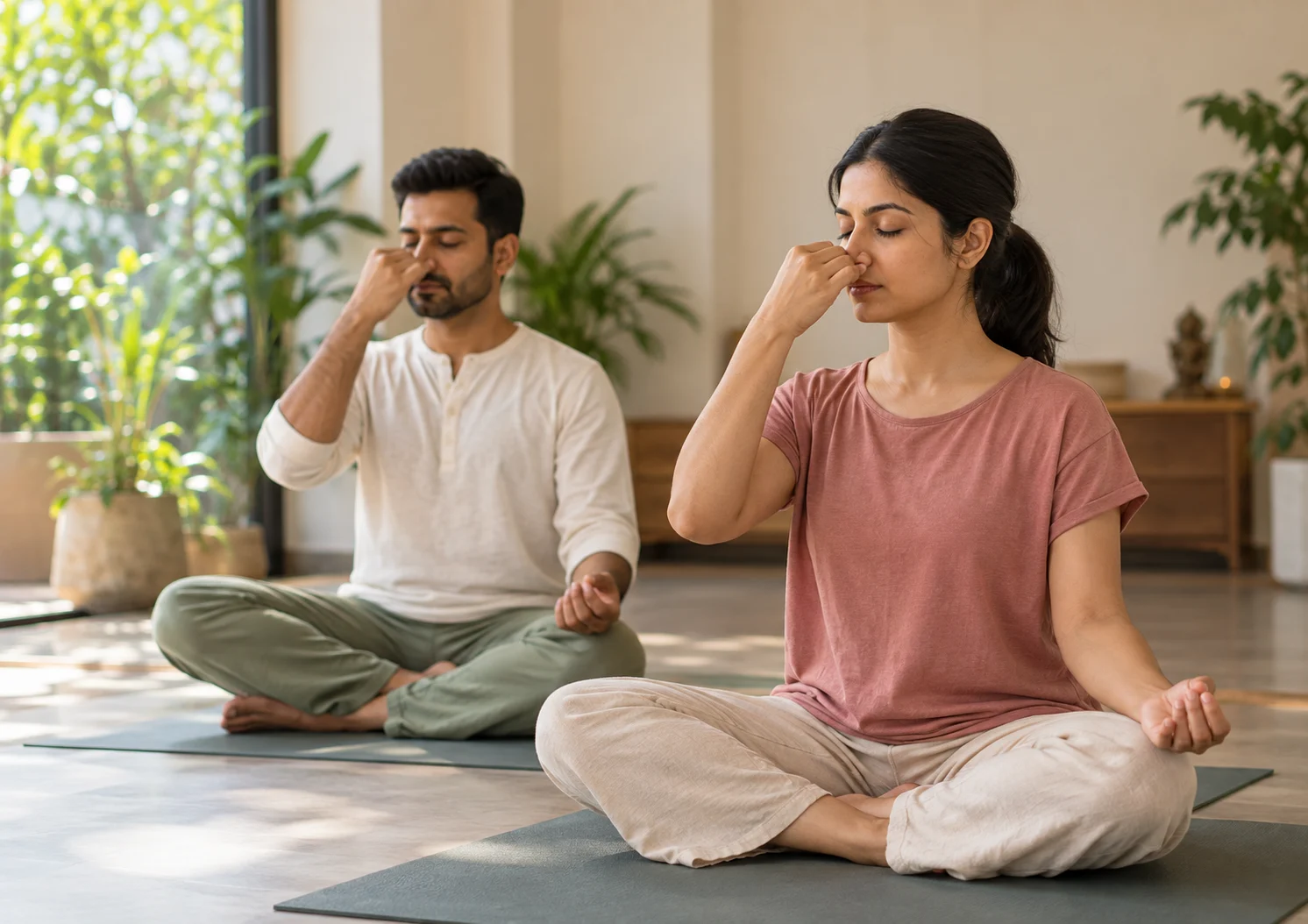
Slow breathing
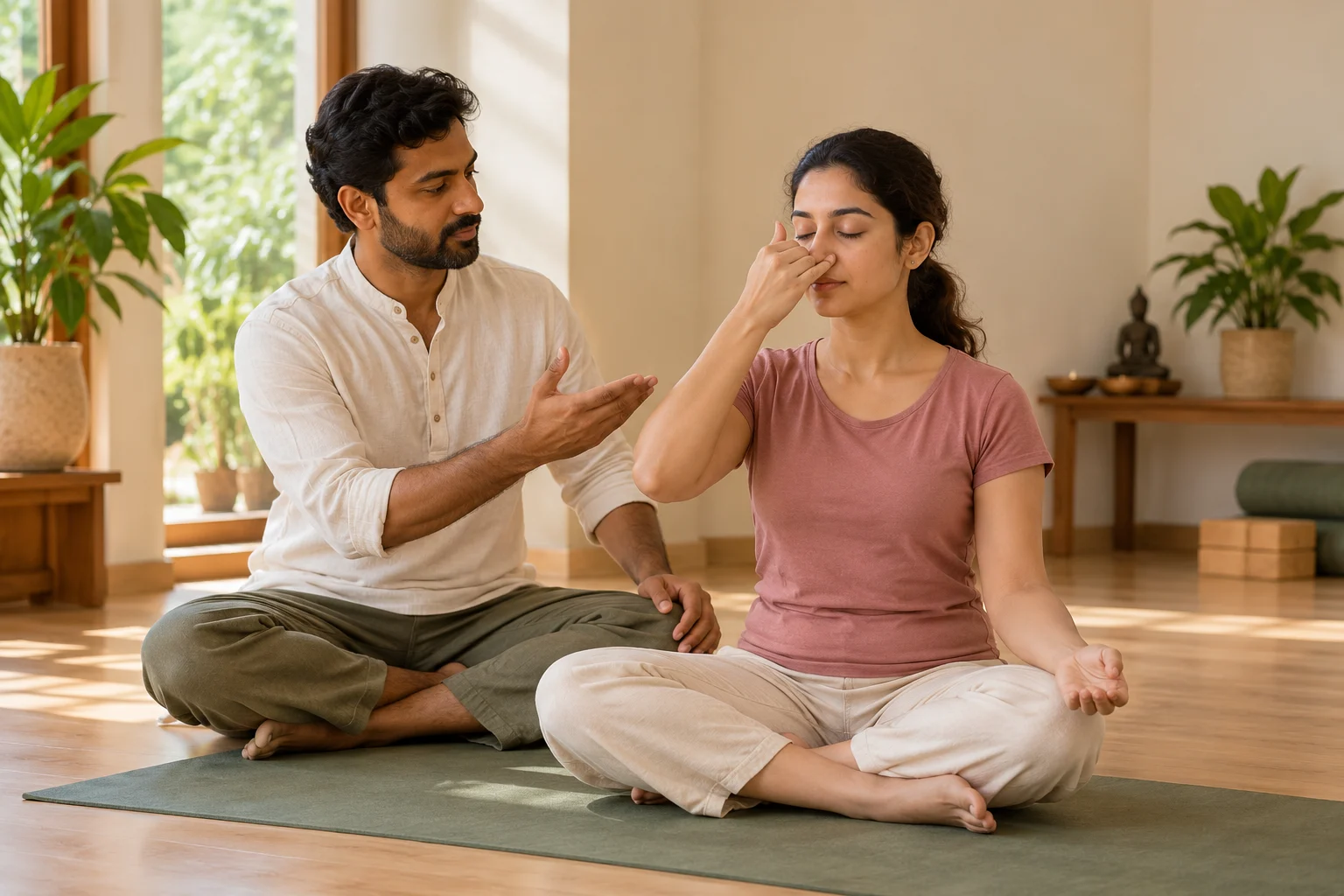
BreathCalming breathing with a longer exhale and alternate-nostril breathing, never with breath retention.
- 07
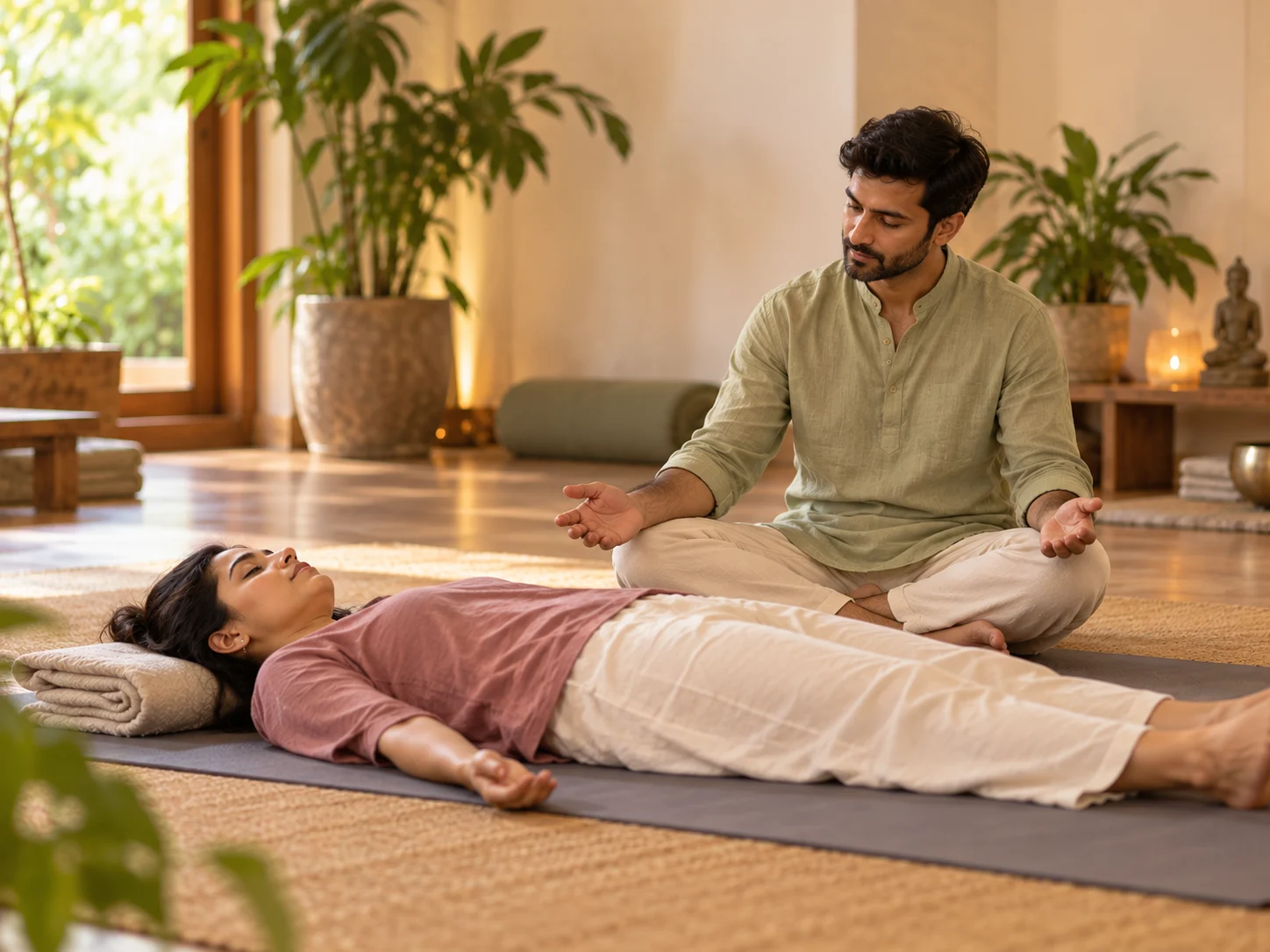
Relaxation
RestGuided relaxation or Yoga Nidra to let the practice settle.
- 08
Close
Take-homeGet up slowly, share how you feel, and take one short routine home.
Class content
Practices you may learn
Practices are introduced in three stages. No single posture or breathing technique treats high blood pressure; the value is in a calm, regular practice your teacher adapts for you.
Tier 1Foundations
Suitable for most beginners
Joint mobility
Gentle movement for the neck, shoulders, wrists, hips and ankles.
Gentle standing postures
Steady poses such as Tadasana, keeping the head above the heart.
Supported seated postures
On a mat, cushion or chair, without straining.
Natural breath awareness
Observing the breath without changing it.
Extended exhale breathing
A longer out-breath, never forced.
Guided relaxation (Shavasana)
Structured rest at the end of every class.
Tier 2Building
After you are comfortable with the foundations
Alternate-nostril breathing (Nadi Shodhana)
Slow and even, without breath retention.
Humming bee breath (Bhramari)
A soft hum on the exhale.
Longer standing holds
Held comfortably, breathing freely, never straining.
Yoga Nidra
A longer guided relaxation, lying down.
Short guided meditation
A few minutes of quiet attention.
Tier 3Generally avoided
Only with your doctor’s and teacher’s agreement
Breath retention (Kumbhaka) and bandhas
Holding the breath, which can raise pressure.
Kapalabhati and Bhastrika
Forceful, vigorous breathing techniques.
Inversions and head-down postures
Such as headstands, shoulder stands and deep forward folds.
Straining or effortful holds
Anything that makes you hold your breath or push hard.
These practices can raise blood pressure or strain the heart, and are not suitable for many people with hypertension, during pregnancy, or with some heart, eye (such as glaucoma) or other conditions. They are not part of our hypertension classes unless your doctor and teacher agree they suit you. None of them is needed to benefit from a regular practice.
Hypertension yoga pairs naturally with Pranayama · Meditation · Diabetes Yoga
Not sure where to start? Ask on WhatsAppBenefits
What regular practice can bring
Everyone’s experience is different, and results cannot be guaranteed. These are what a regular practice is designed to support — not medical outcomes.
- From rushed to unhurried
- From tense to settled
- From holding to releasing
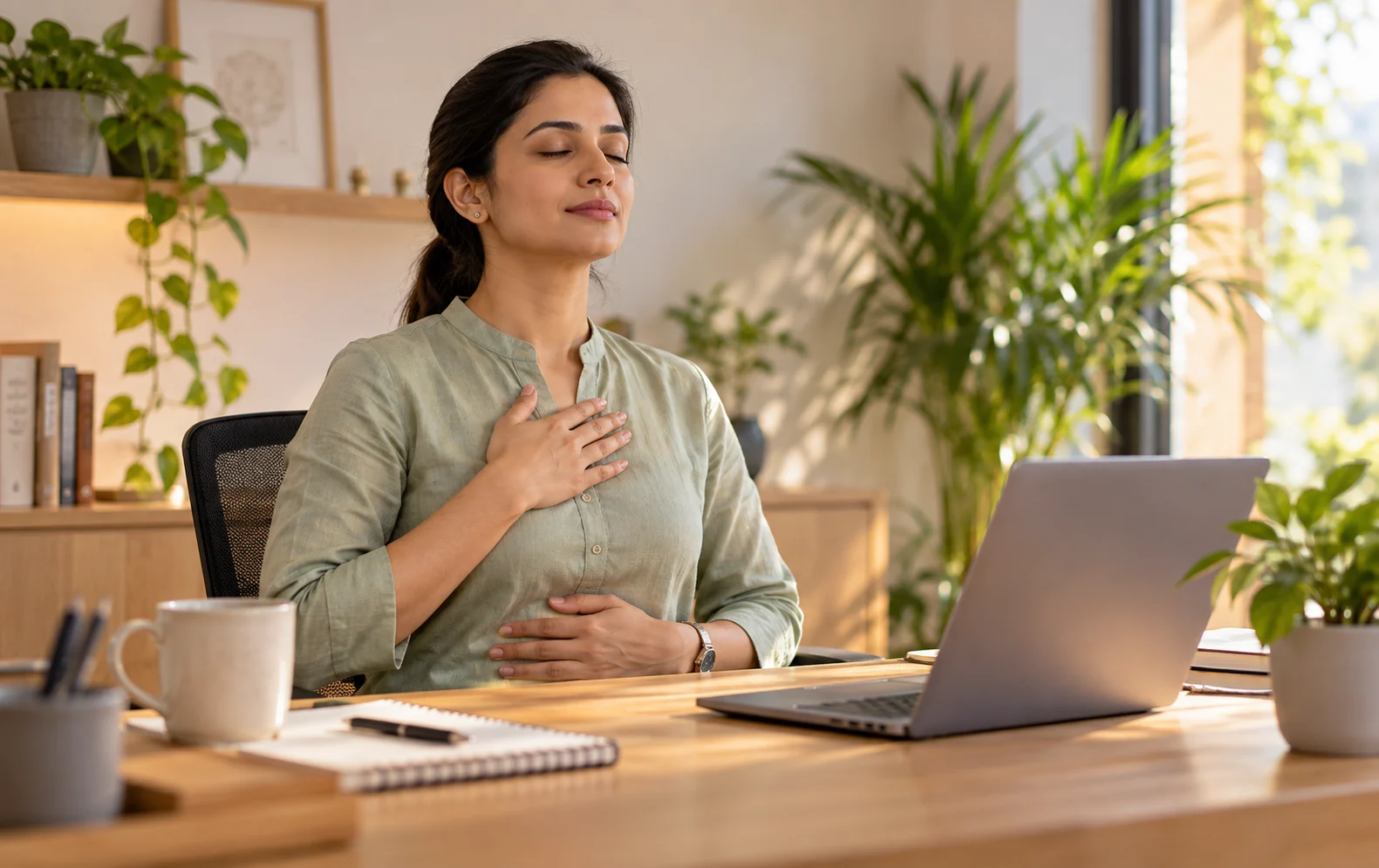
The practice travels with you — a slower exhale at your desk takes seconds.
Slow-breathing skills
Breathing practices you can use on your own, wherever you are.
A calmer wind-down
Relaxation you can use as part of a stress-management routine.
Regular gentle activity
Physical activity is part of lifestyle care for high blood pressure; this is one gentle way to include it.
Better body awareness
Noticing tension, tiredness or dizziness sooner, and responding to them.
Easier everyday movement
Gentle mobility for the neck, shoulders, back and hips.
Support for your wider care
A practice that fits alongside the lifestyle advice your doctor gives.
Hypertension yoga is a complementary wellness practice. It does not cure high blood pressure, and it does not replace medication, blood-pressure monitoring or your doctor’s advice. Please do not change any medication or treatment without your doctor’s guidance.
Try a free classWho it’s for
Who our hypertension yoga classes are for
You don’t need to be fit or flexible. If you can sit comfortably and follow a voice, you can begin.
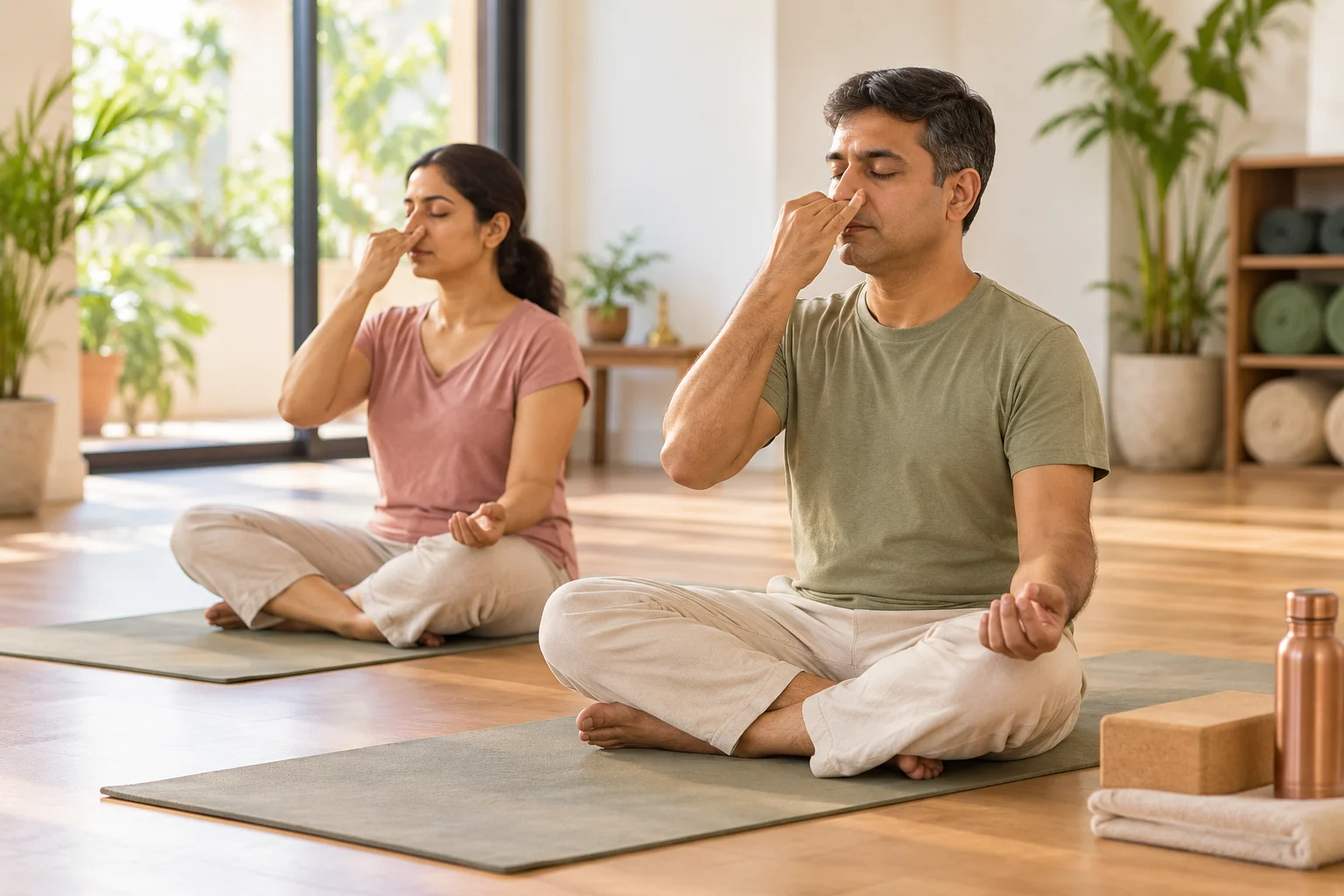
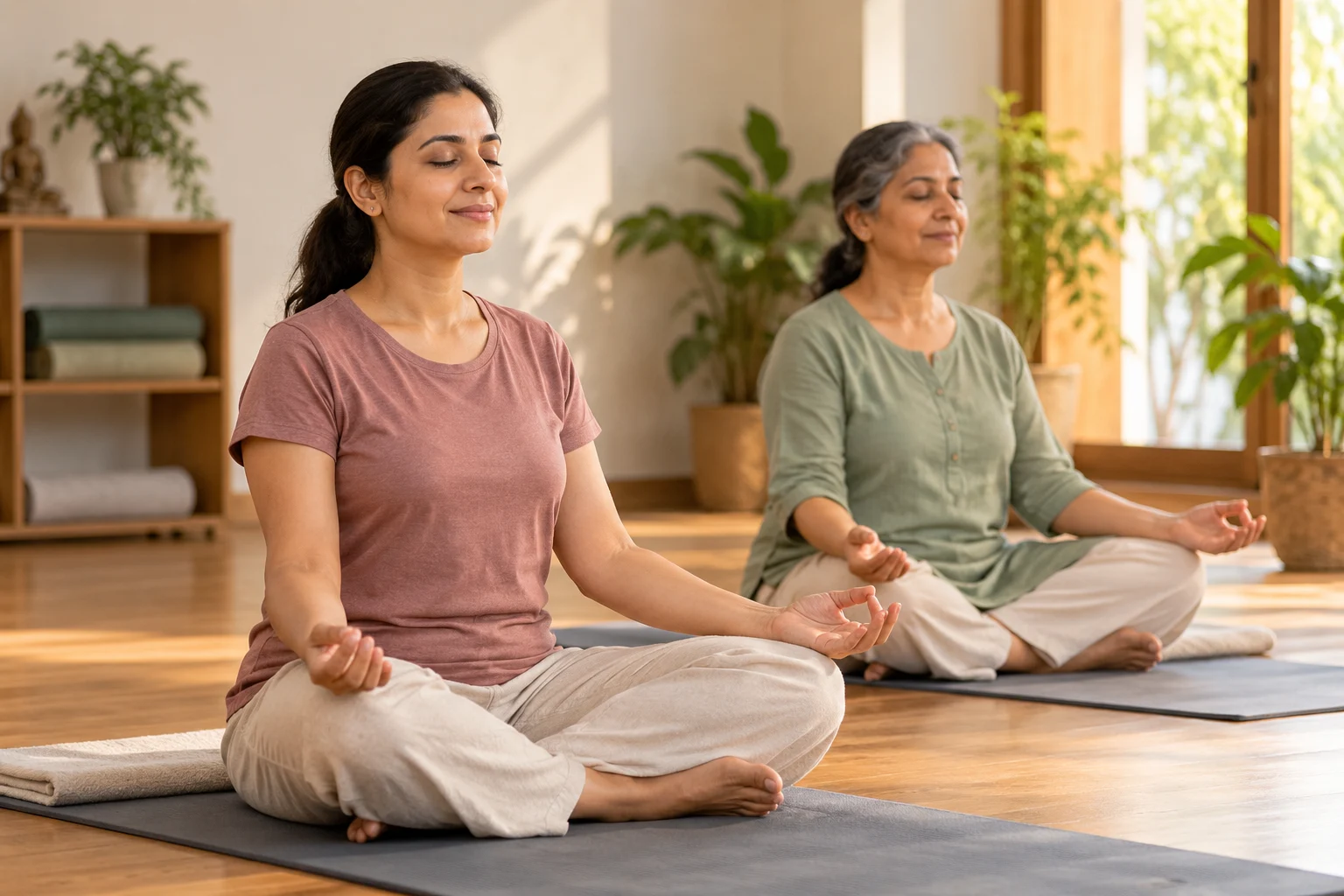
This class welcomes you if…
- You have high blood pressure and want a calm, guided form of activity
- Your doctor has suggested exercise or stress management
- You are new to yoga, or haven’t exercised for a while
- You want something gentle rather than a strenuous workout
- You want breathing and relaxation to be part of your routine
- You are older, less flexible or prefer a chair (chair options available)
Please speak with us (and your doctor) first if you…
- Are pregnant — our Prenatal Yoga class may suit you better
- Have very high or uncontrolled blood pressure, or haven’t had your blood pressure reviewed recently
- Take blood-pressure medication that makes you dizzy when you stand up
- Have a heart condition, chest pain, or a recent heart event or stroke
- Have glaucoma or another eye condition affected by head-down postures
- Have a history of dizziness or fainting
This does not necessarily mean you cannot join. It means we will adapt the practice for you, and in some cases ask you to check with your doctor first. In every class: if you feel dizzy, light-headed or unwell, stop, sit down and tell the teacher.
Have a health question? Talk to us before bookingPractical details
Class details at a glance
- Duration
- Shared when you enquire
- Level
- Beginner to intermediate — foundations first
- Class size
- Teacher-led — ask us about group size
- Batches
- Ask us for current timings See full schedule
- Frequency
- Regular practice matters more than long sessions — we will suggest a rhythm
- Location
- Anahat Yoga, Colours Preschool, Sr 135, Plot 128 Ram Indu Park, Near Balewadi High Street, Baner, Pune 411045
- Online
- Ask us about live online options
- Also convenient for
- Balewadi · Wakad · Pashan · Aundh
- What to bring
- Water bottle and a small towel
- What to wear
- Loose, comfortable clothing you can breathe and move in
- Before class
- Avoid a heavy meal for about 2 hours; keep to your usual medication routine
- Experience
- None required
- Fees
- First class free · plan options shared when you enquire
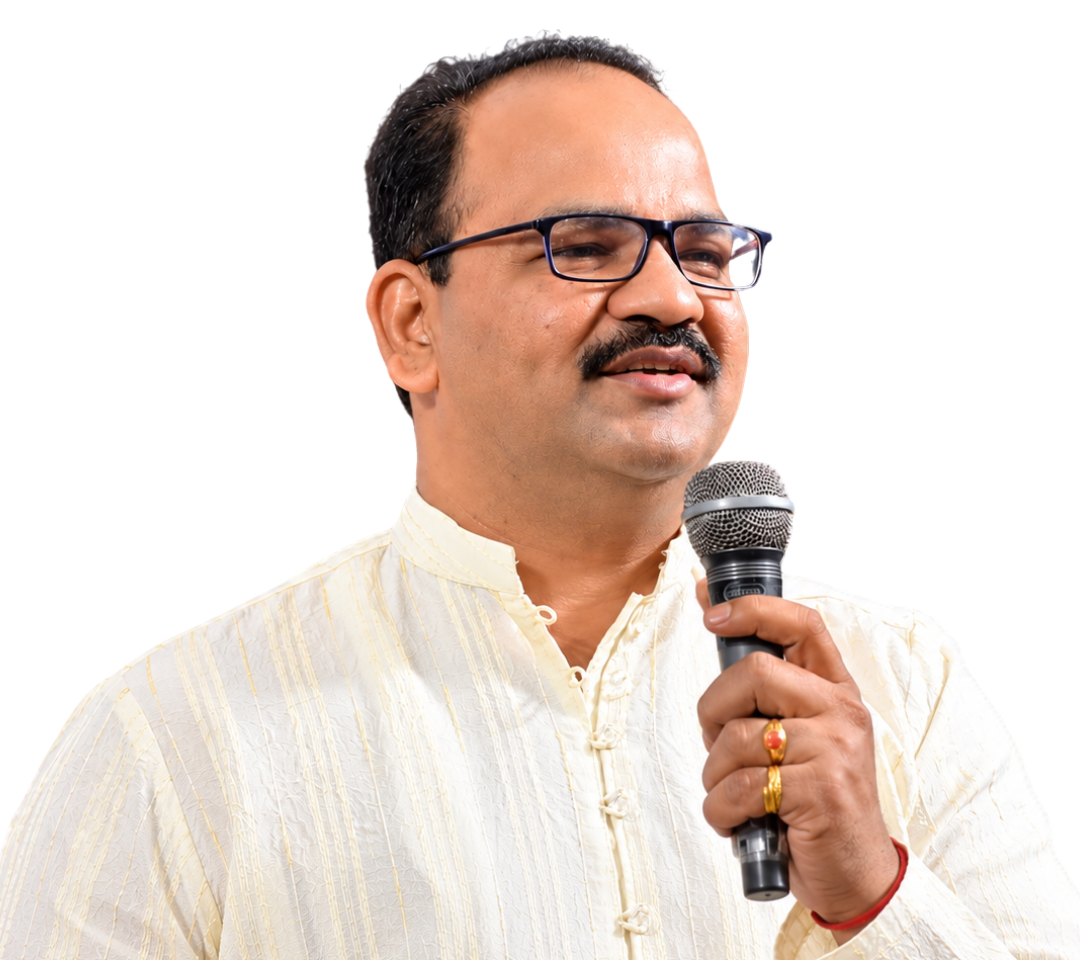
Your teacher
Learn with Dr. Vishvanath Pise
Dr. Vishvanath Pise is the founder and director of Anahat Yoga, near Balewadi High Street in Baner. He designs and guides every program at the studio and leads a team of teachers who follow the same careful, step-by-step approach. In hypertension yoga classes, that means an unhurried pace, no straining and respect for the medical care you already have.
Ease before effort. A calm, unhurried practice you can keep is worth more than a strenuous one you cannot.
- Founder & director, Anahat Yoga
- Teacher-led classes
- Studio near Balewadi High Street
In our students’ words
We publish only real reflections, shared with permission, and never health outcomes or blood-pressure readings. While we gather them, you can read what students say about Anahat Yoga on Google.
Questions
Hypertension yoga — frequently asked questions
Can yoga cure high blood pressure or replace my medication?
No. Yoga is not a cure for hypertension and does not replace medication, monitoring or medical care. It can be one part of the lifestyle side of your care, alongside the treatment your doctor recommends.
Do I need previous yoga experience?
No. Our hypertension yoga classes in Baner start with simple foundations and build up gradually. Every posture has an easier option, and chair support is available.
What does the research say about yoga and blood pressure?
Research reviews suggest yoga may help lower blood pressure modestly in some people, particularly when it includes breathing practices and relaxation. Studies vary in design and quality, and results differ from person to person, so we make no promises about your readings.
What happens during a class?
After a short check-in, the class moves from breath awareness and a gentle warm-up to standing, seated and floor postures, then slow breathing and guided relaxation. You never hold your breath or strain, and you can pause at any time.
Can I join if I take blood-pressure medication?
In most cases, yes, with your doctor’s agreement. Some medicines can make you feel light-headed when you stand up, so we get up slowly and you can sit down at any time. Please let your teacher know what you take.
Should I reduce my medication if my readings improve?
No — not without your doctor. Please keep following your treatment plan and discuss any changes with your doctor. Your yoga teacher cannot advise on medication.
Which practices are avoided?
Breath retention, forceful breathing such as kapalabhati and bhastrika, inversions and head-down postures, and anything that makes you strain or hold your breath are generally avoided, unless your doctor and teacher agree they suit you.
What if I feel dizzy or unwell during class?
Stop, sit or lie down, and tell the teacher. If you have chest pain, a sudden severe headache, difficulty breathing, weakness or trouble speaking, seek urgent medical help.
What if I have a heart condition or another health concern?
Please speak with your doctor and with us before your first class. In many cases we can adapt the practice, and some postures and techniques will be avoided for you.
How often should I practise?
Regular, manageable practice matters more than long sessions. Your teacher can suggest a class rhythm and a short daily breathing routine, and your doctor can advise how much activity suits you.
Do you offer online hypertension yoga classes?
Please ask us. We run live online batches for several classes and can tell you the current options for this class when you get in touch.
Is the first class really free? What happens after?
Yes, your first trial class is free, with no obligation. If you would like to continue, we will share the batch and plan options with you.
Still have a question?
We usually reply on WhatsApp within the day.
Free trial class
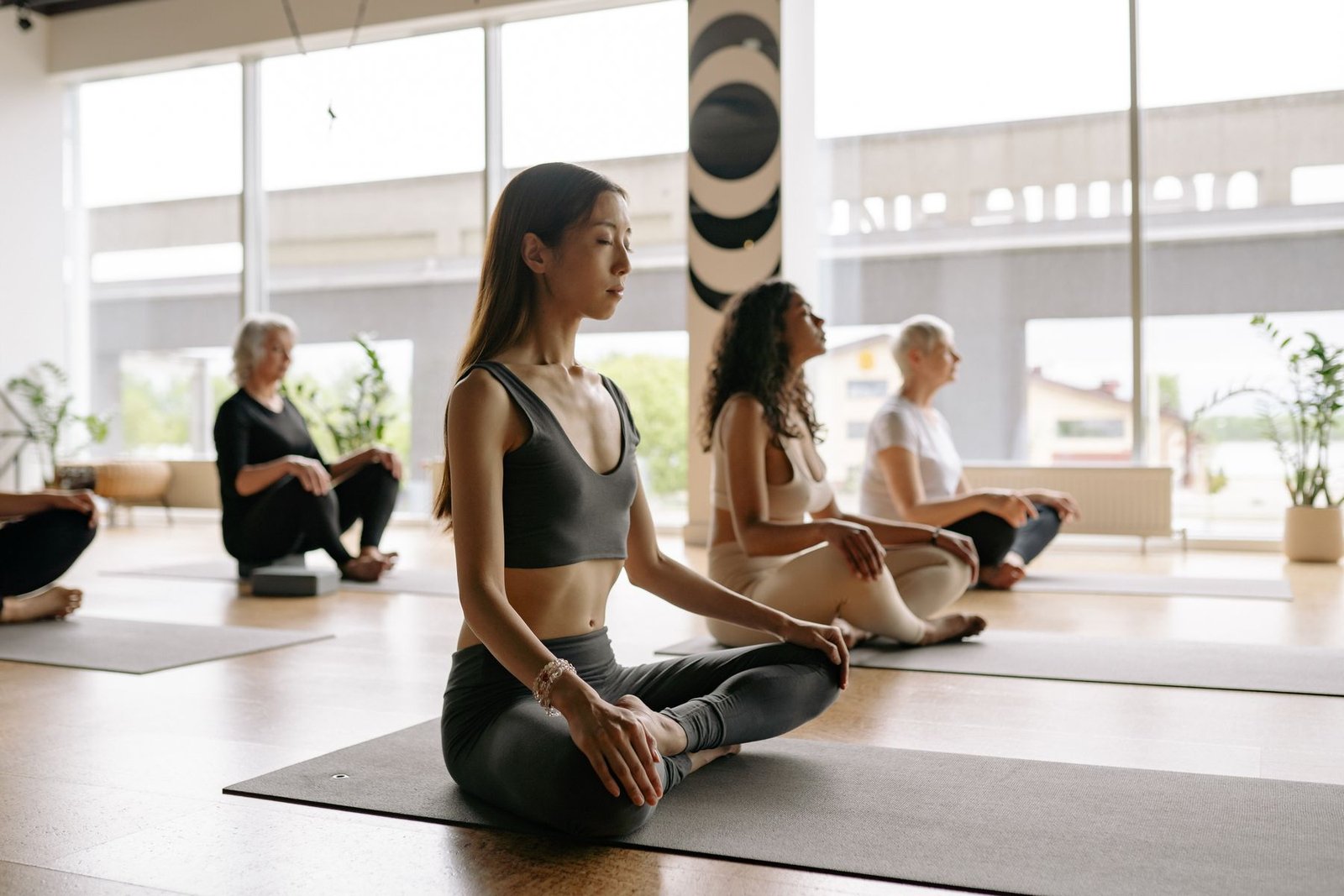
Your first hypertension yoga class is on us
Give yourself one unhurried class. Move at an easy pace with a teacher beside you, learn a few slow breathing practices, and leave with a short routine to use at home. If it feels right, we will help you choose a batch.
Before you book — take one slow breath with us.
- WhatsApp +91 98814 75758
- Call +91 98814 75758
- Studio hours: Mon–Sat, 6:00 AM – 8:30 PM
No payment needed. We will call or WhatsApp you to confirm your slot.
Continue your practice
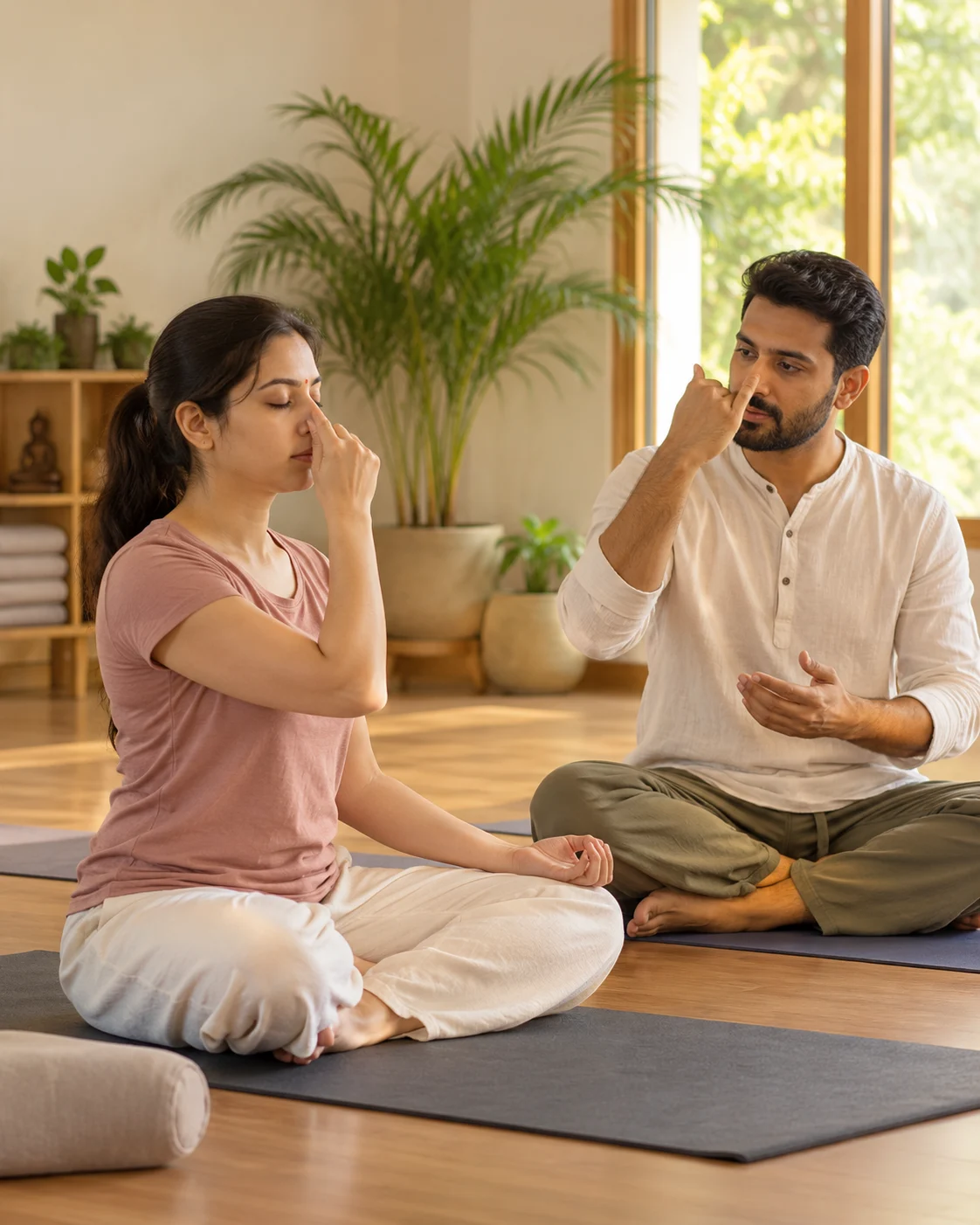
Pranayama
Guided, step-by-step yogic breathing.
Explore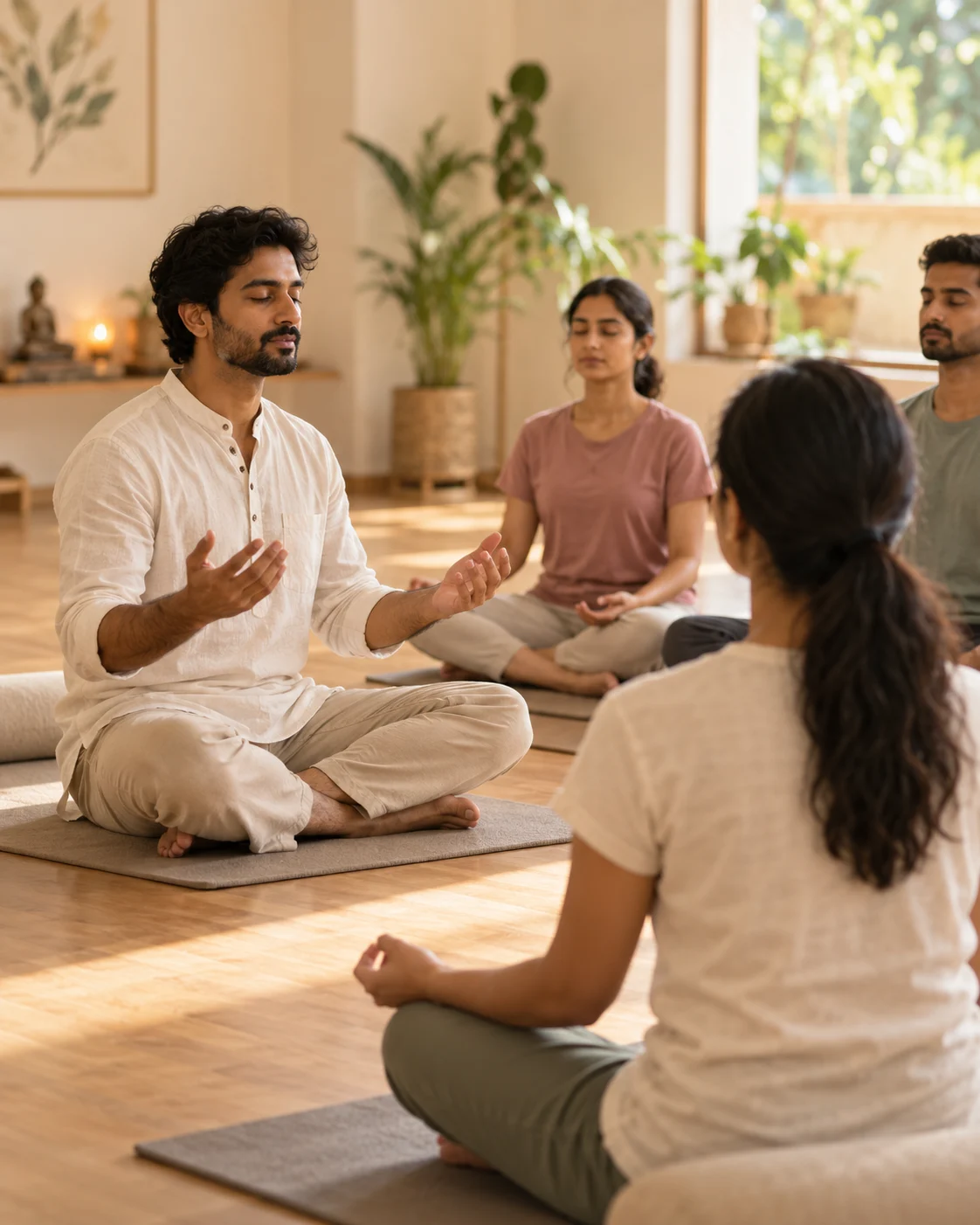
Meditation
Simple, guided techniques for a quieter, clearer mind.
Explore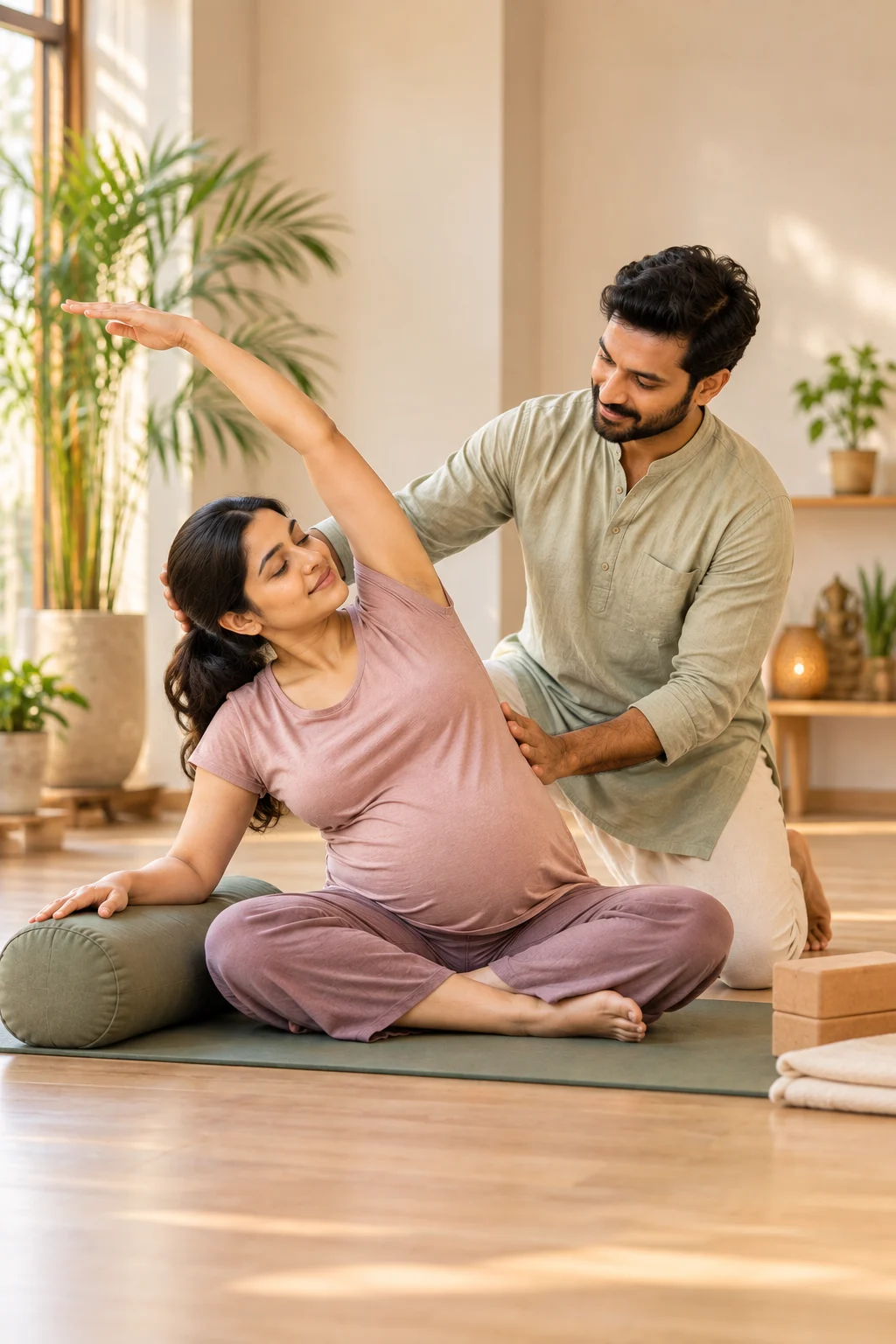
Prenatal Yoga
Gentle, adapted practice for each trimester.
Explore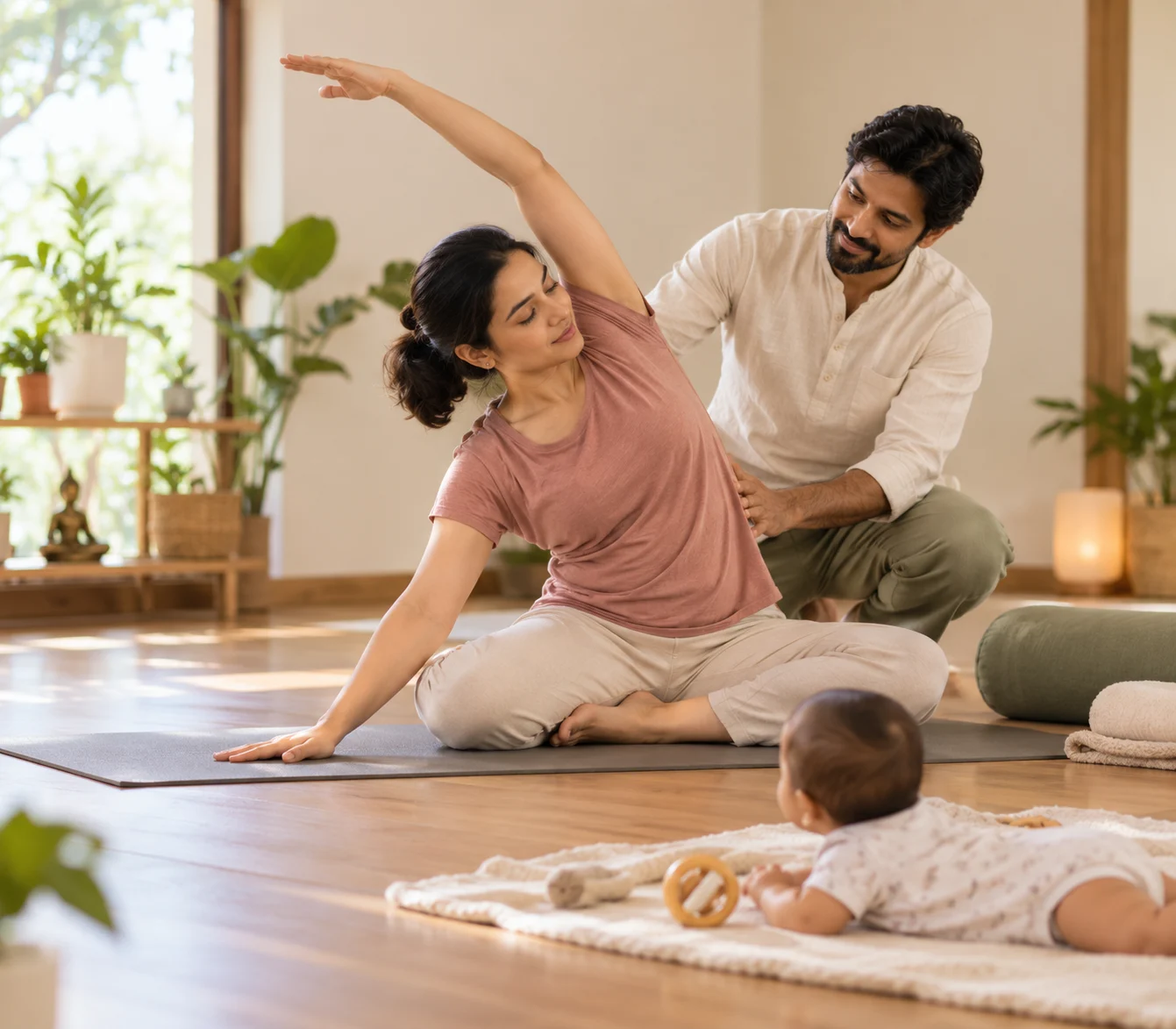
Postnatal Yoga
Rebuild core, pelvic floor and energy after childbirth.
Explore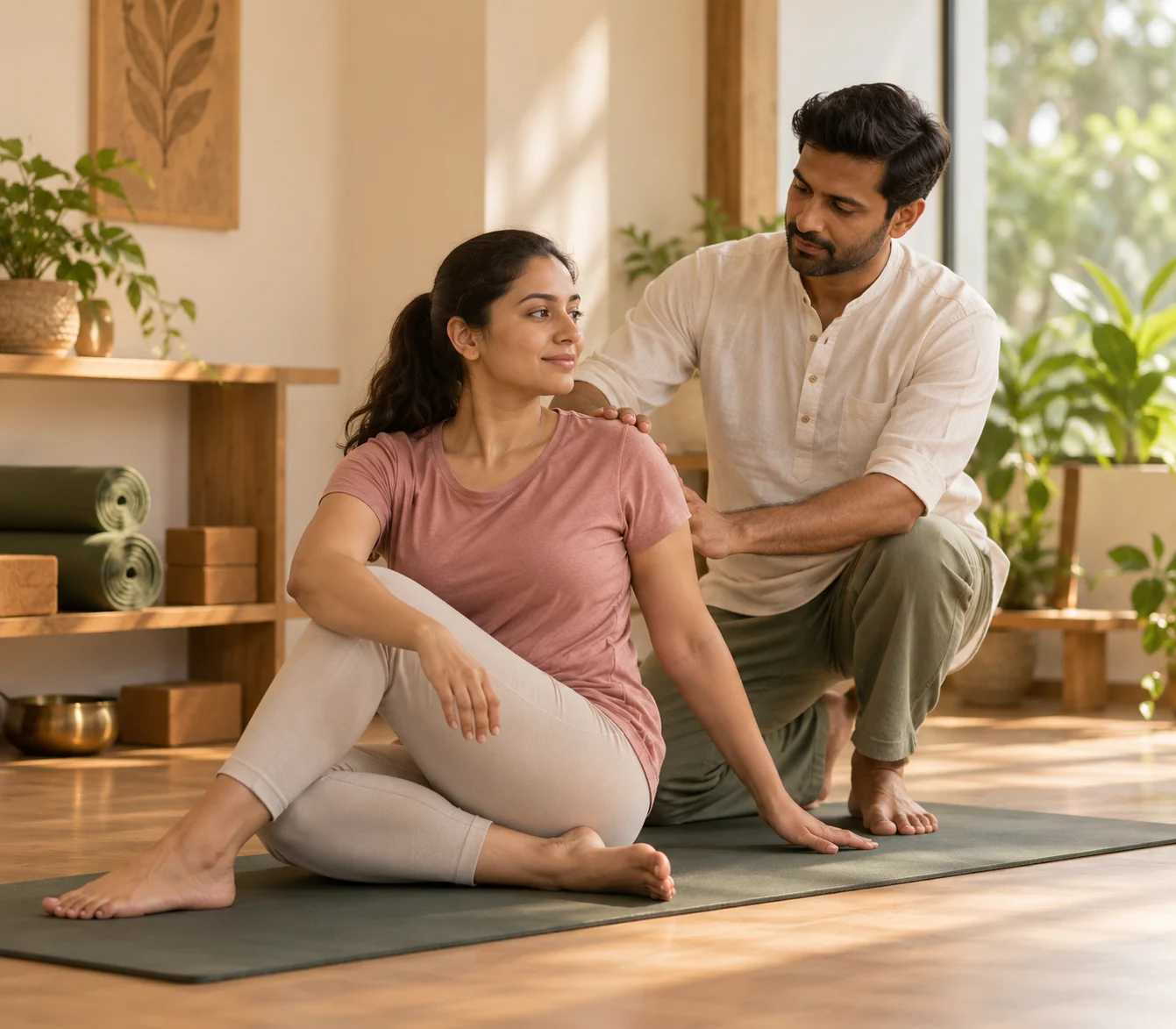
PCOS / PCOD Yoga
A steady practice alongside your medical care.
Explore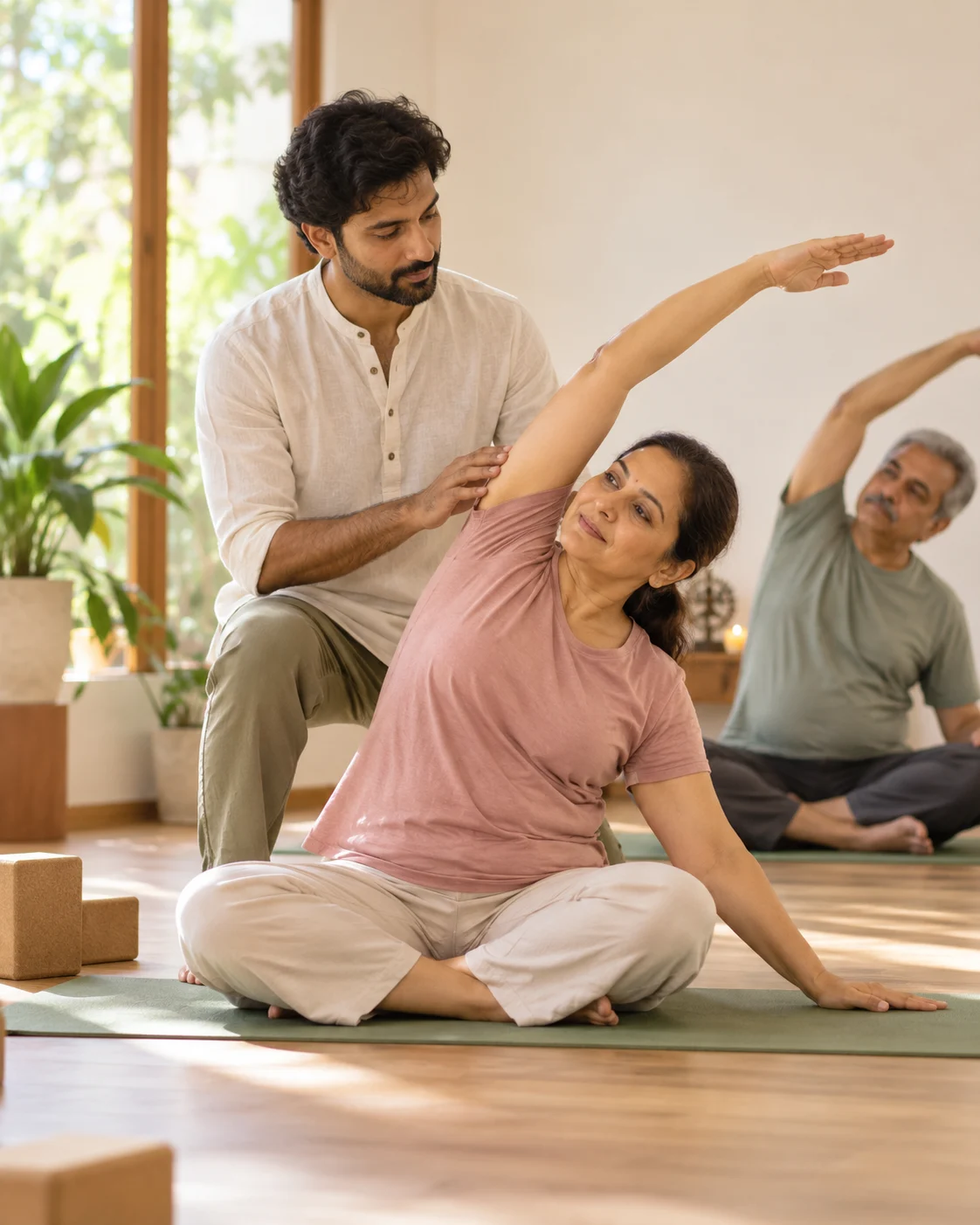
Diabetes Yoga
Gentle, guided practice alongside diabetes care.
Explore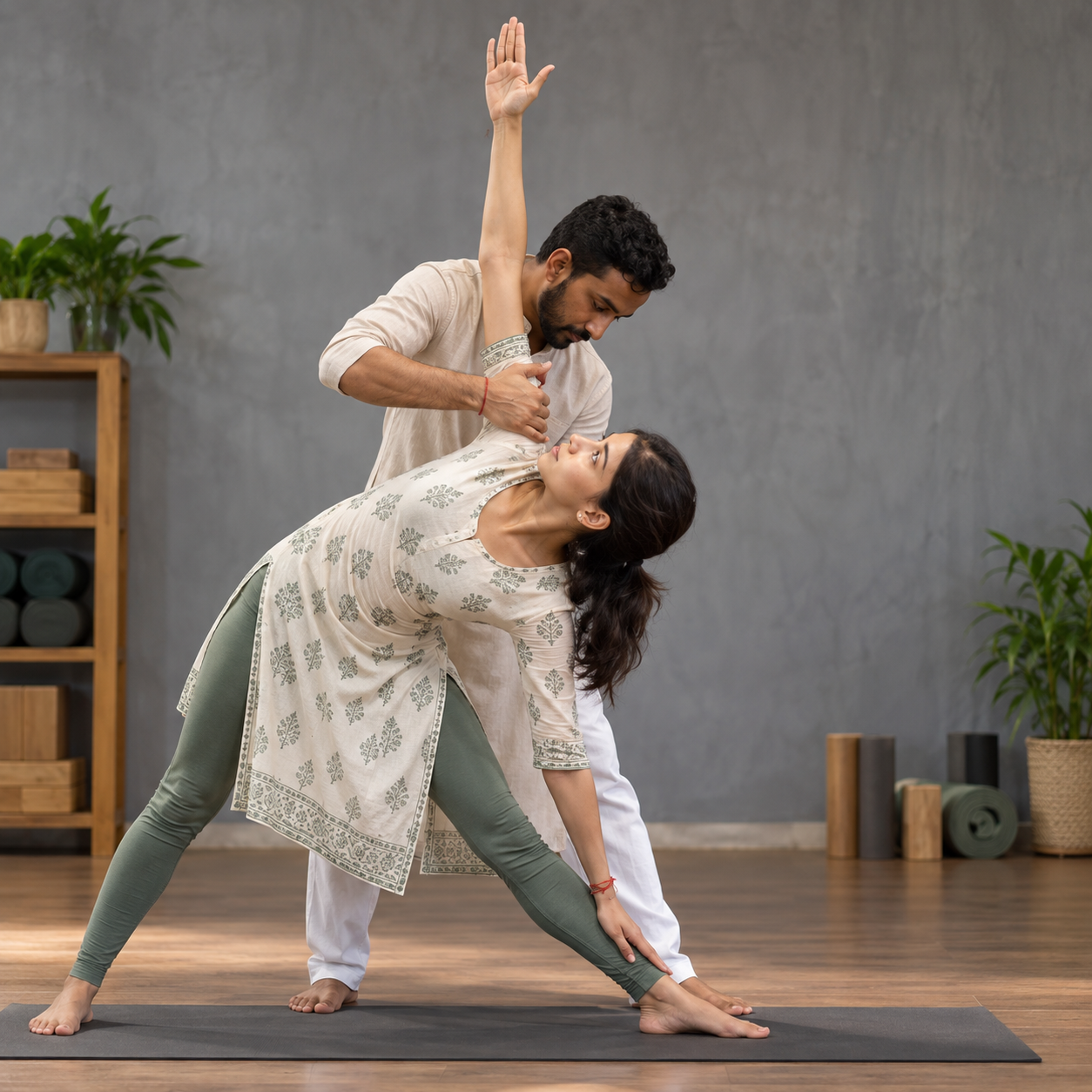
Personal Yoga Training
One-to-one sessions at the studio, at home or online.
Explore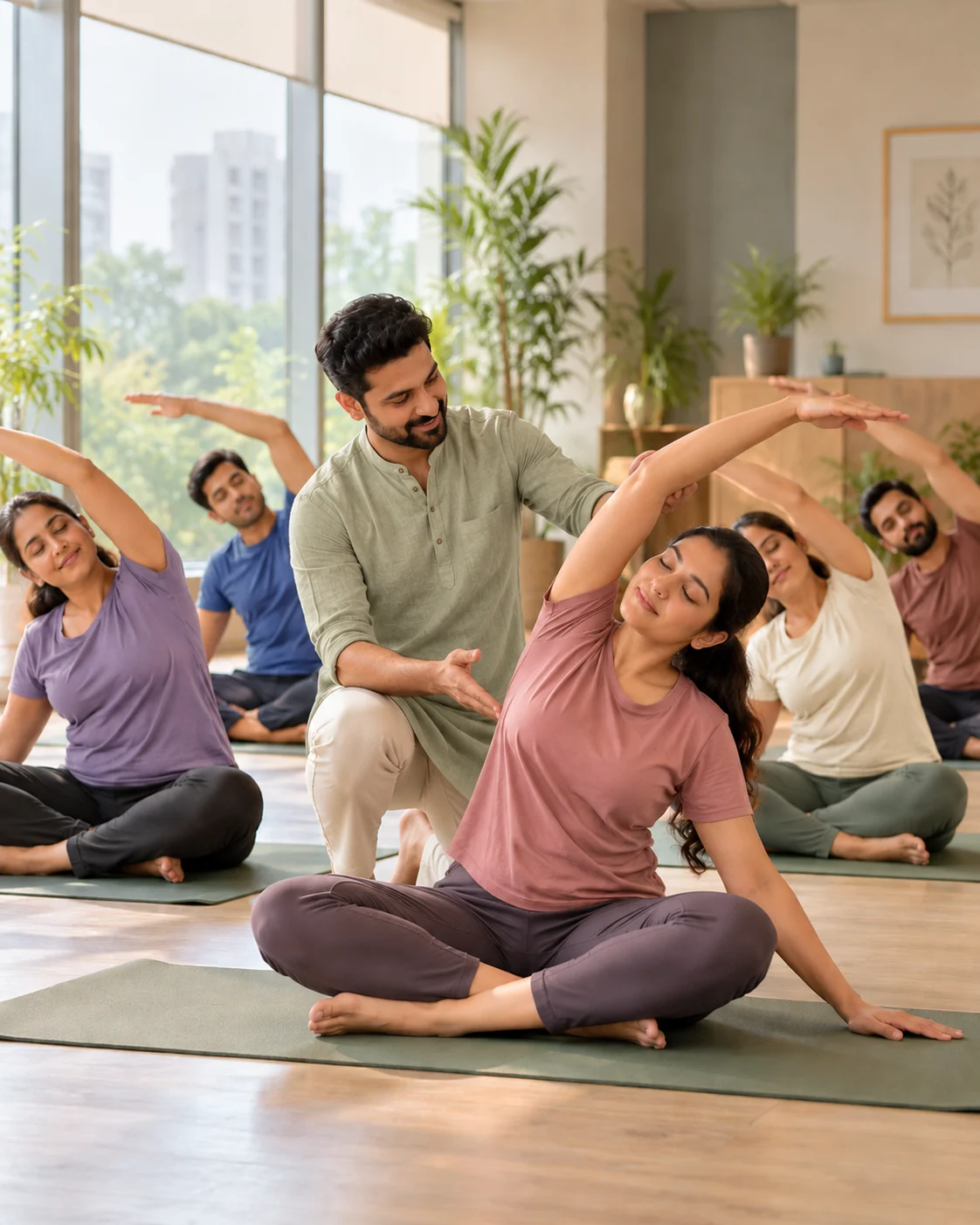
Corporate Yoga
On-site and online sessions for teams.
Explore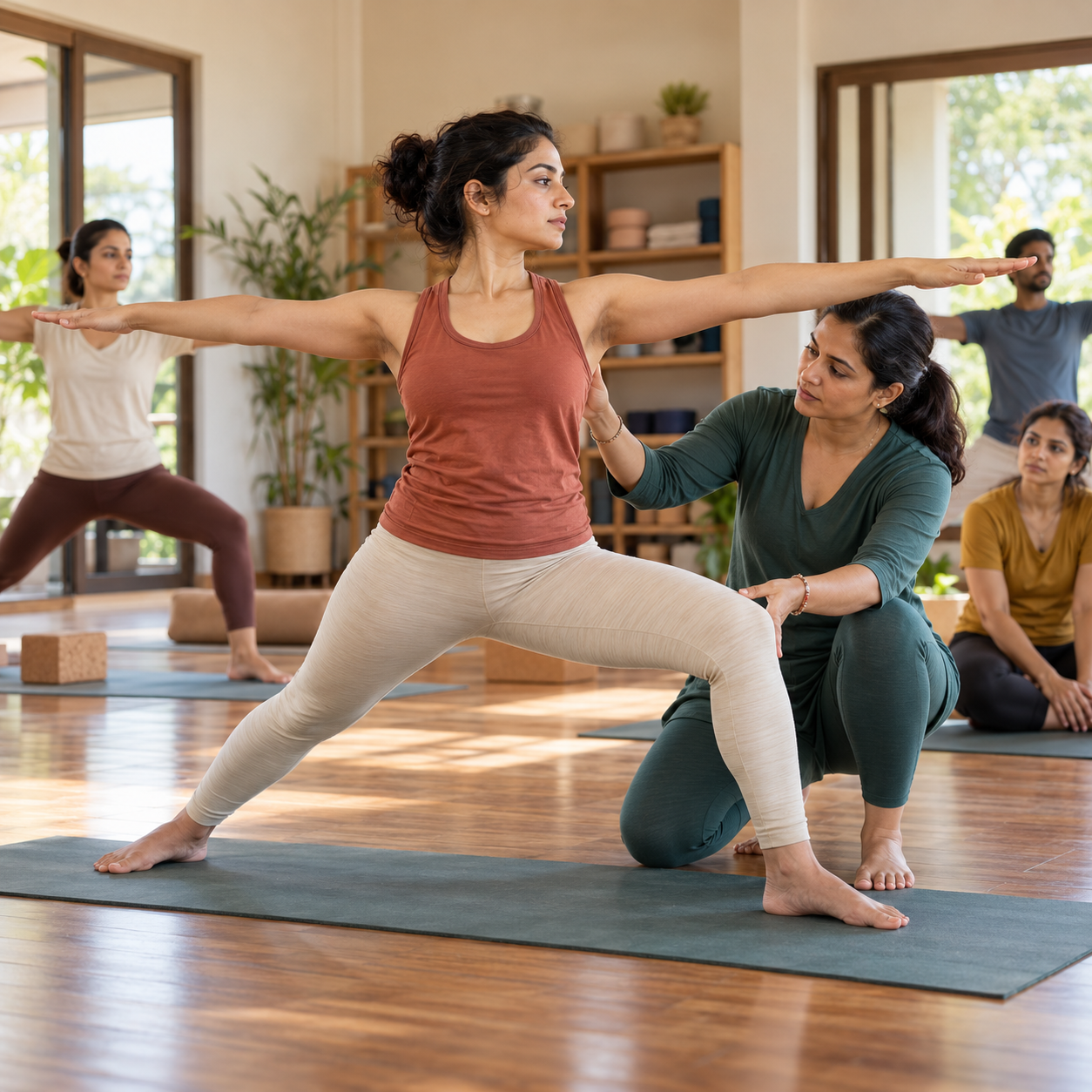
Teacher Training
Study yoga in depth and learn how to guide others.
Explore
Yoga is a complementary wellness practice and is not a substitute for medical advice, diagnosis or treatment. Please consult a qualified health professional about high blood pressure or any medical condition.