Meditation Classes in Baner, Pune
You don’t need a quiet mind to begin — just a guide, and a place to sit.
Guided meditation for complete beginners and busy minds, near Balewadi High Street and live online. 45-minute sessions in small, quiet groups, with a teacher leading every stage and room to sit however is comfortable for you.
First class free · No experience needed · Chair or cushion, your choice.
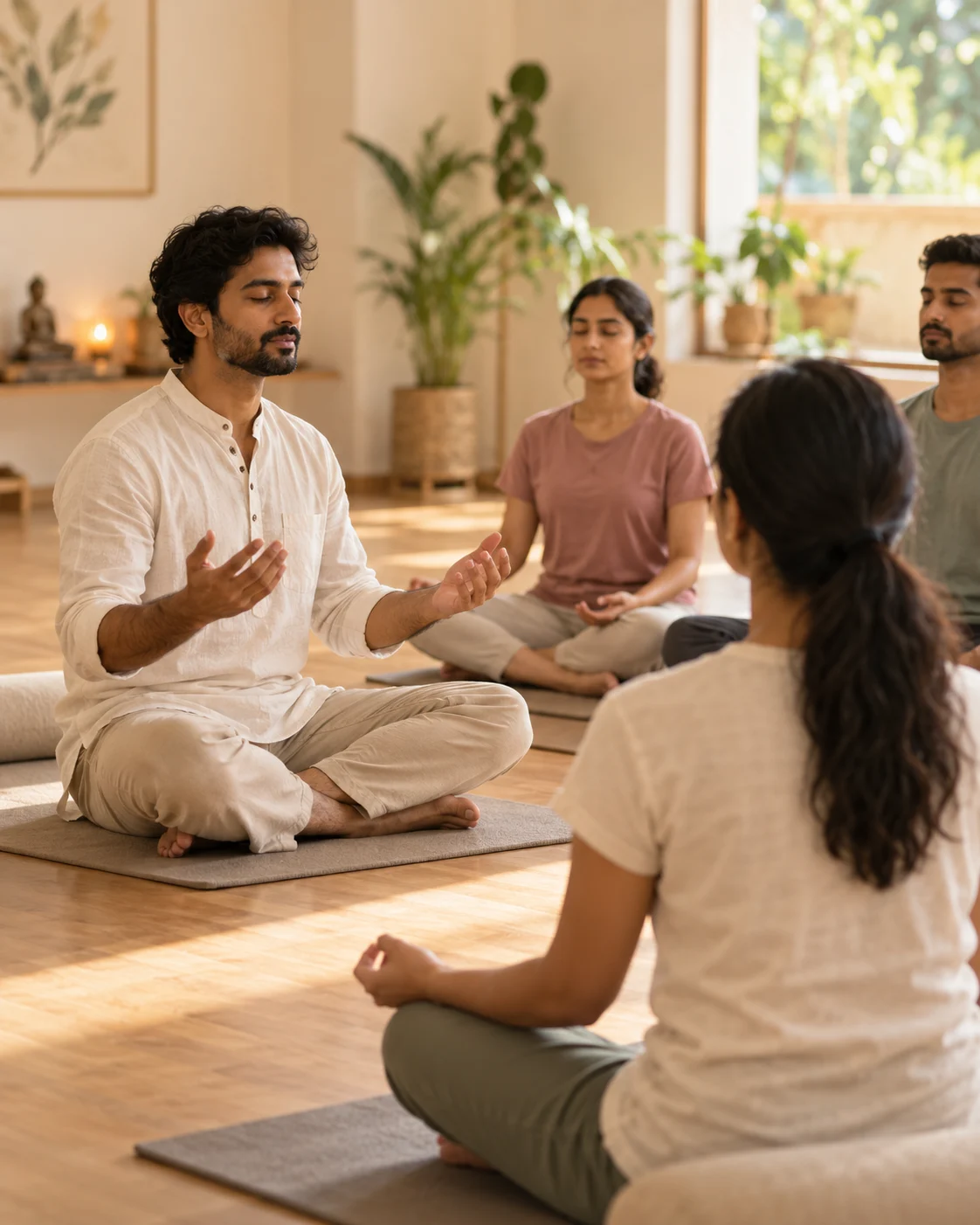
Notice · Return · Rest
What brings you to meditation?
Choose what feels closest. We will show you where to start.
Already know you want to try it? Book a Free Meditation Class
Is this you?
“I’d like to meditate, but…”
Most people who join a meditation class have tried before. What usually stops them is not a lack of discipline, but not knowing what to do when the mind refuses to sit still.
Feels like“I can’t meditate. My mind never stops.”
You close your eyes and the to-do list gets louder.
- In classYou are given one simple place to rest your attention, and taught what to do each time it wanders: notice, and come back.
- You may noticeThoughts still arrive, but they pull you along a little less. That is the skill, not a failure of it.
Feels like“I don’t know what I’m supposed to be doing.”
Sitting quietly, wondering whether this is ‘it’.
- In classA teacher’s voice leads each stage, in plain language, with enough silence to actually practise.
- You may noticeA clear sense of what meditation involves, and a method you can repeat on your own.
Feels like“I leave work, but work doesn’t leave me.”
Still replying to messages in your head at dinner.
- In classA deliberate transition: settling the body, then the breath, before any technique begins.
- You may noticeAn easier shift from the day’s pace into the evening, and a way to recreate it at home.
Feels like“I’ve downloaded the apps. I never keep going.”
A streak that lasted nine days, then quietly stopped.
- In classA fixed batch time, a small group practising together and a teacher who can answer the question an app can’t.
- You may noticePractice that is easier to keep because it is shared, and because your questions get answered.
Feels like“Silence makes me restless.”
Two minutes of quiet and you are already fidgeting.
- In classShort rounds to begin with, guidance between the silences, and freedom to adjust your posture or open your eyes.
- You may noticeStillness becomes more familiar and less of a test, a few minutes at a time.
Feels like“Savasana is the hardest part of my yoga.”
The body is still, but the mind races ahead to the next thing.
- In classDedicated time for the practices that the end of a yoga class only hints at: stillness, awareness, rest.
- You may noticeAsana and pranayama that feel more connected, and a stillness you can stay with a little longer.
If one of these sounded familiar, a single guided class is the simplest way to find out how meditation feels with support. Worried your mind is too busy? Read what actually happens when it wanders.
Try a meditation class freeGuided, not left to chance
Meditation classes in Baner, taught the way beginners actually learn
Sitting alone with a busy mind and no instructions is where most attempts at meditation end. Our classes take the guesswork out: the body is settled first, then the breath, then a single technique is taught clearly and practised together. Silence is introduced gradually, so you learn to stay with it rather than endure it.
Start With a Free Meditation Class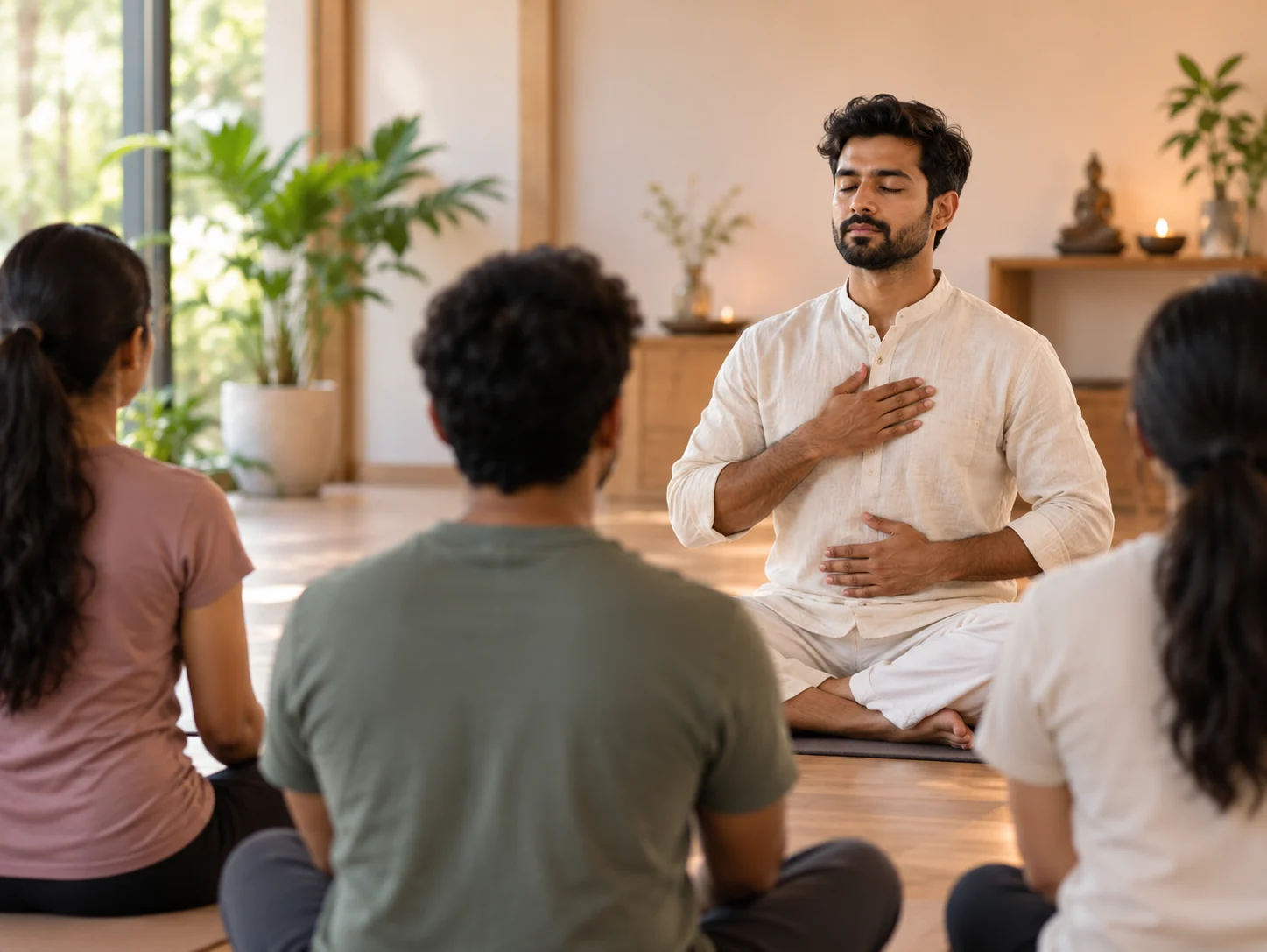
A voice to follow
Each stage is guided, so you are never left alone with a busy mind and no instructions.
Small, quiet groups
Enough people to share the stillness, few enough that the teacher knows how you are finding it.
Your comfort first
Floor, cushion or chair. Eyes open or closed. You are never asked to force a posture or a technique.
A practice for home
A few minutes you can repeat between classes, so the habit grows outside the studio too.
The practice
What is meditation?
Meditation is the practice of training attention. You choose a place to rest it, such as the breath, a sound or a word, and each time the mind drifts away, you notice and gently bring it back. Over time, that simple act becomes steadier, kinder and more familiar.
A practice with deep roots
In Patanjali’s Yoga Sutras, meditation sits near the end of the eight limbs of yoga: dharana, holding attention on one point, deepens into dhyana, an unbroken flow of attention. Posture (asana) and breath (pranayama) come earlier on that path for a reason. A comfortable body and a settled breath make it far easier to sit with the mind.
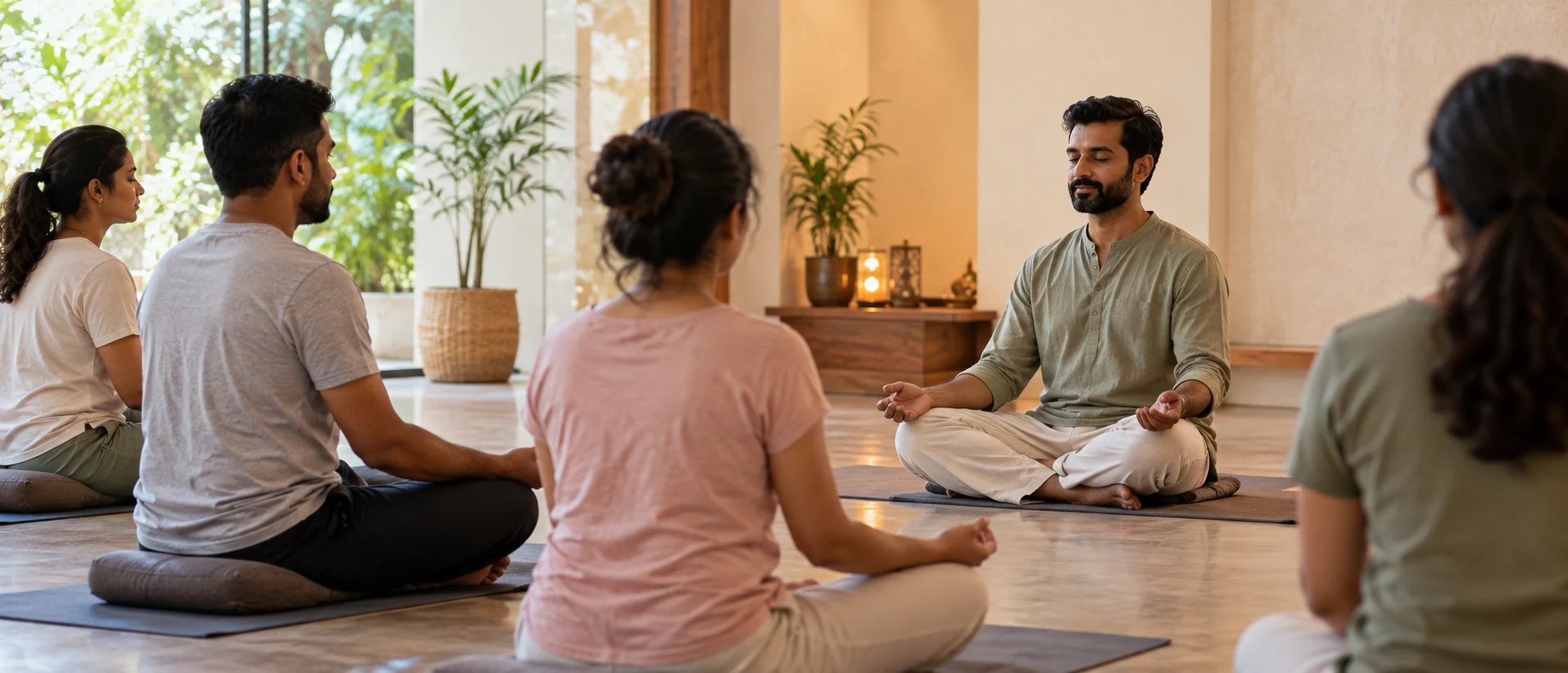
What meditation is not
Emptying the mind completely
Thoughts will come. You learn to notice them and return.
Sitting perfectly still for an hour
Sessions build gradually, and you may shift position whenever you need to.
Something that needs flexibility
A comfortable, upright seat is enough, including on a chair.
A test you pass or fail
A distracted session is still practice. Consistency matters more than any one sit.
Why guidance helps a beginner
Early on, the hardest questions are practical ones. Am I doing this right? Why is my knee aching? Is it normal to feel restless? A teacher answers them as they come up, adjusts the practice for the group, and keeps the pace gentle enough that you want to return. Consistency, more than intensity, is what makes meditation grow.
New to meditation? Your first class is freeThe most common worry
“What if my mind is too busy to meditate?”
Then you are exactly who meditation is for. A wandering mind is not a sign that you are doing it wrong; it is the material you practise with. Every time you notice that your attention has drifted and bring it back, you have completed one full repetition, the same way a single lift is one repetition in the gym.
A busy mind may simply give you more repetitions. In class, the teacher’s voice helps you notice sooner and return more gently, without turning each drift into a small judgement about yourself.
If you noticed that you drifted, you were meditating.
- 1
Rest your attention
On the breath, a sound, a word or a sensation.
- 2
The mind wanders
To a meeting, a meal, a memory. This is normal.
- 3
You notice
“I’m thinking.” That moment of noticing is awareness.
- 4
You come back
Gently, without scolding yourself. Then again.
Then back to the start. That returning is the practice.
What happens in a class
45 minutes, from busy to still
Every class follows the same gentle arc, so you always know what comes next. The technique changes from session to session; timings are indicative.
- 01
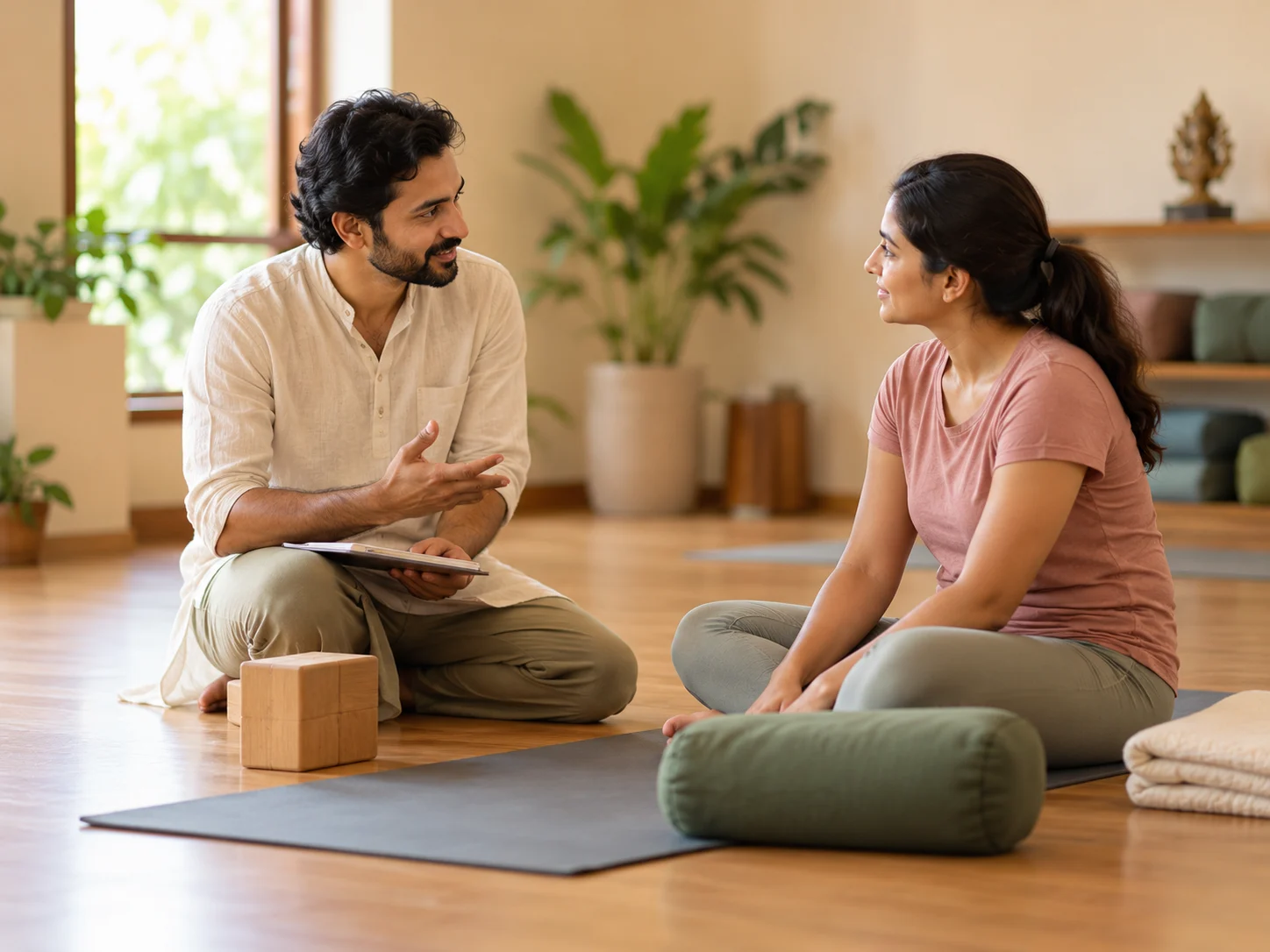
Arrive & settle
≈5 minChoose a mat, cushion or chair. First-timers have a short, private word with the teacher about comfort and any health concerns.
- 02
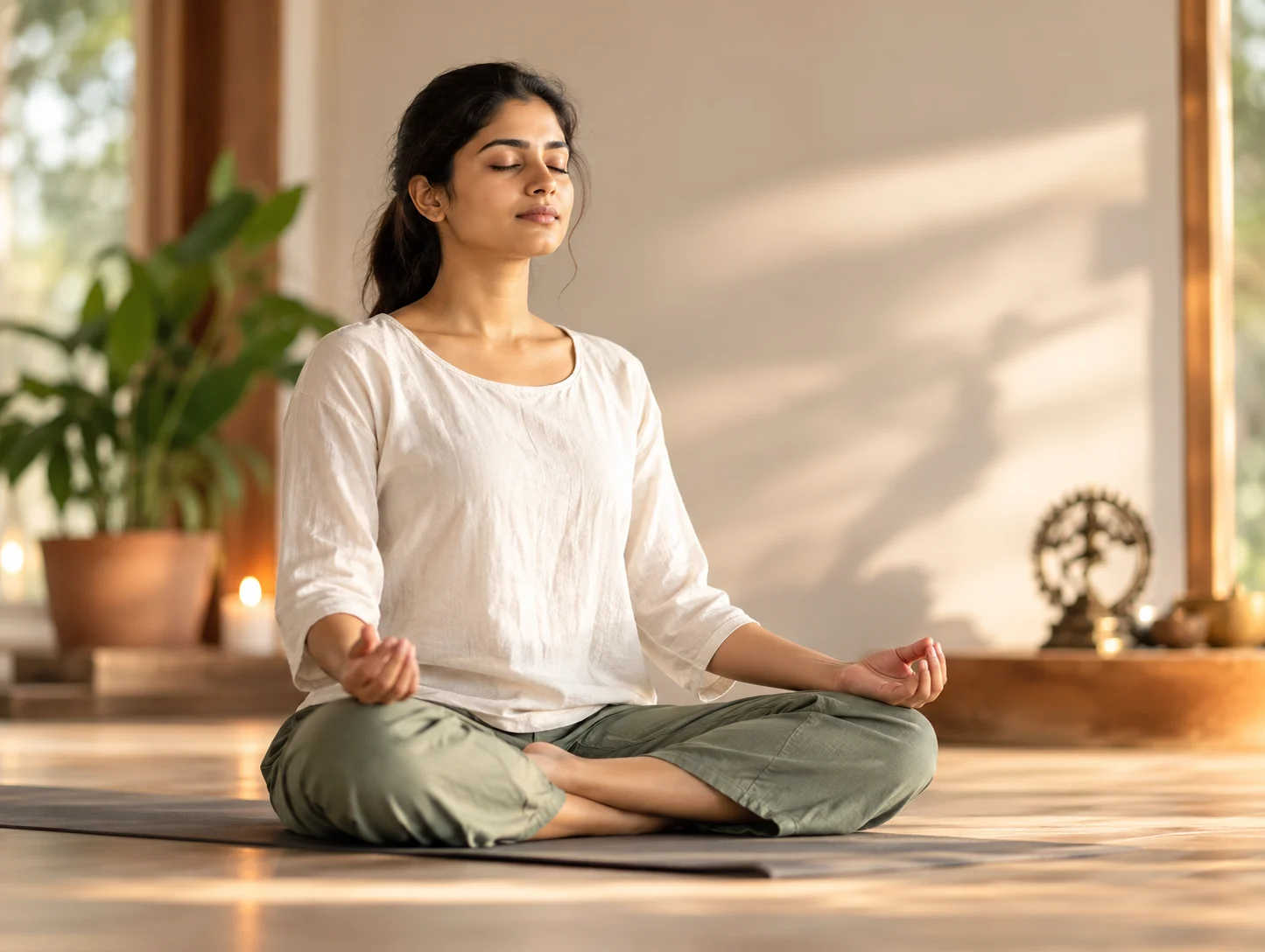
Breath awareness
≈5–8 minFeel the natural breath without changing it. This gives a busy mind something steady to hold on to.
- 03
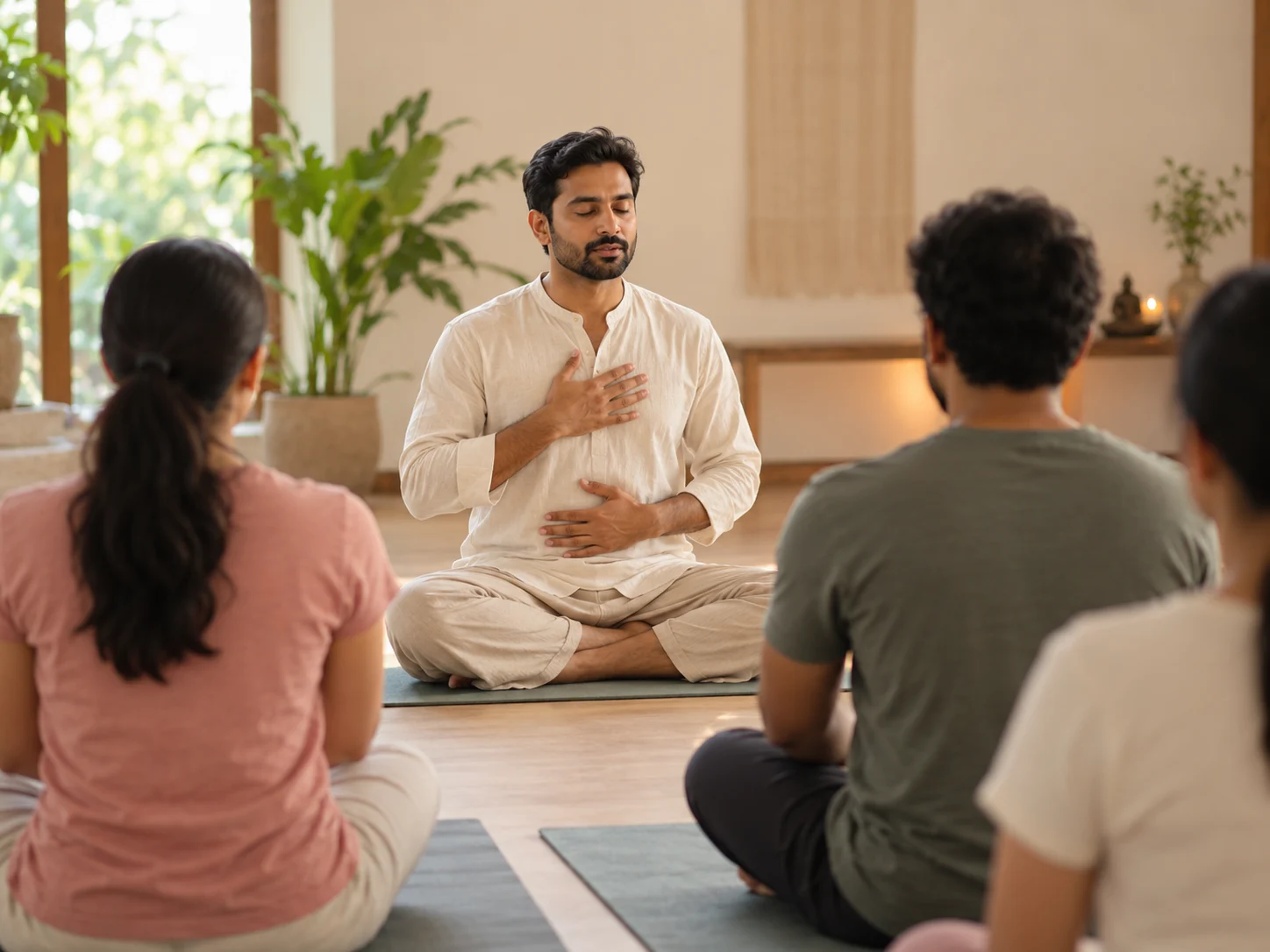
Guided practice
≈15 minThe technique for the session, such as a body scan, So-Hum or a short mantra, introduced clearly and practised together.
- 04
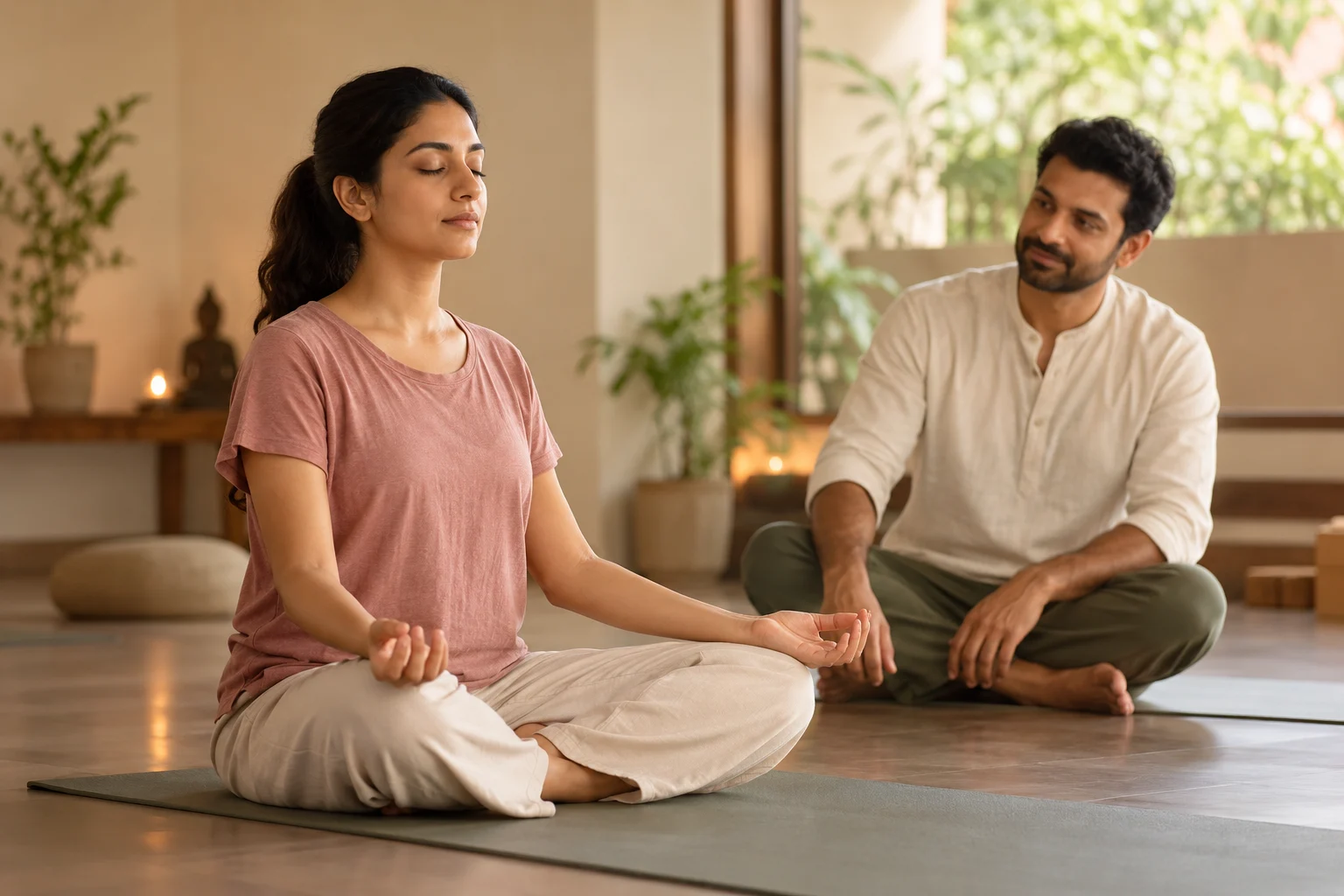
Quiet observation
≈10 minFewer words, more silence. Time to practise on your own, with the teacher close by.
- 05
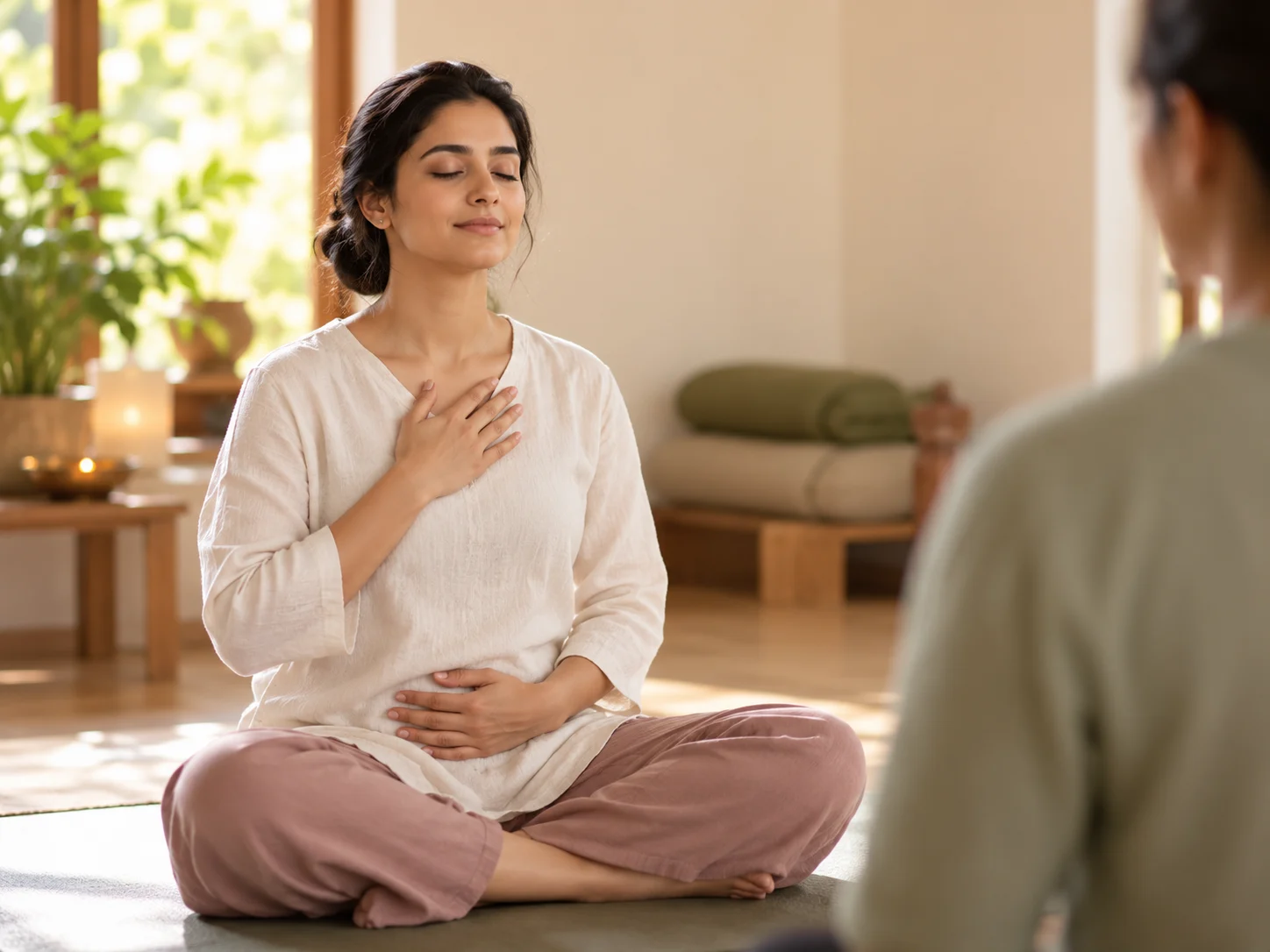
Return & reflect
≈5 minA gentle return, a moment to notice how you feel, and one short practice to try at home.
Class content
Meditation techniques you may learn
Not every class includes every technique. Your teacher chooses a practice for each session based on the group, the level and what you are ready for, so you learn a few methods well rather than many at once.
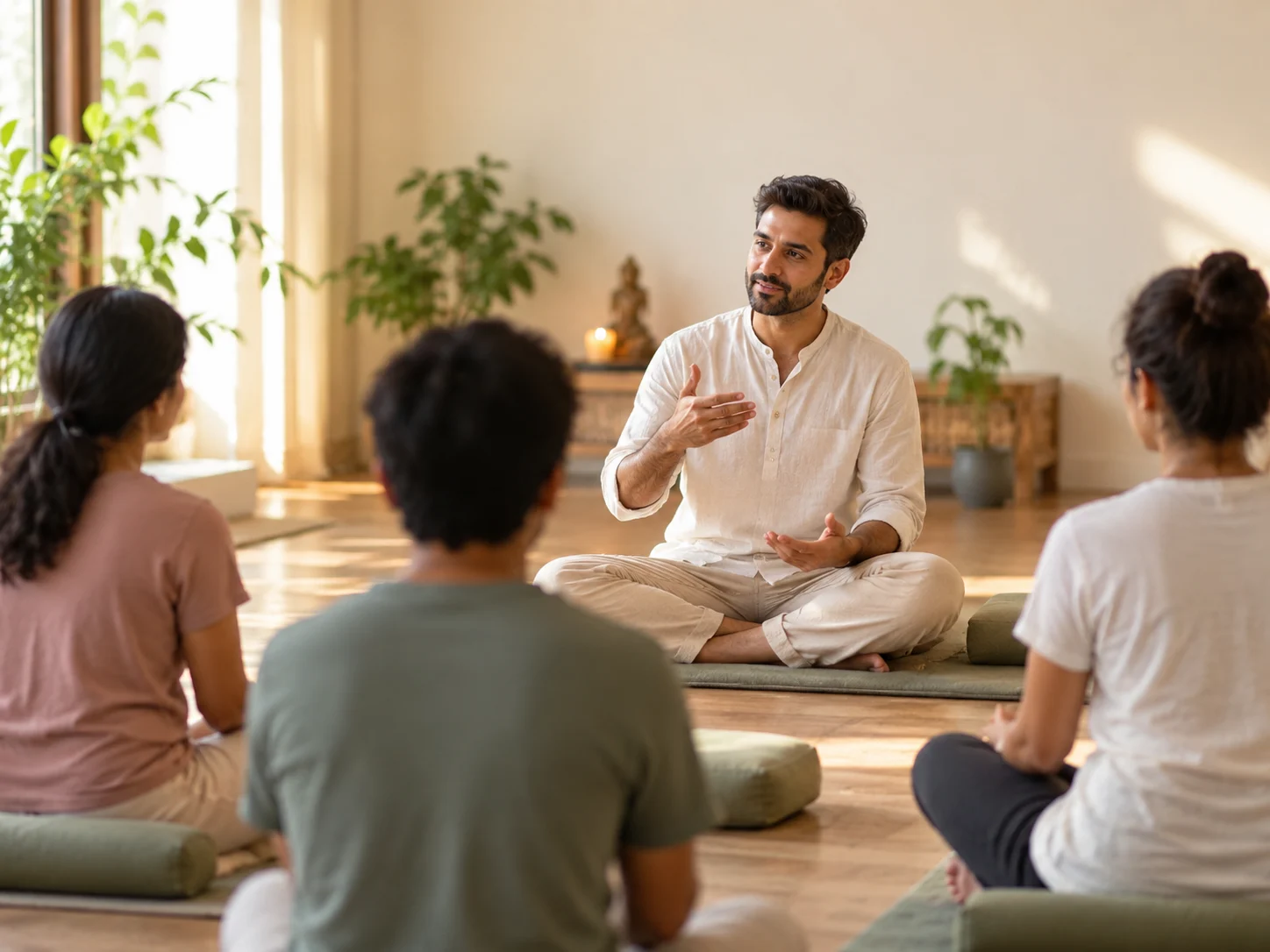
Steadying attention
Concentration practices: one anchor, returned to again and again
Breath awareness
Resting attention on the natural rhythm of the breath, often the first practice beginners learn.
So-Hum
Silently pairing ‘so’ with the inhale and ‘hum’ with the exhale, a simple mantra carried by the breath.
Om chanting
Chanting Om aloud, then sitting with the quiet that follows. The sound gives a restless mind a focus.
Mantra meditation
Silent repetition of a short word or phrase, taught with its meaning explained.
Trataka
Steady gazing at a candle flame, then at its after-image with eyes closed.
Widening awareness
Observing the body, sensations and thoughts as they come and go
Body scan
Moving attention slowly through the body, noticing sensation and tension without trying to fix it.
Witnessing (sakshi bhava)
Watching thoughts arise and pass, like traffic seen from a window, rather than following each one.
Walking meditation
Slow, attentive walking, useful for anyone who finds long seated practice difficult.
Rest & warmth
Deep relaxation and practices that soften how you meet yourself and others
Yoga Nidra
A guided practice lying down, moving through body, breath and imagery towards deep rest while staying aware.
Loving-kindness (maitri)
Quietly offering good wishes to yourself and others; maitri, or friendliness, is named in the Yoga Sutras.
Some practices are not right for everyone. Candle gazing is not suitable for people with epilepsy or certain eye conditions, and long silent sits may not suit everyone at every time in life. Your teacher always offers an alternative, and you can return to simple breath awareness whenever you like.
Meditation pairs naturally with Pranayama
Not sure where to start? Ask on WhatsAppBenefits
What regular practice can bring
Individual experiences vary, and changes tend to be gradual. These are the shifts students most often describe after practising regularly.
- From reacting to responding
- From scattered to steady
- From rushing to pausing
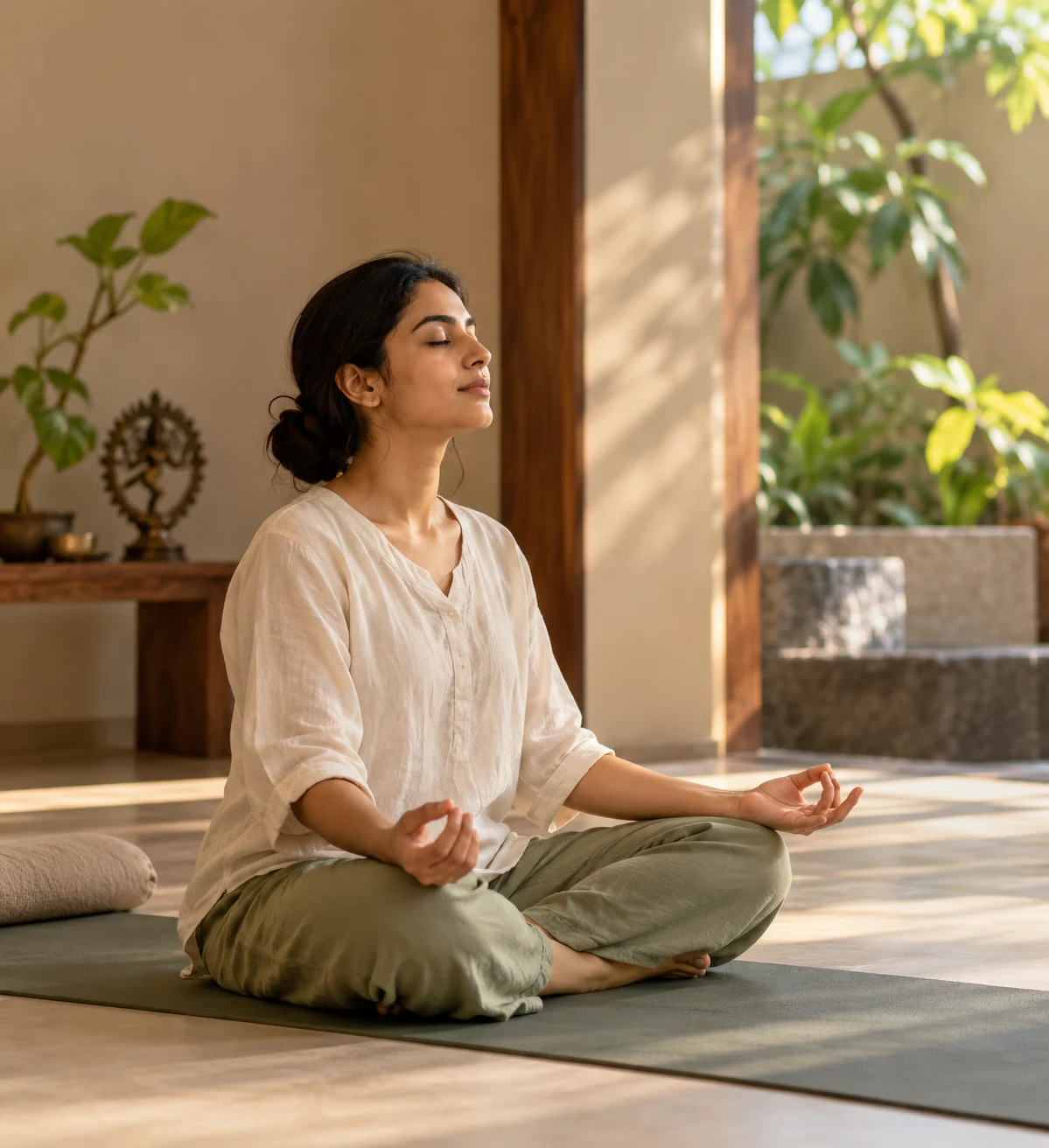
The skill travels with you. One unhurried breath before you reply to a message counts.
Steadier attention
Staying with one task, one conversation or one page for a little longer.
The ability to pause
A small gap between what happens and how you respond to it.
Knowing your own mind
Recognising your habitual thought loops, and where they tend to take you.
Rest you can return to
A familiar route into relaxation, rather than ‘trying to relax’.
Calmer transitions
A steadier start to the morning, or a clearer line between work and evening.
A deeper yoga practice
Asana and pranayama that feel more attentive and connected.
Meditation is a complementary wellness practice. It is not a substitute for medical or mental-health diagnosis, therapy or treatment. If you are receiving care for any condition, please continue to follow your healthcare professional’s advice.
See how it feels — try a free classWho it’s for
Who our meditation classes are for
No one arrives good at meditation. If you can sit comfortably for a few minutes and follow a voice, you can begin.
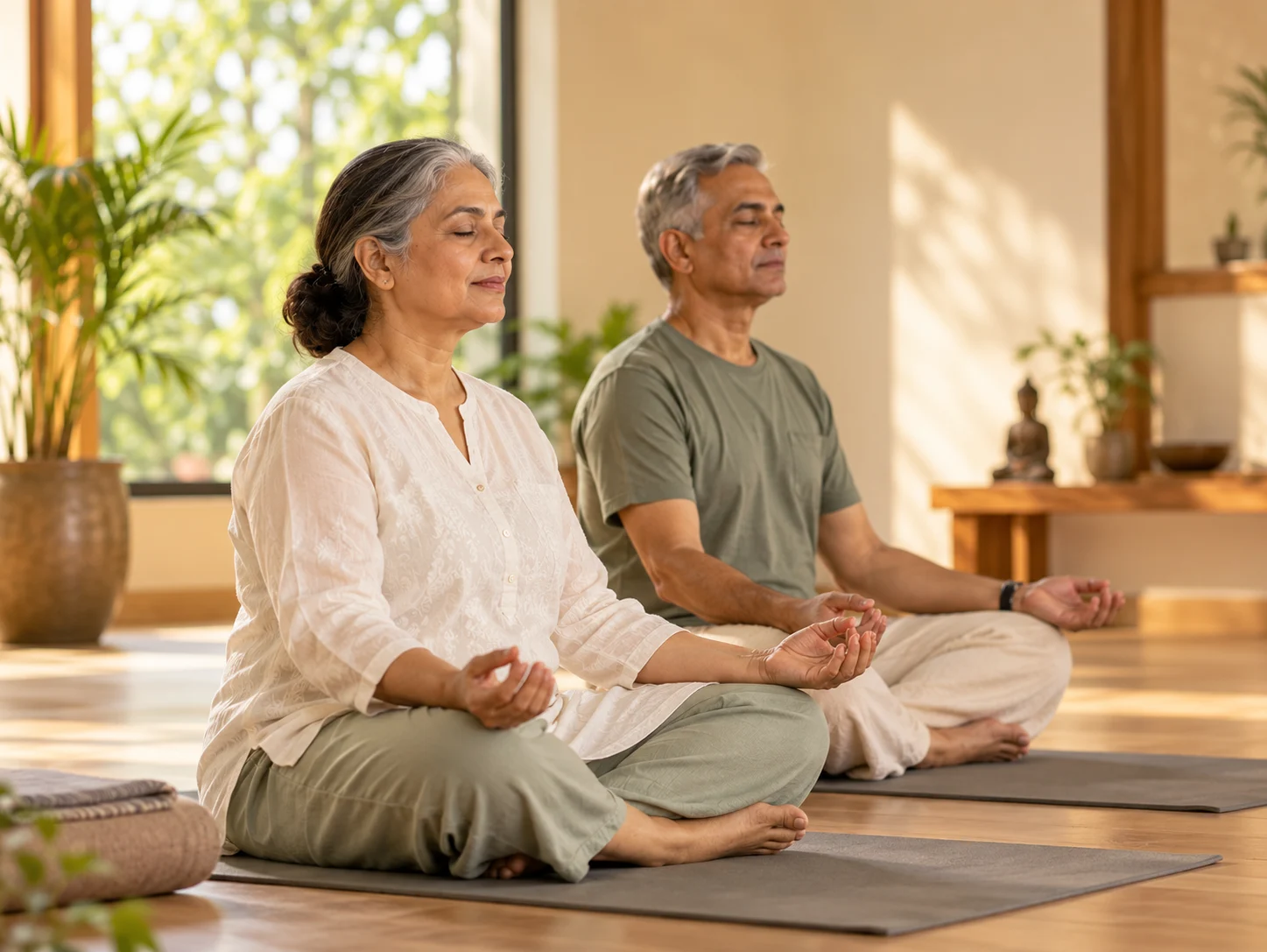
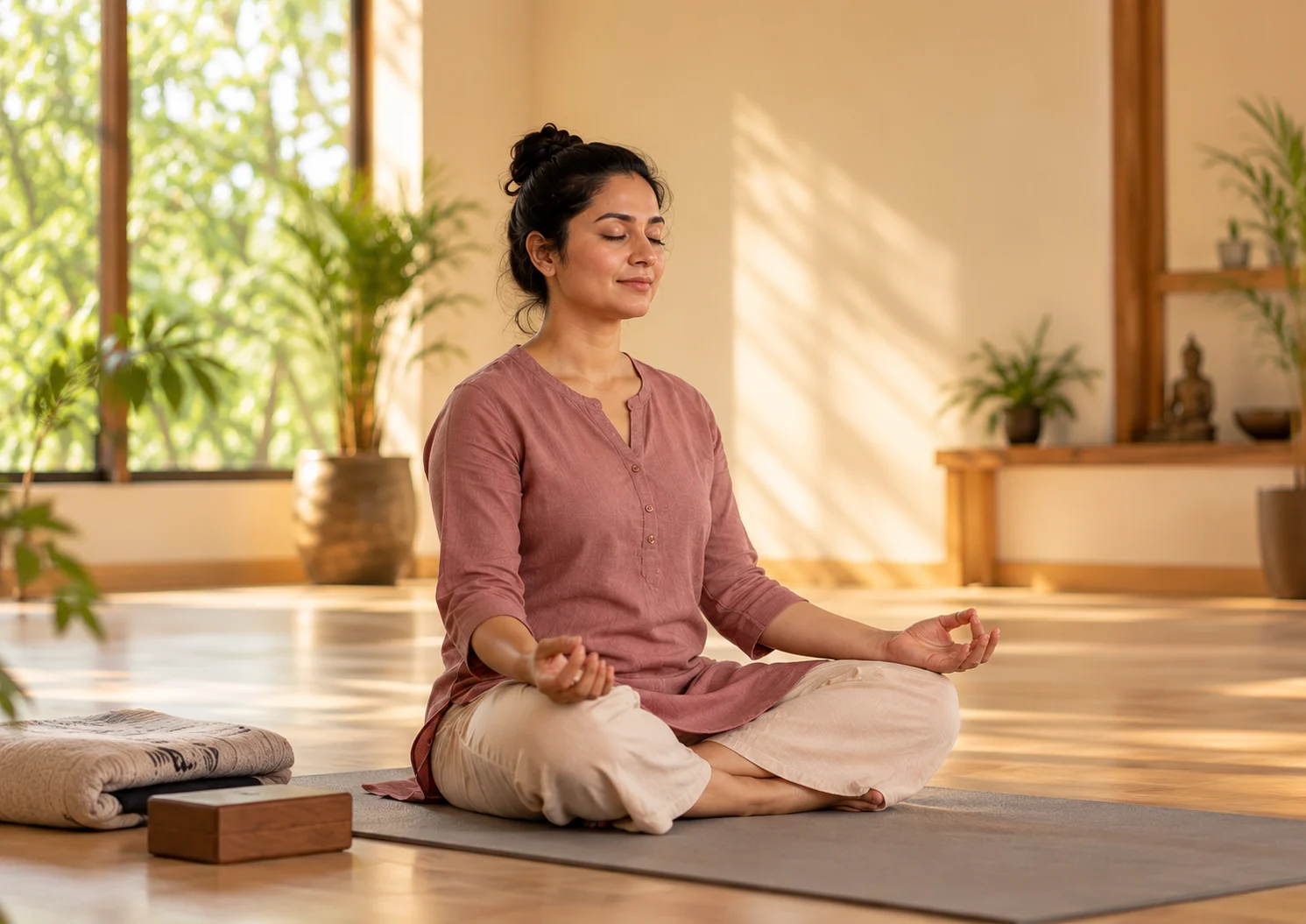
This class welcomes you if…
- You have never meditated before, or tried once and decided you were ‘bad at it’
- Your mind feels constantly busy, and you would like a way to pause
- You have used meditation apps but want real guidance and a regular time
- You would rather learn with a teacher than practise completely alone
- You want a calmer start or end to the day
- You already practise yoga or pranayama and want to add meditation properly
- You are older, less flexible or prefer a chair (chair options available)
You may want to speak with your healthcare professional first if you…
- Are currently receiving care for a mental-health condition, such as depression, anxiety, PTSD or psychosis
- Have experienced trauma or a recent bereavement, where long periods of silence may bring up strong feelings
- Have epilepsy or a light-sensitive eye condition (relevant to candle-gazing practices such as trataka)
- Are pregnant — we can suggest comfortable positions, or our Prenatal Yoga class
- Have pain or a condition that makes sitting still for long periods uncomfortable
- Take medication that makes you drowsy or light-headed
This does not necessarily mean you cannot join. It means we will talk first and adapt the practice, for example with shorter silences or eyes-open techniques. Our classes are not a substitute for therapy or crisis support. In every class: if anything feels overwhelming, open your eyes, move, rest, and let the teacher know.
Have a question? Talk to us before bookingYour first class
Everything to know before you arrive
What should I wear?
Loose, comfortable clothes you can sit in without anything pressing. A light shawl helps during stillness.
Do I need to bring anything?
Just a water bottle. Bring a mat if you have one; let us know if you don’t.
Do I need experience?
No. The first class assumes you have never meditated, and every stage is explained.
Must I sit cross-legged?
No. You can sit on a cushion, kneel with support, sit against a wall or use a chair.
Can I keep my eyes open?
Yes. A soft, lowered gaze works well. Close your eyes only if and when it feels comfortable.
What if I can’t concentrate?
Expected, especially at first. Noticing that you drifted and coming back is the practice itself.
What if I fall asleep?
It happens, particularly in relaxation practices. It usually means you needed rest. No one minds.
What if I feel uncomfortable?
Shift position, open your eyes, stretch or step out. Tell the teacher afterwards and we will adapt.
Comfort is part of the practice
- Cushions and chairs for every body
- A wall or back support if you need it
- Change position at any time
- Eyes open or closed, your choice
- No technique is ever forced
- Duration
- 45 minutes
- Level
- Complete beginners welcome; techniques build gradually
- Class size
- Small, quiet groups
- Batches
- Morning and evening batches See full schedule
- Location
- Anahat Yoga, Colours Preschool, Sr 135, Plot 128 Ram Indu Park, Near Balewadi High Street, Baner, Pune 411045
- Online
- Live online batches, camera optional
- Also convenient for
- Balewadi · Wakad · Pashan · Aundh
- Fees
- First class free · plan options shared when you enquire
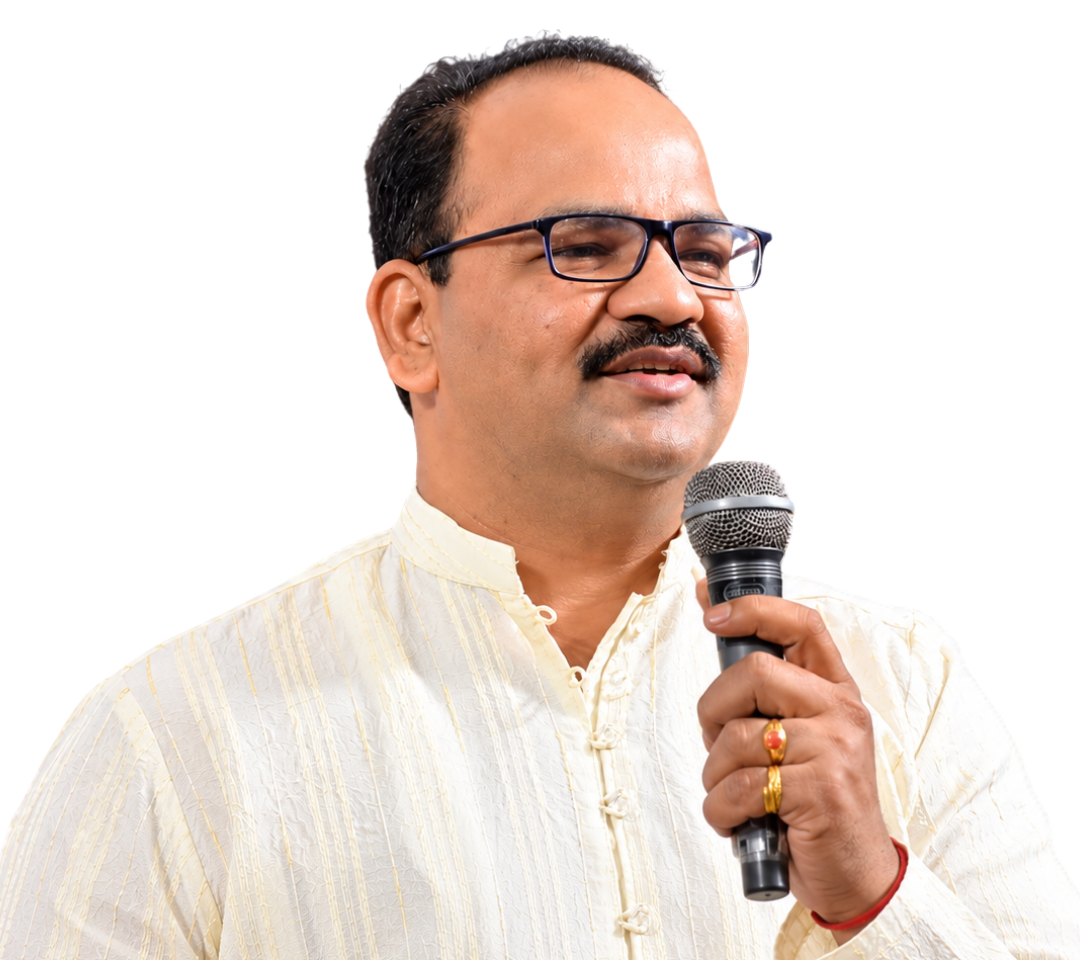
Your teacher
Learn with Dr. Vishvanath Pise
Dr. Vishvanath Pise is the founder and director of Anahat Yoga, near Balewadi High Street in Baner. He designs and guides every program at the studio — from regular batches to pranayama and meditation — and leads a team of teachers who share the same patient, step-by-step way of introducing stillness to beginners.
You are not trying to stop the mind. You are learning to notice where it goes, and to come back kindly.
- Founder & director, Anahat Yoga
- Small, teacher-led batches
- Studio & live online
In our students’ words
We publish only real reflections, shared with permission by people who meditate with us. While we gather them, you can read what students say about Anahat Yoga on Google.
Questions
Meditation classes — frequently asked questions
Is meditation suitable for complete beginners?
Yes. Our meditation classes in Baner are designed with beginners in mind. Every stage is guided in plain language, sessions start with short periods of silence, and you are never expected to know what to do already.
What happens during a meditation class?
Each 45-minute class moves from settling in and breath awareness to a guided technique, a period of quieter practice, and a short reflection at the end. You leave with one simple practice to try at home.
What if I cannot stop thinking?
You are not expected to. Thoughts are a normal part of meditation. The practice is noticing when your attention has wandered and gently bringing it back, and each time you do that, you are meditating.
Do I have to sit cross-legged on the floor?
No. You can sit on a cushion, kneel with support, lean against a wall or sit on a chair. A comfortable, reasonably upright position matters far more than a traditional posture.
Do I need to close my eyes?
No. Many beginners prefer a soft, lowered gaze. You can close your eyes when it feels comfortable, and open them again at any time.
How long is a class, and how often should I practise?
Classes last 45 minutes. Regular practice matters more than long sessions, so attending class regularly and adding a few minutes at home on other days is a good way to build the habit.
How is a guided class different from a meditation app?
Apps can be useful, but they cannot see you or answer your questions. In class, a teacher adapts the practice to the group, helps with posture and difficulties, and a fixed batch time with other people makes the habit easier to keep.
Can meditation be combined with yoga and pranayama?
Yes, and traditionally they belong together. Asana prepares the body to sit comfortably, and pranayama helps settle the breath and mind. Many students attend meditation alongside our yoga or pranayama classes.
What should I bring to my first class?
Comfortable clothing, a water bottle and, if you like, a light shawl for the quieter parts of the class. Let us know if you need a mat, cushion or chair.
Do you offer online meditation classes?
Yes. We run live online batches, so you can practise from home with the same guided structure as studio classes. Your camera is optional.
Is meditation suitable for everyone?
Meditation is generally a gentle practice, but it is not a substitute for medical or mental-health care. If you are receiving treatment for a mental-health condition, have experienced trauma or have concerns about your health, please speak with your healthcare professional and with us before joining, so we can suggest suitable practices.
What can I realistically expect from regular practice?
Experiences vary. Many students describe finding it easier to pause, to notice their own thought patterns and to settle at the end of the day. These changes tend to be gradual and come from regular practice rather than any single class.
Is the first class really free?
Yes, your first trial class is free, with no obligation. If you would like to continue, we will share the batch and plan options with you.
I live in Wakad or Balewadi. Is the studio easy to reach?
Our studio is near Balewadi High Street in Baner, a few minutes from Balewadi and an easy drive from Wakad. If you prefer not to travel, you can join a live online batch instead.
Still have a question?
We usually reply on WhatsApp within the day.
Free trial class
Your first meditation class is on us
Give yourself 45 unhurried minutes. Sit however is comfortable, follow a steady voice, and leave knowing what meditation actually feels like, with a short practice to take home. If it feels right, we will help you choose a batch.
Before you book — take one slow breath with us.
- WhatsApp +91 98814 75758
- Call +91 98814 75758
- Studio hours: Mon–Sat, 6:00 AM – 8:30 PM
No payment needed. We will call or WhatsApp you to confirm your slot.
Continue your practice
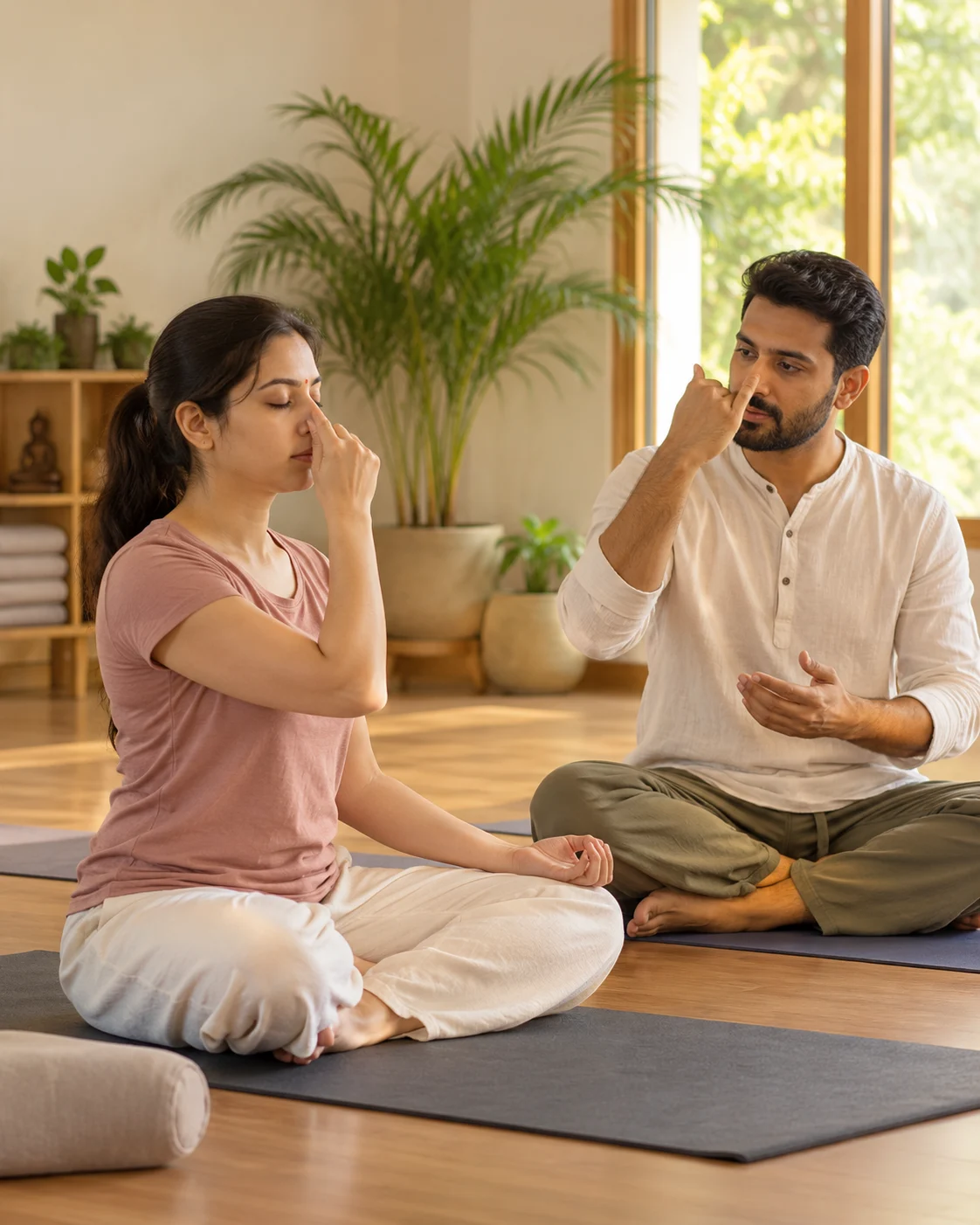
Pranayama
Guided, step-by-step yogic breathing.
Explore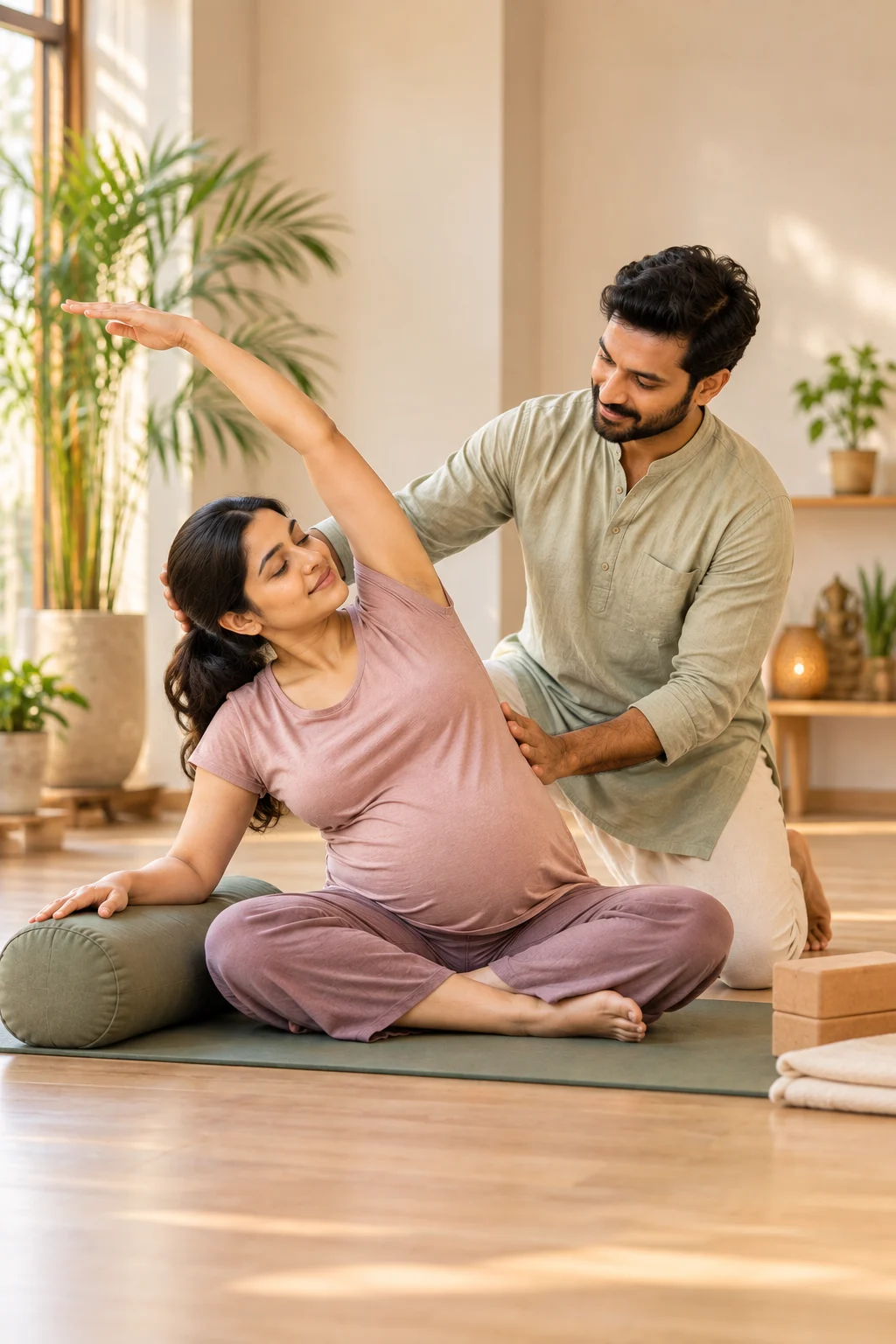
Prenatal Yoga
Gentle, adapted practice for each trimester.
Explore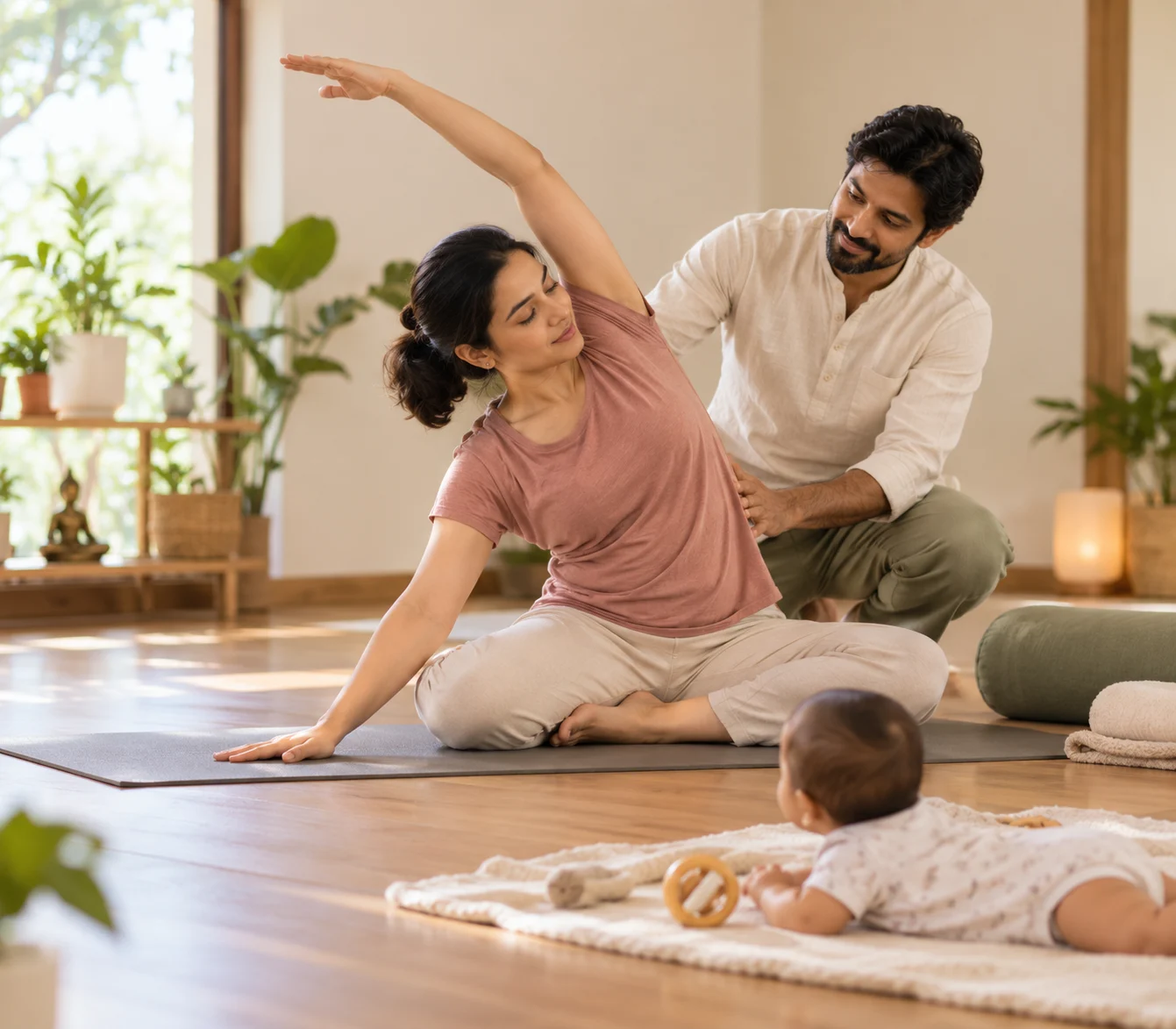
Postnatal Yoga
Rebuild core, pelvic floor and energy after childbirth.
Explore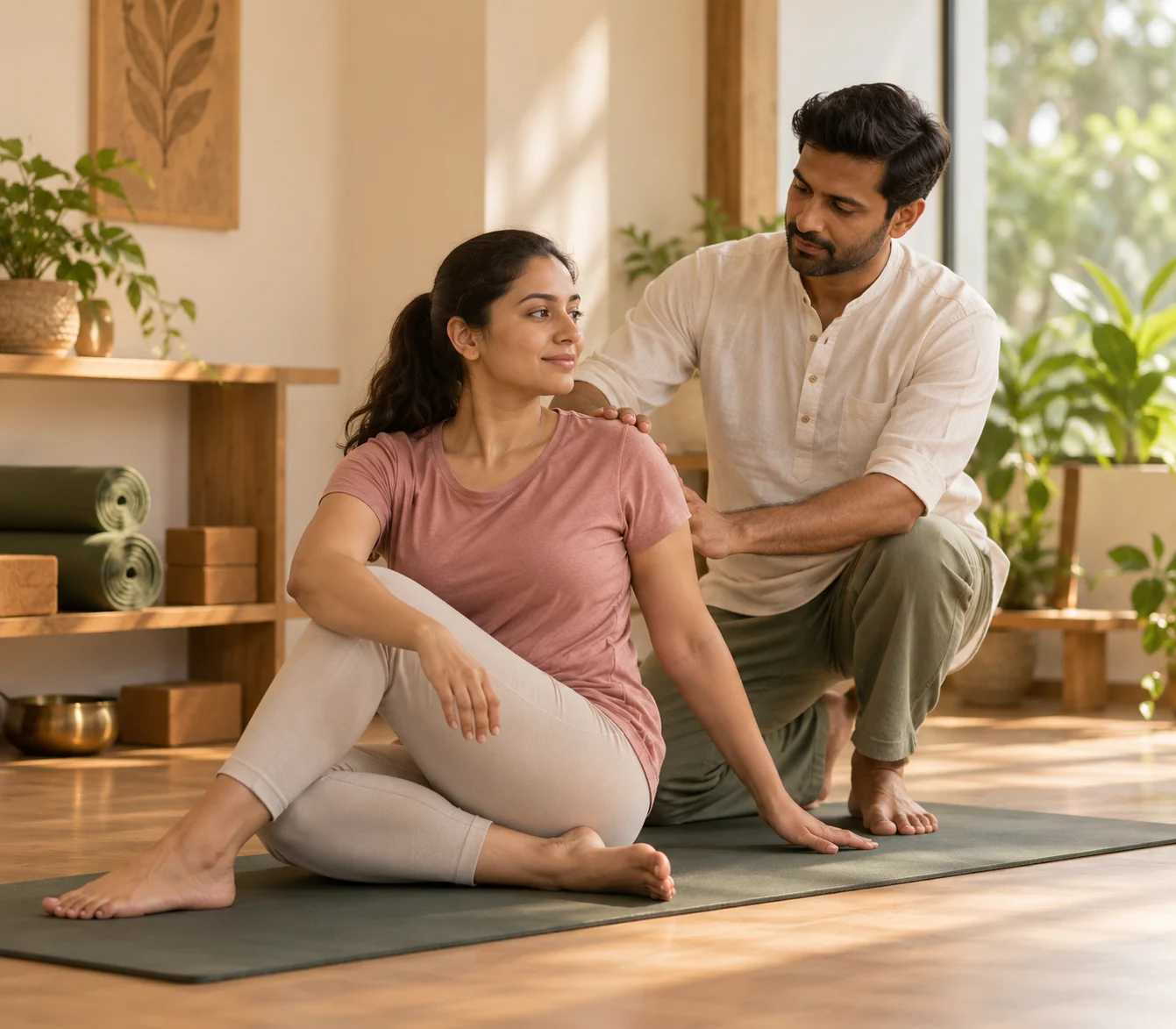
PCOS / PCOD Yoga
A steady practice alongside your medical care.
Explore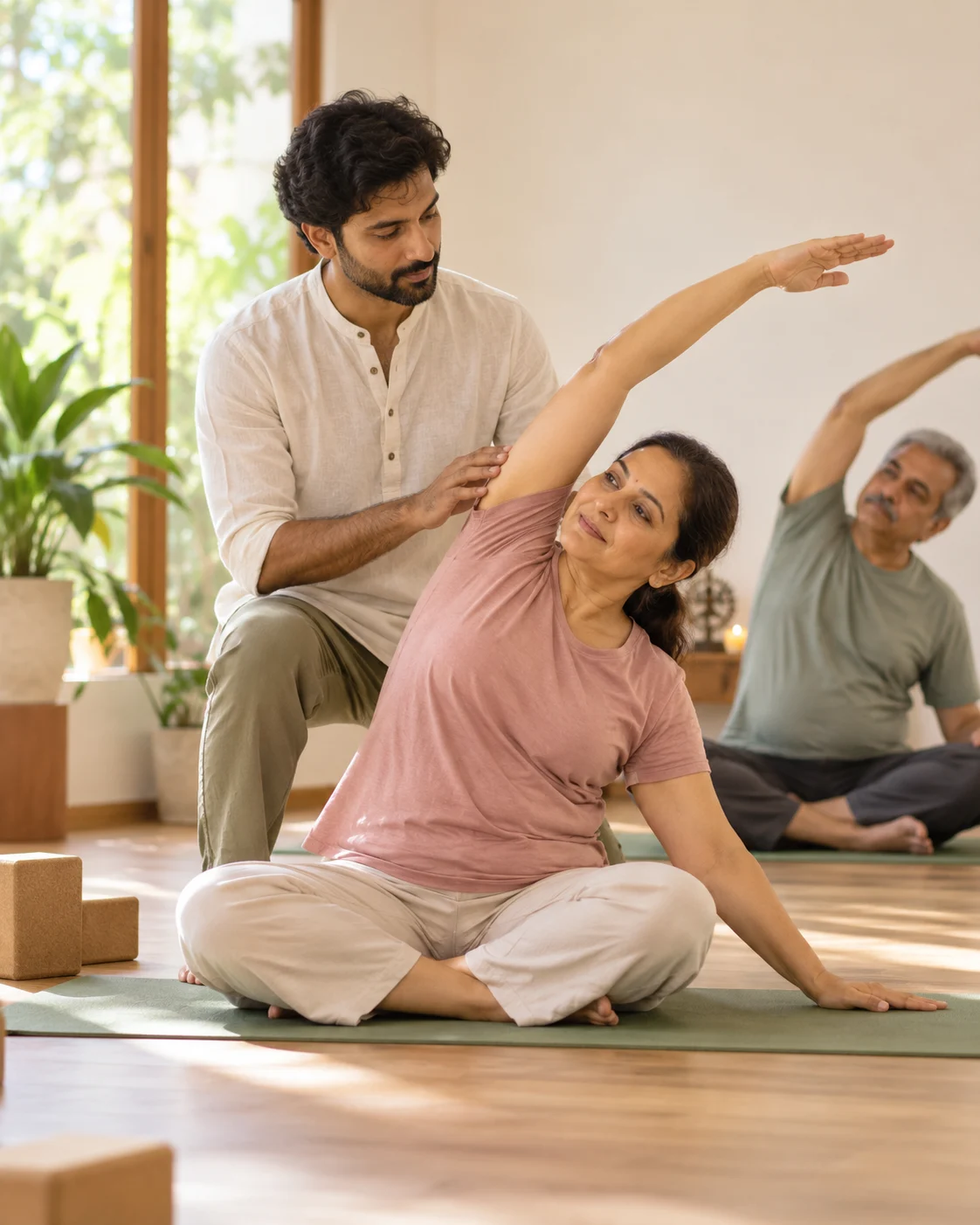
Diabetes Yoga
Gentle, guided practice alongside diabetes care.
Explore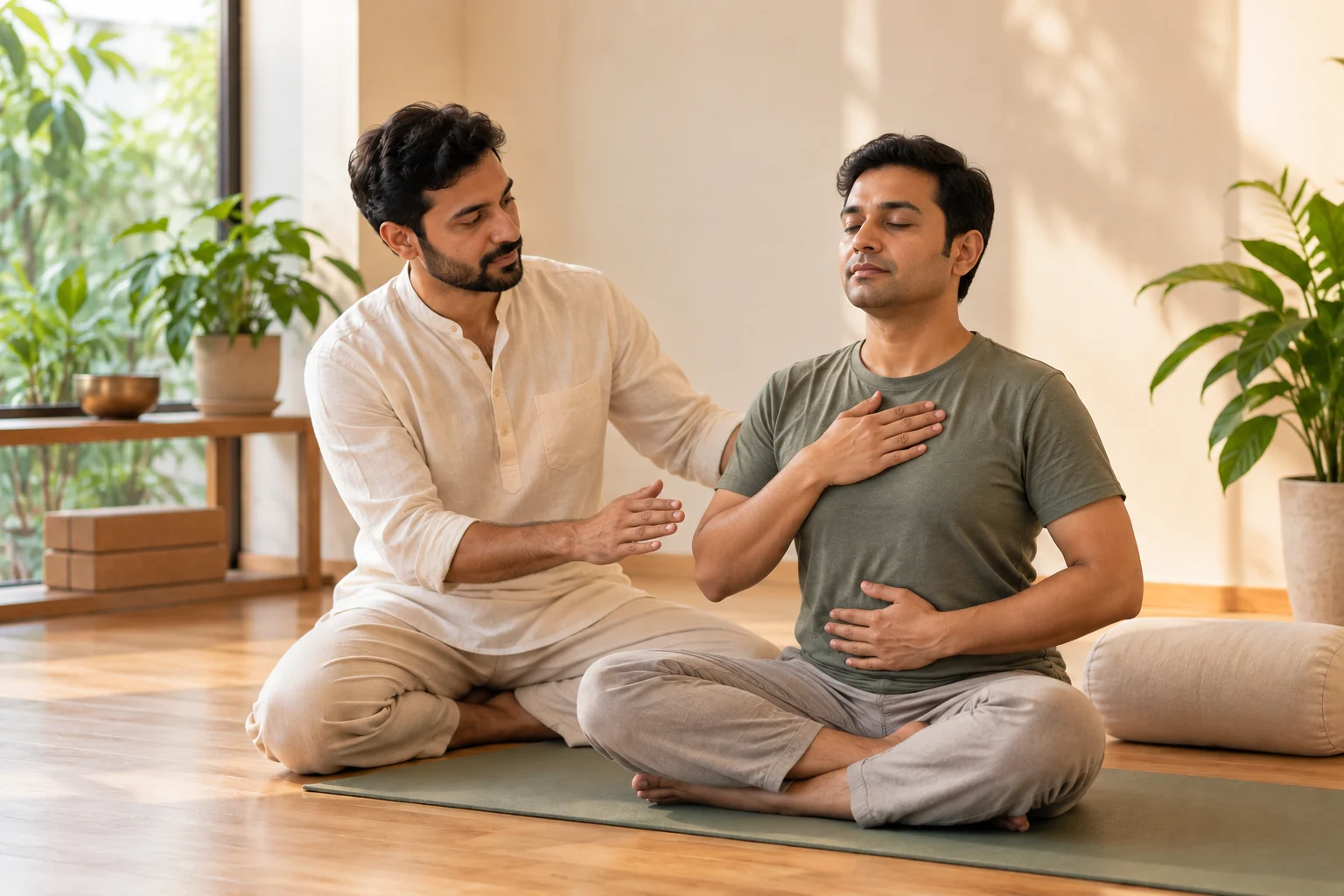
Hypertension Yoga
A slow, calming practice for blood-pressure concerns.
Explore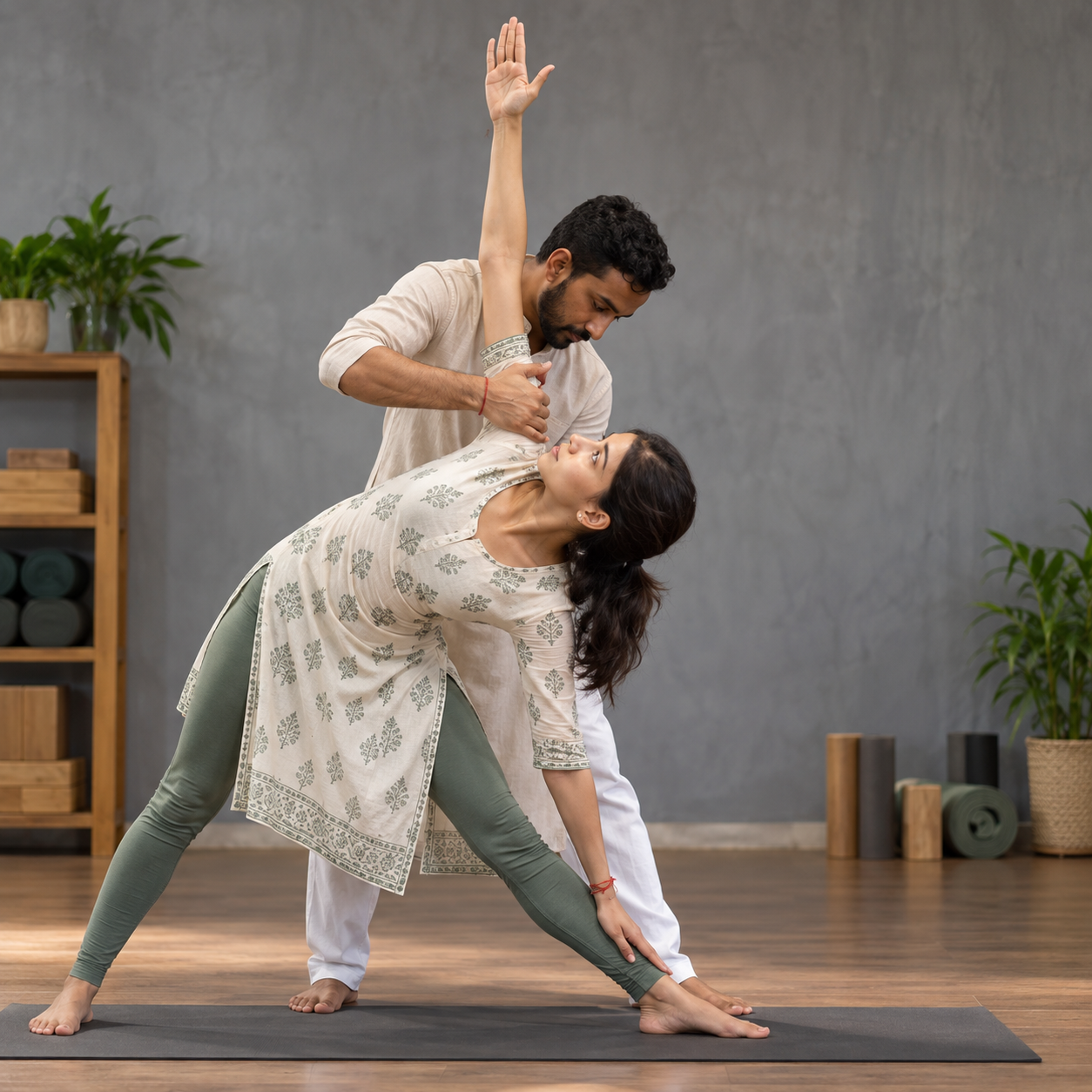
Personal Yoga Training
One-to-one sessions at the studio, at home or online.
Explore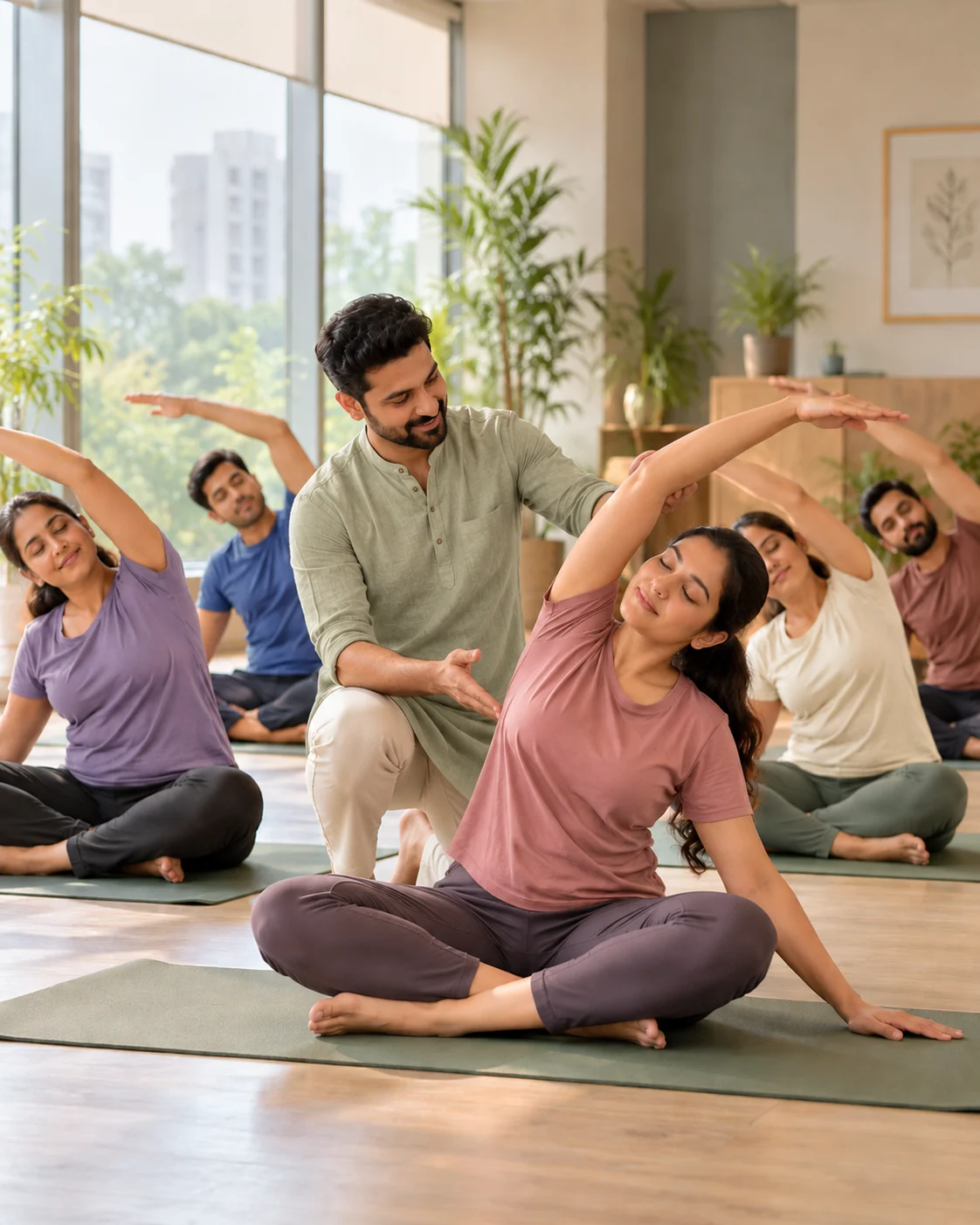
Corporate Yoga
On-site and online sessions for teams.
Explore
Teacher Training
Study yoga in depth and learn how to guide others.
Explore
Yoga and meditation are complementary wellness practices and are not a substitute for medical or mental-health advice, diagnosis or treatment. Please consult a qualified health professional about any medical or psychological condition.